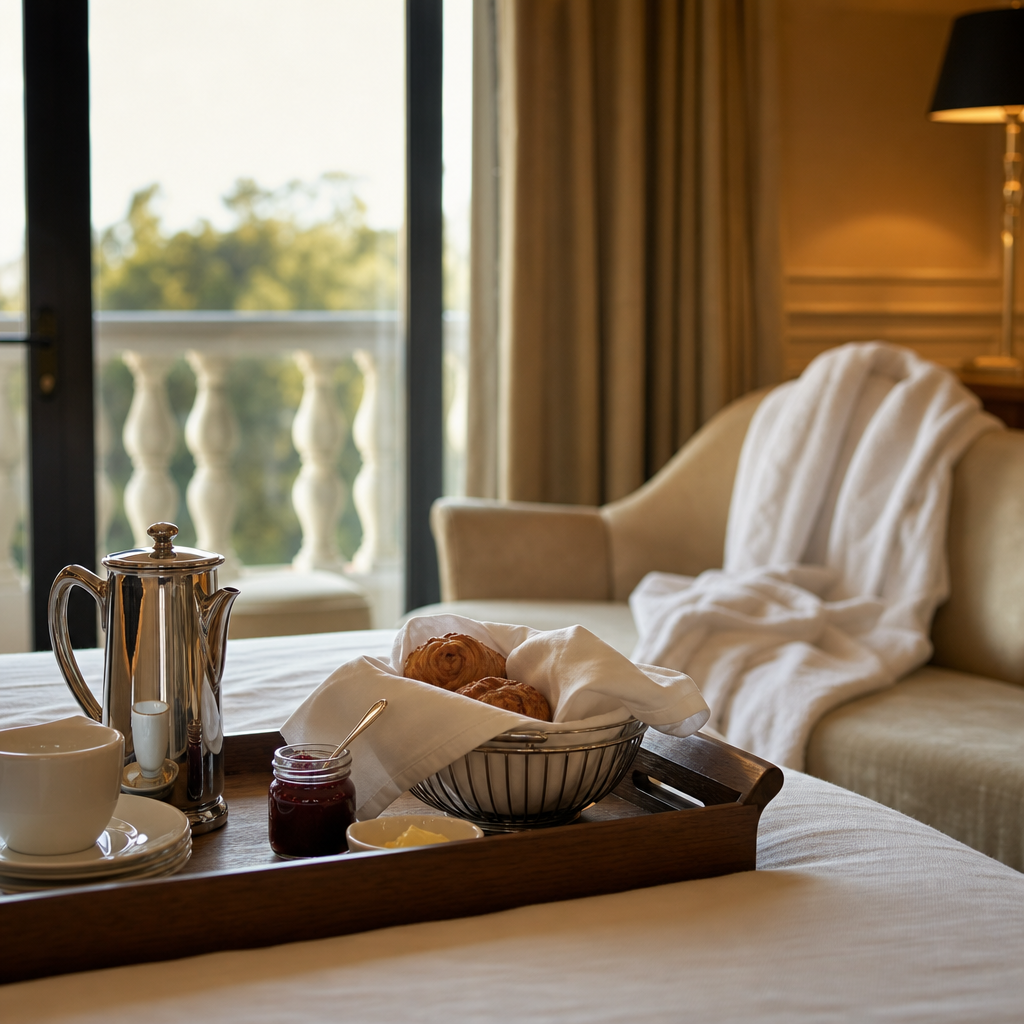
Imagine you've paid £4,000 a night for a suite overlooking the Amalfi Coast. You have a butler. There are flowers arranged specifically for you. Your name is on a little embossed card on the door. And yet, in the eyes of English law, you own absolutely nothing. You are a licensee. A guest. Someone who has paid for permission to be somewhere temporarily, with remarkably few rights attached.
This is the legal reality hiding underneath every luxury holiday booking, and once you see it, it's genuinely hard to unsee.

Can a hotel remove a guest from their room?
English property law draws a sharp line between a tenancy and a licence. A tenant has rights – they can exclude the landlord, stay put within the terms of the agreement, and the law throws up considerable barriers to removing them. A licensee gets none of that. A licence is simply permission. Permission can be withdrawn. A hotel guest, no matter how much they've paid, is a licensee – whether the room costs £49 at a motorway Travelodge or £4,000 at a five-star property on the Italian coast. The law doesn't care about the thread count.
What this means practically is straightforward: a hotel can – within certain contractual limits – move you to a different room, deny you access to amenities, or in serious circumstances, ask you to leave. The property never stops being theirs. The suite with your name on the card is as legally "yours" as a seat on a train.
The Feeling They're Selling You
The reason this matters for luxury travel specifically is that the entire marketing apparatus of high-end holidays sells the opposite feeling. The personalised welcome letter, the suite that's been "prepared for you", the butler who "looks after you throughout your stay" – all of this is carefully designed to create a sense of ownership, of arrival, of having somewhere that is, at least for a week, genuinely yours. The language of luxury hospitality leans hard on words like "your villa", "your table", "your itinerary". It is a very convincing theatre of possession.
For a thoughtful look at how travel documents and bookings can go wrong in ways you'd never anticipate, this piece on The Holiday That Died on a Typo is well worth five minutes.
What rights does a hotel guest actually have?
When you book even the most extravagant holiday imaginable, what you've actually purchased is a contractual right to receive services – accommodation, meals, transfers, whatever was specified. The suite is a delivery mechanism. If it isn't delivered as promised, you have a claim in contract. But that's a very different thing from having any claim to the room itself.
None of this makes a great holiday any less wonderful, of course. The flowers are still real. The view is still the view. It's just that the sense of the place being "yours" – which luxury travel sells so expertly – is always, legally speaking, borrowed.
Questions this raises
- Is a hotel liable for items stolen from a room?
- When does a long hotel stay become a tenancy?