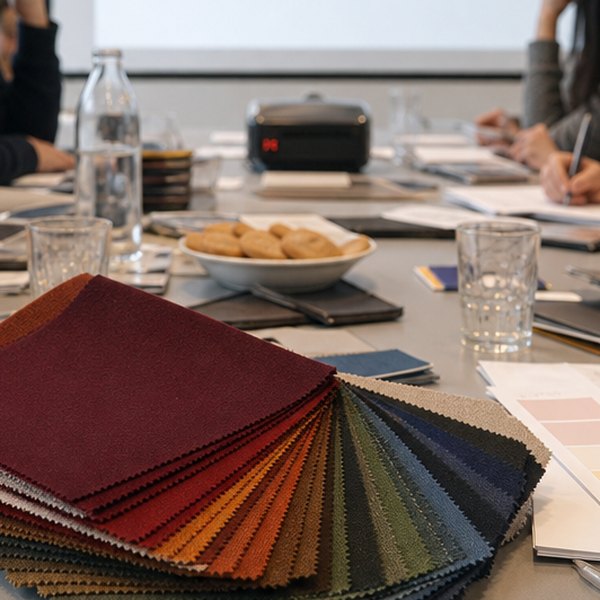
Category: Trends

  • The Actuary Decides What’s Trendy

    The Actuary Decides What’s Trendy

    Somewhere in a glass tower in the City of London, a person with a spreadsheet and a very calm face is deciding whether your next big thing is allowed to happen. Not a magazine editor. Not a TikTok algorithm. An underwriter.

    This sounds like a conspiracy theory, but it's really just how risk works. And once you see it, you can't unsee it.
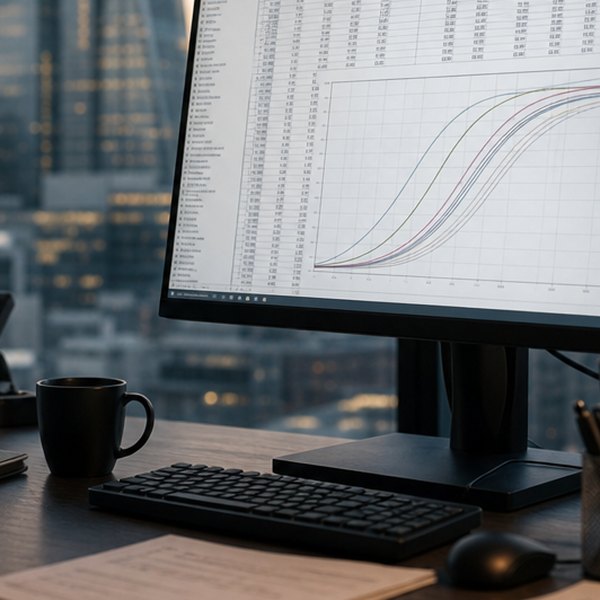
    Actuary analyzing fashion trend data — detail

    What is a loss curve in insurance?

    Every trend that makes it to the high street has, at some point, passed through a room full of actuaries asking a very specific question: can we draw a loss curve around this? A loss curve is essentially a map of how often things go wrong, how badly, and how predictably. For anything an insurer touches – a new product, a new activity, a new piece of kit – they need enough historical data to sketch that curve before they'll agree to cover it.

    If they can sketch it, the trend gets a price. If it gets a price, it gets liability cover. If it gets liability cover, it gets a supplier, a retailer, a brand, a launch event, and eventually a shelf in Boots.

    If they can't sketch it because the thing is too new, too weird, or the injury patterns are too unpredictable, the price comes back either astronomical or nonexistent. Either way, the trend quietly doesn't happen.

    Can a business get cover for something genuinely new?

    E-scooters are an interesting case. The technology existed for years before any mainstream rental scheme arrived in the UK. What held it back wasn't engineering or demand – it was that insurers couldn't agree on how to model the risk. Was it a bicycle? A moped? A pedestrian with wheels? Until the liability question settled down, the rollout stayed messy and piecemeal.

    Trampolining parks moved faster because soft-play centres had already given the industry a usable dataset for how children hurt themselves in foam-padded environments. The actuaries had something to work from. The parks arrived.

    DIY laser treatments – the kind of skin device marketed online as "clinical grade" – are in the strange middle zone right now. Salons can get cover for supervised treatments. Home devices are a different story. The claims data is thin, the user behaviour is impossible to model, and the result is that the category keeps almost breaking through without ever quite doing so.

    For a genuinely thoughtful piece on how the luxury travel industry handles its own version of this unspoken pricing problem, read The Only Honest Review of a Luxury Holiday Comes From Someone Who Can't Read at https://savingourplanet.co.uk/the-only-honest-review-of-a-luxury-holiday-comes-from-someone-who-can-t-read/.

    What This Means for the Next Big Thing

    The cheerful upshot is that trends which look unstoppable are usually more than they seem – they've already survived a room full of sceptical people with calculators. The bleaker reading is that some genuinely interesting ideas never arrive not because nobody wanted them, but because the loss curve wouldn't cooperate.

    So next time a trend lands and feels oddly inevitable, it probably is. The influencers just got there after the actuaries had already signed off.

    Questions this raises

    • How does an insurer decide something is too risky to cover?
    • Why do some activities become impossible to insure?
  • The Trend That Had to Pass Its MOT First

    The Trend That Had to Pass Its MOT First

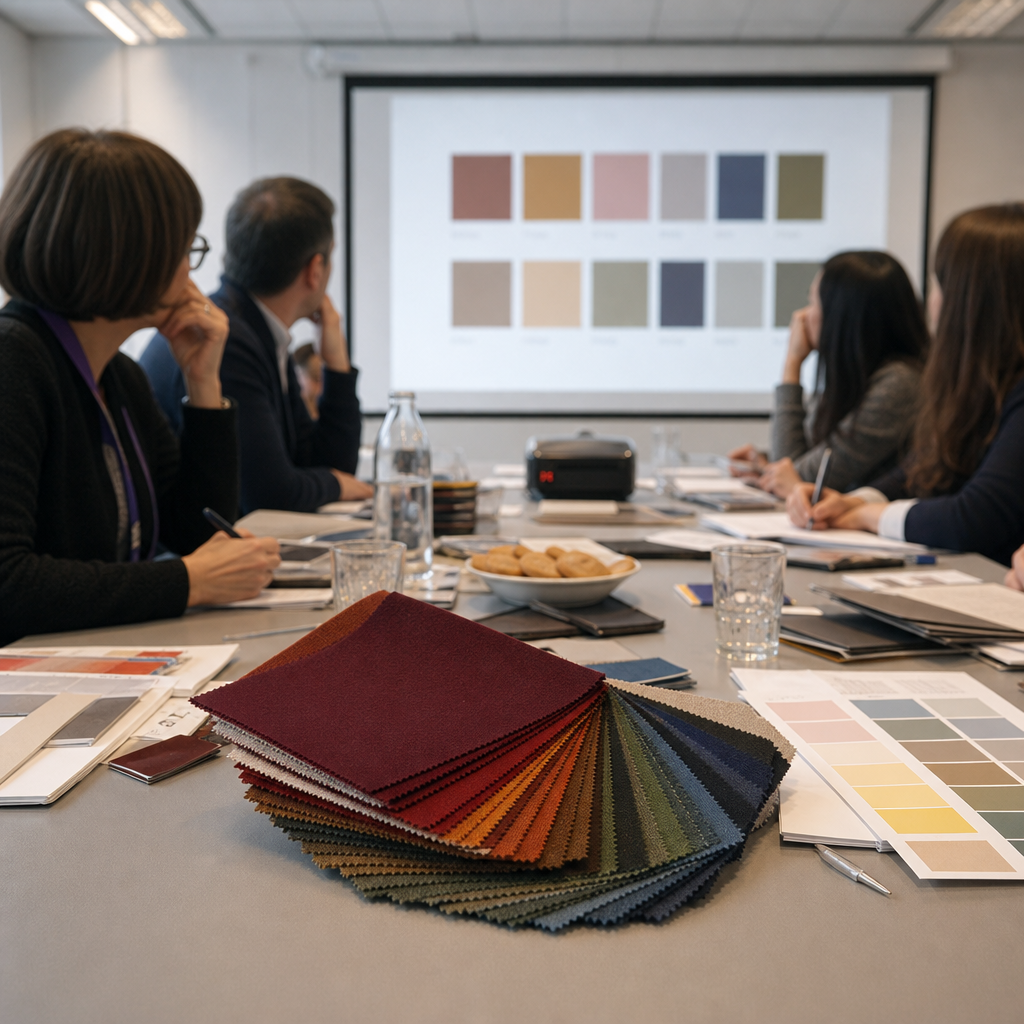
    Picture a room in Brussels, or maybe Pantone's headquarters in New Jersey. It looks less like a fashion studio and more like a committee meeting for a medium-sized water company. Fluorescent lights. A projector. People with lanyards. Someone has brought a plate of biscuits. And somewhere in this room, the colour you will be wearing next autumn is being formally agreed upon.

    This is how trends actually happen. Not on a street corner in Shoreditch, not on a mood board in a creative director's dream, but in a ratification process that would feel entirely at home to anyone who has ever watched a safety standard get approved.

    Vehicle undergoing MOT inspection test — detail

    Who decides the colour of the year?

    Twice a year, representatives from fibre producers, yarn manufacturers, dye houses, and retail buyers gather at trade bodies like Première Vision in Paris or the Color Association of the United States – the latter of which has been meeting since 1915 – and formally vote on a seasonal palette. Not suggest. Vote. The Pantone Colour Matching System, which underpins almost every fashion and homeware trend you encounter, operates its own Colour of the Year panel: a group of colour experts who spend months building a technical case for a single shade before it is published. That announcement, treated by lifestyle journalists as a burst of cultural inspiration, is actually the output of something closer to peer review.

    The International Colour Authority, based in London, runs a similar process eighteen months ahead of any retail season. Eighteen months. By the time a particular dusty sage appears on the rail at your local high street, it had already passed through a panel roughly the same time ago that you were still wearing whatever you wore last spring.

    How far ahead is a season’s colour palette agreed?

    The reason is entirely mechanical. A yarn mill in northern Italy needs nine months to dye, spin, and ship enough fibre to justify a new colour. A garment factory in Bangladesh needs its buyers to commit to a fabric before it can weave it. A retailer needs to place orders before the factory will start. Each of these steps has a minimum lead time, and they sit end to end like components on a production line. The trend has to be decided early enough for the physical object to exist at all.

    So the colour you are told is "having a moment" was, in industrial terms, ratified before anyone was having that moment. The cultural feeling follows the certification. The inspiration is retrospective.

    For a broader look at how the same kind of invisible institutional layer shapes the financial world – the bodies and processes that quietly underwrite what feels like open market activity – The Ground Beneath Your Money at savingourplanet.co.uk is worth an hour of your time.

    What the Shop Floor Is Selling You

    None of this means the clothes are bad, or that nobody ever genuinely loves a colour. People do. The point is just that the story of a trend arriving organically, bubbling up from real life into shops, is almost entirely backwards. The shop came first. The cultural moment was scheduled. And somewhere, a person with a lanyard cast the deciding vote.

    Questions this raises

    • Do retailers have to follow the forecast colours?
    • Is colour forecasting simply self-fulfilling?
  • The Oracle in the Cargo Hold

    The Oracle in the Cargo Hold

    There is a person somewhere right now whose job title probably says "trend forecaster" but whose actual working day looks more like a commodities trader's. Multiple screens. Live shipping data. Satellite images of industrial ports in southern China. They are not watching for fashion, exactly. They are watching for fabric.

    Which sounds strange, until you understand what fabric moving through a port actually means.

    Mysterious figure in ship cargo hold — detail

    What the Ships Already Know

    When a manufacturer in Guangzhou starts ordering terracotta-coloured linen at volume, that linen has to travel. It shows up in freight data. It shows up on satellite imagery as containers being loaded onto specific vessels. It shows up in port throughput numbers that were originally designed to help soybean traders in Chicago work out whether a Brazilian drought would squeeze global supply.

    Trend forecasters borrowed all of this. Not the vibe of it – the actual software. The same tools that track grain shipments now track the movement of polyester twill and wide-leg denim canvas. And because manufacturing lead times run at roughly six to ten weeks ahead of the shop floor, you can see what is coming before a single influencer has posted about it. Before a buyer has placed an order. Before anyone has even taken a photograph.

    The supply chain, it turns out, is the most honest mood board in the world.

    The Proxy Game

    What makes this interesting is that it is not actually new behaviour. Predicting value by watching what nobody else thinks to watch is an old trick. Merchants have always done it – reading the weather, the harvest, the movement of ships – to get ahead of a market that was still making up its mind. For a wider piece on how money and value have always been read through indirect signals, The Oldest New Money in the World.

    The cargo-ship forecasters are doing exactly this. The fabric is not the trend. It is a shadow the trend casts six weeks before it arrives.

    What the Cool-Hunters Got Wrong

    The old model assumed culture moved from the top down or the street up. A designer in Milan or a teenager in Peckham started something, it spread, someone spotted it, it got copied. That still happens. But it is slow and it is noisy – full of things that look like signals and turn out to be nothing.

    Raw material flows are quieter and more honest. A factory does not order forty thousand metres of a particular weave because it has a feeling. It has a confirmed order, already sitting in a freight manifest weeks before the PR machine switches on.

    Reading Sideways

    This is the genuinely odd thing about how trends work now. The most accurate picture of what you will want to wear next spring is currently sitting in logistics software that smells strongly of the agricultural futures market.

    Culture has a supply chain. And if you know where to look, the supply chain talks.

    Questions this raises

    • How far ahead can shipping data predict a trend?
    • Who buys fashion forecasting data and what does it cost?
    • Does forecasting create trends rather than spot them?
    • Can shoppers see the same freight figures themselves?