Category: Budget Holidays

  • What the Rep Knew (And Who Taught Her)

    What the Rep Knew (And Who Taught Her)

    There is a type of knowledge that lives entirely in people rather than books. The recipe a grandmother never wrote down. The way a mechanic hears a problem before he's lifted the bonnet. For about twenty years, from the early 1970s to somewhere around the mid-1990s, the entire working knowledge of the British package holiday industry existed in exactly this form – passed mouth to ear, on a sunbed, over a warm Mythos, between a rep who was leaving and a rep who was arriving.

    Female sales representative in training session — detail

    Do package holidays still hold a welcome meeting?

    The welcome meeting is still there if you book a package today. You shuffle into a hotel conference room on your first morning, slightly jet-lagged, and a cheerful person in a branded polo shirt talks you through transfer times and excursion options. It feels like a ritual because it is one. It was invented by early reps in the late 1960s almost by accident – a way to head off forty identical questions before they were asked – and then passed down through that informal chain for a decade before any tour operator thought to write it into a training manual.

    What the departing rep taught the arriving one was specific and strange. Always put the excursion pitch in the middle, never at the end when people are restless. Sit the complainers near the front where they feel acknowledged. Learn the name of the hotel manager's wife. Know which taxi driver is reliable at 2am, and which one will be forty minutes late and apologetic.

    Thomson Builds a School, Sort Of

    By the mid-1980s, Thomson and Airtours were shipping tens of thousands of British holidaymakers a year to Majorca, Corfu, the Algarve. The knowledge chain was straining. A rep who went home in October might be replaced by someone who'd learned from a rep who'd learned from someone who misremembered the original. Like a long game of whispers played out across the Mediterranean.

    So both operators – and several smaller ones – briefly ran what you might charitably call rep schools. A week or two of classroom sessions covering complaint handling, local medical contacts, the legal bits. But the instructors were, almost without exception, former reps themselves. They didn't so much codify the oral tradition as perform it. The institutional knowledge became institutional in name only. The real curriculum was still the two days a veteran spent walking a new recruit around the resort, pointing at things.

    For budget package holidays today, see sites like https://www.icelolly.com/

    Why Your 2am Transfer Still Exists

    Here is the strange inheritance of all that informal knowledge: the budget package holiday is structurally the shape it is because of what those rep curricula hardwired in. The transfers, the welcome meeting, the excursion upsell, the rep who appears at the pool on Tuesday – none of it was designed from above by a product manager. It evolved from the bottom, from hundreds of individual reps solving the same problems independently, comparing notes, and passing solutions on.

    The 2am airport transfer exists because an early rep discovered that a cheerful send-off at an ungodly hour dramatically reduced post-holiday complaints. Someone taught someone else. And somewhere in the chain, it became simply how things were done – long after anyone could remember why.

    Read next

    Questions this raises

    • What did a resort rep actually do all day?
    • Why did tour operators cut rep numbers so sharply?
    • How are holiday problems handled now there is no rep?

  • The Holiday That Got Its Money Back

    The Holiday That Got Its Money Back

    In 1971, an ordinary British holidaymaker sat down in a small claims court and asked a very reasonable question: if the holiday I was sold isn't the holiday I got, who is actually responsible?

    Holiday gift with refund receipt attached — detail

    It sounds like the sort of thing you'd mutter furiously on a sun-scorched balcony overlooking a building site. But this particular person followed it all the way to a judge. And the ripples from that case eventually settled into the Package Travel Regulations – the legal framework that quietly governs almost every cheap holiday sold in the UK today.

    Here's what that actually means for you when you're scrolling through last-minute deals at midnight.

    What do the Package Travel Regulations actually cover?

    Before the regulations existed, a "package holiday" was just a vague bundle. A flight, a bed, possibly a transfer – sold together at a price that felt like a bargain. But if the flight was fine and the hotel was a disaster? The tour operator could simply shrug and point at the hotel. The hotel could point at the local agent. The local agent had already left for the evening.

    The court case changed that. What emerged, eventually codified in the 1992 Package Travel Regulations (updated in 2018), was a legal definition of what a "package" is: two or more travel components – transport, accommodation, car hire, or certain tourist services – sold together for an inclusive price, for a trip lasting more than 24 hours. That combination isn't just a marketing convenience. It's a legally enforceable promise, with one entity responsible for the whole thing.

    The interesting bit is how arbitrary that line is, and how much rides on it. Add a hotel to a flight and you're protected. Book them separately, ten minutes apart on two different websites, and you might not be. The word "budget" looks like it describes a price. It's describing a legal category – whether you're inside it or outside it depends on how the sale was structured, not how little you paid.

    The Invention of a Promise

    There's something almost alchemical about what a legal definition does. It takes a loose arrangement of flights and beds and turns it into a single, enforceable thing with a value attached. The link between The Oldest New Money in the World and this story is closer than it sounds. Early currency did something remarkably similar, transforming an agreement between strangers into an object with fixed, recognised worth. The Package Travel Regulations did the same thing for holidays. They took what was previously a handshake and turned it into something a court could weigh.

    What That Means When You're Booking

    The practical upshot: before you pay, check whether what you're buying is a package in the legal sense. Look for ATOL protection on flights and packages sold by UK-based operators. That certificate isn't just paperwork – it's the direct descendant of that 1971 complaint. If a company collapses after you've paid and before you've flown, ATOL means you get your money back or a flight home. Without it, you're outside the line.

    The cheapest holiday you can find isn't always the least protected one. But it might be, depending entirely on how the operator has structured the sale. Worth knowing before you hand over your card details and go back to watching the weather forecast.

    Questions this raises

    • Am I protected if I book flights and hotel separately?
    • How do I claim for a holiday that was misdescribed?
    • Does ATOL protect the same things as the package rules?
  • The Holiday That Died on a Typo

    The Holiday That Died on a Typo

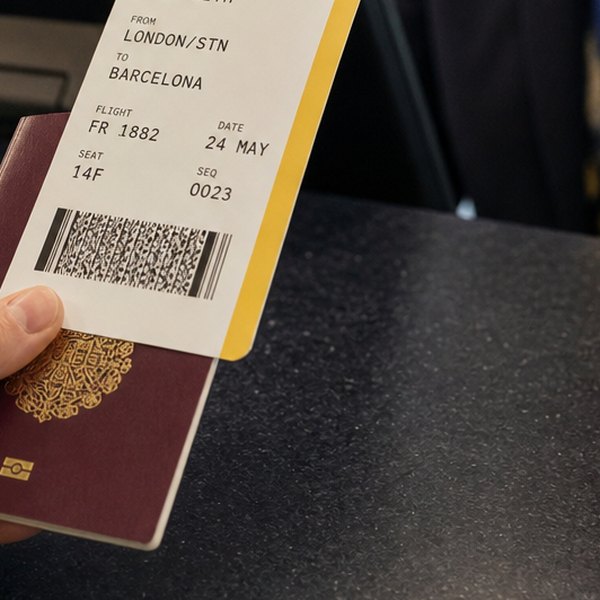
    Somewhere in the world, right now, someone is standing at an airport check-in desk watching their cheap holiday evaporate. Not because of weather, or a cancelled flight, or a lost bag. Because their boarding pass says "JON" and their passport says "JOHN", and these are, in the eyes of the airline's system, two completely different human beings.

    It sounds absurd. It is absurd – and it is, unfortunately, governed by a layer of international rules most travellers have never heard of and will never read until the moment they become catastrophically relevant.

    Typed error on holiday announcement — detail

    Where the Rules Actually Come From

    The International Civil Aviation Organisation – ICAO, the UN body that sets global aviation standards – requires that a passenger's name on a boarding document matches their travel document exactly. Not roughly. Not close enough. Exactly. Carriers build their own ticketing policies on top of that foundation, and budget airlines in particular tend to enforce it without much warmth. Their margins are thin. Their rebooking fees are not.

    Ryanair, easyJet and Wizz Air all publish name correction policies. They differ slightly. What they share is this: a "minor" correction (one or two characters, caught before departure) will cost you a fee. A "name change" – which is how they classify anything beyond that, including swapping a nickname for a full legal name – is treated as a cancellation and a new booking, at the current fare. On the morning of travel, the current fare is rarely £29.99.

    Does a middle name have to match your passport?

    The trickiest version of this isn't a fat-fingered typo. It's the name people actually call themselves. Someone who has gone by "Nikki" their whole life books a holiday as Nikki. Their passport, issued in a more formal moment, says Nicola. These are the same person. The check-in desk does not care.

    The same trap opens up around middle names. Some booking forms ask for them, some don't, and people answer inconsistently without thinking. If your passport shows three names and your booking shows two, you may be fine – or you may not, depending on which airline, which desk, which day. The policies are written in a way that gives the carrier discretion, which is not the same as giving you reassurance.

    How much do airlines charge to correct a name?

    Work it out from the other direction. You saved £60 booking early. The name correction fee on most budget carriers sits between £30 and £55 per passenger, per flight, already eating your saving before you factor in the non-refundable hotel, the airport car park, the travel insurance excess. If the correction tips into "name change" territory and you're buying a new ticket on the day, you're typically looking at several hundred pounds on a route that was selling for £40 a month ago.

    The cheap holiday was never the flights. It was all the bits attached to the flights. All of them depended on those flights departing with you on them.

    So before you close the booking confirmation and forget about it: open your passport, read the name on the screen, and compare every single character. Thirty seconds now. An airport rebooking desk is a much slower way to learn the same lesson.

    Questions this raises

    • Can you change the name on a flight booking?
    • Will travel insurance cover a name-mismatch refusal?
  • The Rain That Built Ryanair

    The Rain That Built Ryanair

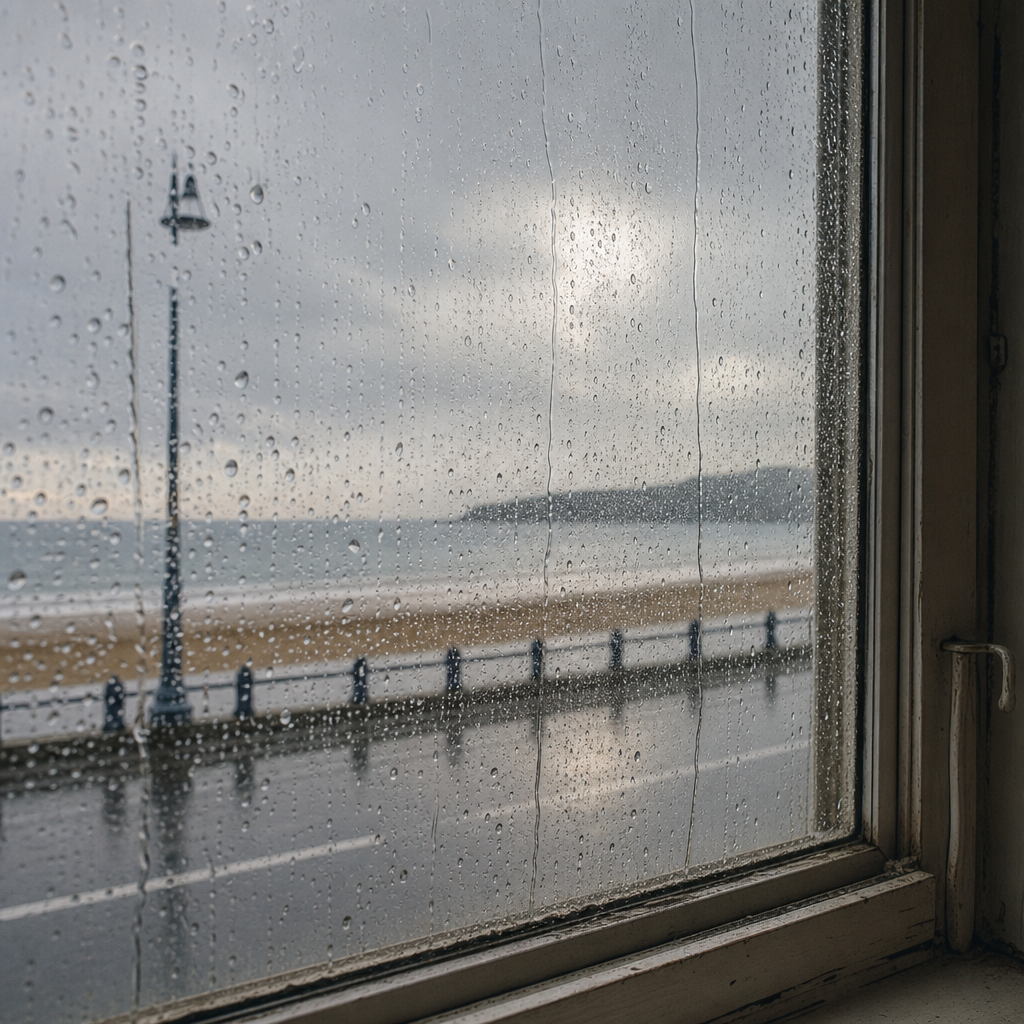
    Every time you type "cheap flights August" into a search engine and wince at the price, you're not just having bad luck. You're standing inside a machine that was built around British weather. The whole budget holiday industry – the charter flights, the two-week packages, the packed Malaga terminals in school summer holidays – exists in the shape it does because UK summers are psychologically unbearable in a very specific way.

    It's not that they're terrible. They're just unreliable. And that, it turns out, is worse.

    Heavy rain falling on aircraft exterior — detail

    The Misery That Had to Go Somewhere

    Cast your mind back to roughly 1950. The average British factory worker has two weeks off a year, all of it in a fixed summer block, nearly all of it spent under the same grey Midlands drizzle he'd been under for the other fifty weeks. The sun wasn't actually absent – it might appear gloriously on a Tuesday – but it couldn't be counted on. You couldn't plan a fortnight around "might be nice".

    This is the specific psychological condition that Vladimir Raitz, a young travel entrepreneur, noticed in 1950 when he chartered a plane and flew sixty-six passengers to Corsica for £32.50 all-in. He hadn't invented the desire to go somewhere warm. He'd found a mechanism for the pent-up demand that British unpredictability had been manufacturing for decades, and his company, Horizon Holidays, is more or less where the package holiday was born.

    Why are UK school holiday flights so much dearer?

    What Raitz created, the airlines and tour operators who followed him refined into a machine that still runs today. Because British annual leave was (and largely still is) compressed around school terms, because the school summer holiday falls in a narrow six-week corridor, and because the psychological pressure of "this is the only window where the sun might cooperate" is enormous – demand doesn't spread itself sensibly across a year. It spikes.

    Airlines and operators responded to that spike the same way any industry responds to predictable demand surges: they built the infrastructure around it, then charged accordingly for access during peak periods. The block-booking model, where tour operators reserved entire aircraft and hotel floors months in advance to guarantee supply, came directly from needing to manage a nation that wanted to leave at the same time.

    For cheap flights to Lanzarote, visit https://savingourplanet.co.uk/while-you-were-asleep-last-night-someone-was-sewing-not-down-the-road-not-in/

    Does British weather still drive holiday bookings today?

    The interesting thing is that most British people frame their summer holiday instinct as a simple preference – "I just like going in August." But the pricing data tells a different story. The same two weeks in Tenerife can cost twice as much in August as it does in October, and the weather in Tenerife in October is, frankly, better.

    What we think of as wanting to go in summer is partly wanting guaranteed sunshine, which the shoulder months offer more reliably at your destination, not less. The urgency of August belongs to the British weather system, not to the Canary Islands. We exported our meteorological anxiety and built an entire industry inside it.

    Booking Against the Weather (Rather Than With It)

    Which means one of the most practical things you can know about budget travel is this: the cheapest version of your holiday is priced around the peculiarities of a British summer that your destination doesn't share. October half-term aside, late September to early November is when the block-booking logic breaks down slightly. The planes still run, the hotels still stand, the sun still shines over Faro, but the compressed demand has eased. Prices drop.

    The British weather that made a generation of holidaymakers desperate to leave also trained those same holidaymakers to leave at the most expensive possible moment. The machine runs on habit now as much as anything else – and habits, at least, you can decide to change.

    Questions this raises

    • When did package holidays to Spain become affordable for most people?
    • How did Ryanair undercut the charter holiday operators?