Category: Buying Crypto

  • What The Colours Are Actually Telling You

    What The Colours Are Actually Telling You

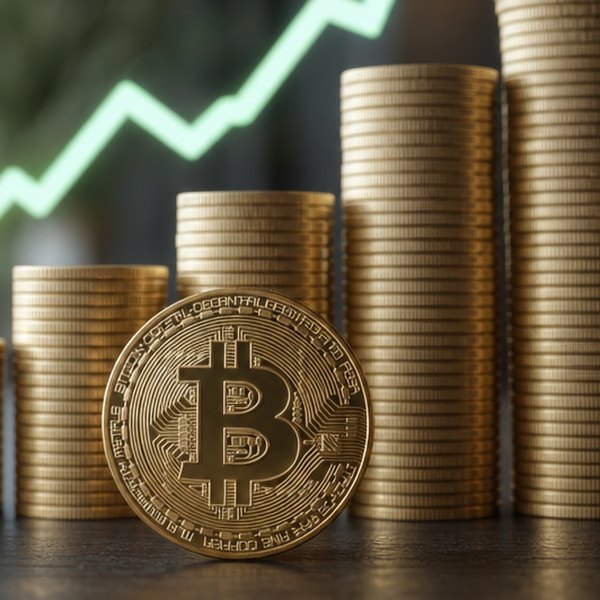
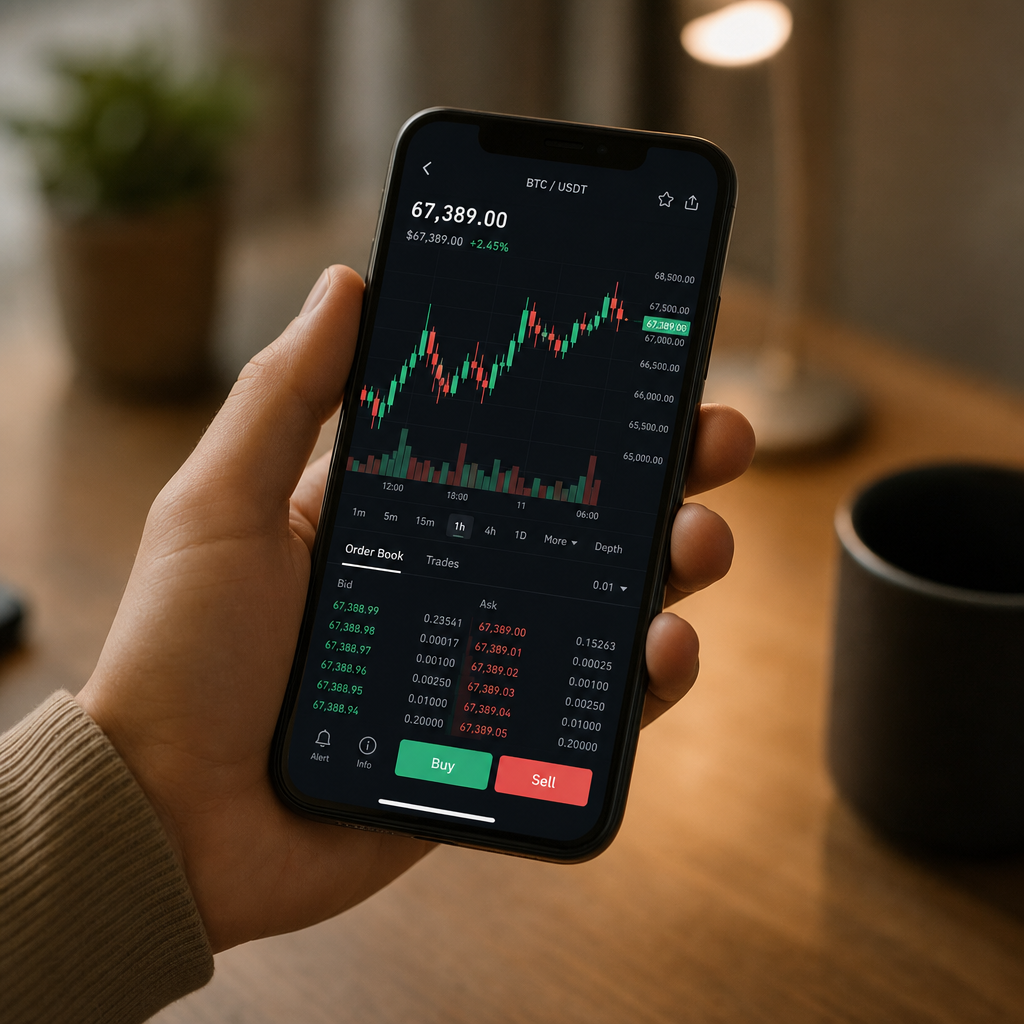
    Open a crypto trading app for the first time and you'll get the same wall of information: jagged line graphs, blinking numbers, little candle-shaped bars stacked left to right across a chart, everything striped in two colours. One means up. One means down. You are apparently expected to know which is which.

    Roughly one in twelve men in the UK has red-green colour blindness. For them, that entire visual system – the thing the whole interface is built on – collapses into a single muddy sameness. The "Bitcoin is surging" signal and the "Bitcoin is tanking" signal look identical. Which is a problem. But also, accidentally, a useful one. Because asking why the interface was built this colour way at all turns out to explain what it's actually trying to say.
    Colorful palette representing different meanings — detail

    Why were red and green chosen for markets at all?

    Crypto didn't invent this. It borrowed the whole visual grammar wholesale from stock trading platforms, which borrowed it from commodity trading floors, which had their own physical, shouted, chaotic reasons for colour-coding things fast. On a trading floor in the 1980s you needed to know at a glance whether a price was above or below its opening level. Green for above (good, growing, go). Red for below (danger, falling, stop). The metaphors go back centuries – red ink in the ledger meant debt, green meant profit. Crypto just inherited all of that history and dropped it onto your phone screen, no explanation included.

    What A Candlestick Is Saying

    The candlestick chart – those rectangular bars that look a bit like a pub quiz graph drawn by someone with very steady hands – is the thing most new buyers ignore and probably shouldn't. Each bar represents one time period: an hour, a day, whatever you've set. The body of the bar shows the opening price and the closing price for that period, while the thin lines poking out of the top and bottom (called wicks, which is a genuinely lovely piece of terminology) show the highest and lowest price the asset hit during that same window.

    So the bar isn't just "up" or "down". It's a small compressed story. It opened here, swung as high as this, dipped as low as that, and settled here by the end. Colour just tells you whether it closed higher or lower than it opened. Take the colour away entirely and the shape still contains all of that information – the wick lengths, the body position, the relative size compared to the bars around it.

    For crypto specifically, wide wicks on both ends of a short body mean a lot of violent price movement that ended up roughly where it started. Traders have a word for this: indecision. Which, is a fair description of most of crypto's recent years.

    The Numbers The Chart Is Built On

    Below or beside most charts you'll find a volume bar – usually a quieter, smaller set of bars running along the bottom. Volume is the total amount of that asset that changed hands during each period. A big price move on low volume is considered less reliable than the same move on high volume, because fewer people were involved in making it happen. A price spike with no volume behind it tends not to stick around.

    The percentage figure that usually sits next to the current price – "+4.2%" or "-7.8%" – is almost always a 24-hour change. Not from when you bought it. Not from its all-time high. Just from this time yesterday.

    Can you change the colours in a trading app?

    The reason all of this matters is that crypto platforms largely haven't updated their accessibility since the 2010s. Most still default to a red-green scheme with no alternative mode, which is a fairly strange choice given how many people are using them on a phone. Some newer platforms have begun offering high-contrast or colour-blind-friendly display settings; check the accessibility options before you assume the interface just looks that way for everyone.

    But here's the genuinely useful thing about looking at these charts through the lens of "what if the colour meant nothing": you stop leaning on the colour and start reading the actual shape. The wicks. The volume. The time window you've selected. Those don't change with the palette. They're the information. The colour is just the highlight pen.

    Questions this raises

    • How do colour-blind traders read candlestick charts?
    • Do UK accessibility rules apply to trading apps?
  • The Oldest New Money in the World

    The Oldest New Money in the World

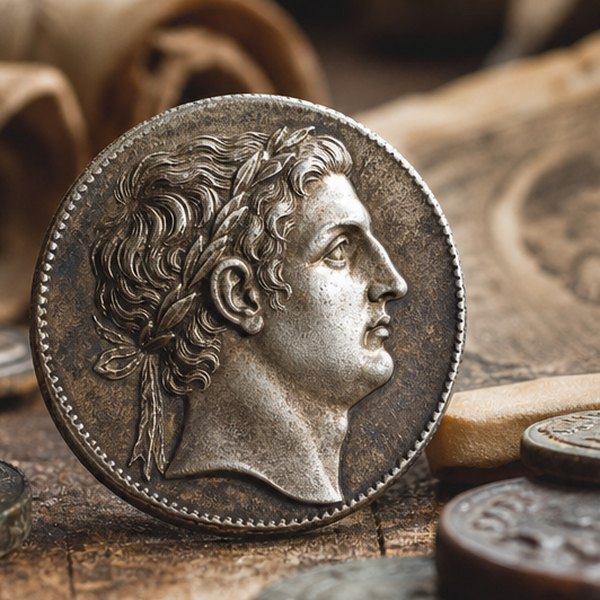
    Somewhere in a Lancashire museum, if you know which drawer to look in, there are small brass tokens the size of a 50p. They were stamped in the 1800s by mill owners and handed to workers in lieu of wages. You couldn't spend them at the baker's or the pub – only at the company shop, where the company set the prices. The workers called the system "the truck," and they hated it. Parliament eventually banned it. But before it did, hundreds of thousands of ordinary working people spent their lives trading in money that a private institution had invented, controlled, and could devalue whenever it liked.

    Sound familiar?

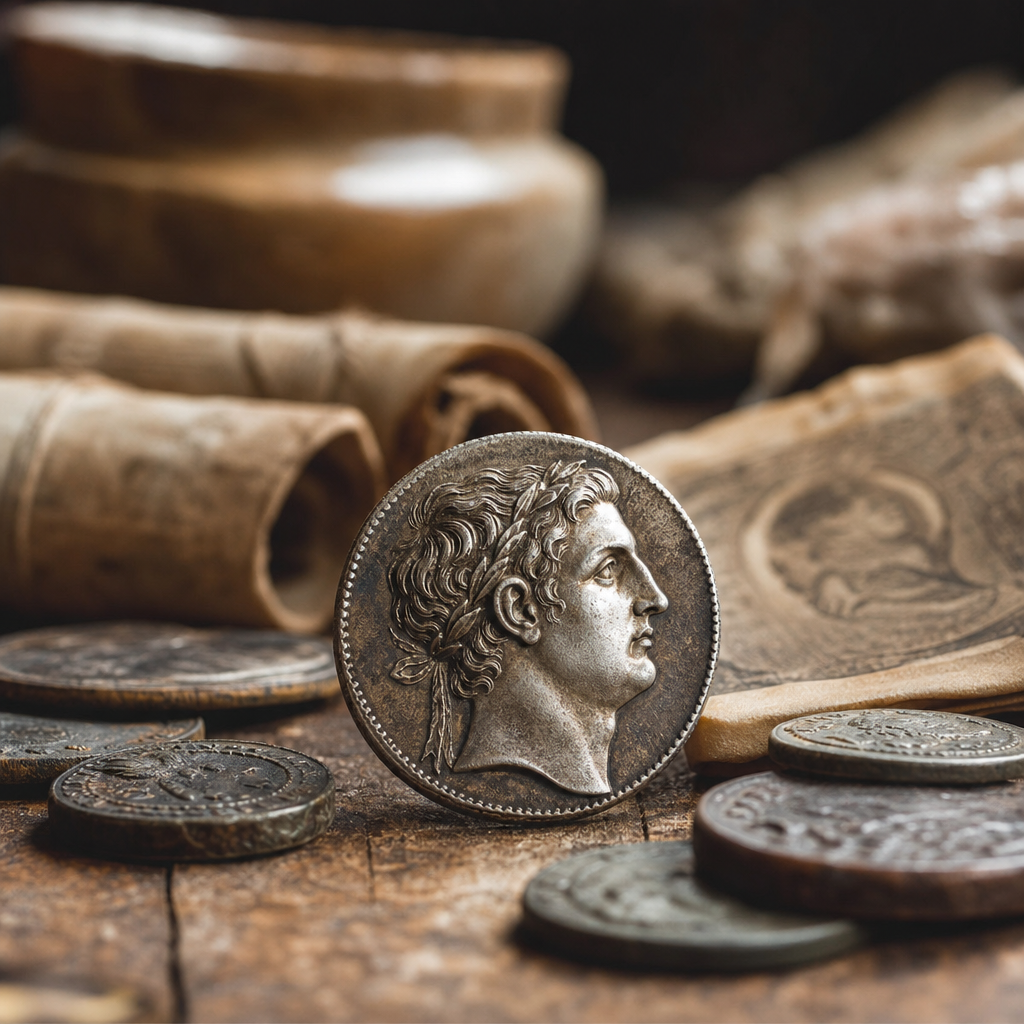
    Ancient coins and currency specimens — detail

    The Tally Before the Bank

    Go back further and the story gets stranger. Medieval England ran partly on tally sticks – notched hazel rods that recorded a debt between two people. The stick was split down the middle, creditor kept one half, debtor kept the other. When you wanted to prove the debt, you matched the halves. No king's seal. No banker's guarantee. Just a shared piece of wood and mutual trust. These things circulated. People traded them. For centuries, they were as real as coins.

    The impulse behind the tally stick and behind the truck token is the same. When official money is scarce, or distrusted, or controlled by someone whose interests aren't yours, people reach sideways and invent something else. They always have.

    The Folklore Underneath the White Paper

    When Bitcoin appeared in 2009 – released pseudonymously, by someone who still hasn't been definitively identified – it came wrapped in a very specific set of beliefs. Fixed supply. No central issuer. Immune to debasement. The language was new but the anxieties underneath it were ancient: distrust of banks, the fear that whoever controls the money supply will eventually abuse that control, the dream of a store of value that can't be quietly inflated away.

    That's not a Silicon Valley idea. That's the Lancashire weaver looking at his brass token and thinking: I'd rather be paid in something nobody can fiddle with.

    If you're curious about buying crypto today, somewhere like Ramp makes the actual process of exchanging pounds for digital currency fairly straightforward.

    Is cryptocurrency really comparable to company scrip?

    The technology is real and genuinely new. But when you buy Bitcoin or any other cryptocurrency, what you're also buying into – without necessarily knowing it – is a very old argument about who should be trusted to issue money. It's the same argument the tally-stick traders were having. The same one the truck workers were losing.

    History doesn't tell you whether crypto will hold its value or collapse next Tuesday. What it does tell you is this: that feeling – the urge to reach for money the government didn't print – is not a modern glitch in your thinking. It's one of the most durable instincts in economic history. People have always built their own exchange systems, trusted them, sometimes been burned by them, and then built new ones.

    The brass token just has better branding now.

    Questions this raises

    • When did Parliament ban the truck system?
    • How were mill workers paid before the Truck Acts?
    • Who controls the value of a privately issued currency?
  • The Number That Makes Crypto Look Better Than It Is

    The Number That Makes Crypto Look Better Than It Is

    Imagine a room with a hundred people in it. Ninety-nine of them reach into their pockets and hand £100 to the one person standing at the front. That person walks out with £9,900 and everyone else goes home skint. Now imagine someone runs the numbers the next morning and announces: "Great news! The average participant gained £98!"

    Technically true. Utterly useless.

    Cryptocurrency metrics displaying exaggerated performance data — detail

    This is, more or less, what happens every time someone quotes you the average return on a crypto investment.

    Why the Average Is Lying (Without Technically Lying)

    The number people throw around when talking about crypto gains is almost always the mean – you add up everything and divide by the number of people. That works fine when the outcomes are bunched together, like heights in a classroom or scores on a test. But it falls apart completely when the distribution is wildly skewed, with a tiny cluster of colossal wins and a much larger crowd of people who broke even or lost.

    Crypto returns are about as skewed as it gets. Bitcoin's most spectacular price rises happened in a handful of short, violent bursts – a few months in 2013, a stretch in 2017, another in 2020-2021. If you happened to be holding during those windows and, crucially, actually sold, you may have done extraordinarily well. The mean return across all buyers across all time looks remarkable partly because of those moments. But the median – the return that the person exactly in the middle of the queue actually experienced – is a very different, much quieter number.

    The Difference Between Mean and Median (And Why It Matters Here)

    The mean is dragged upward by the outliers at the top end. The median ignores them entirely and just tells you what a typical person got. In a power-law distribution – which is the rough shape of crypto returns – those two numbers can be miles apart.

    Back to the room with a hundred people. One person gains £100,000. Everyone else loses £100 each. Mean return: roughly £990 profit per person. Median return: minus £100. The average looks extraordinary; the typical experience was a loss. Both numbers are arithmetically correct. Only one of them tells you what happened to most people.

    The mathematics here isn't an argument against buying crypto. It is an argument against trusting headline return figures without asking which measure of "average" is being used and who, exactly, was in the room when those returns were made. If you want to go further and understand the practicalities of how buying works, there are straightforward guides at places that explain the process without dressing it up – Coins.co.uk is one example worth a look for UK buyers.

    What the Person in the Middle Experiences

    Most buyers arrive after the headline-grabbing run has already happened. They buy somewhere in the middle of a cycle and either sell too early, too late, or hold through a correction that wipes most of the gain back out. They didn't make a mistake, exactly. They just experienced what the median always experiences in a skewed distribution: something considerably less exciting than the mean.

    The number everyone quotes when they say crypto has delivered extraordinary returns is, by construction, a number built mainly by people who aren't you – a handful of early holders, a handful of traders who got the timing right, and a mathematical formula that adds them all in regardless. Worth knowing before the room fills up again.

    Questions this raises

    • What is the median return on a crypto investment?
    • Why do people quote the mean instead of the median?
    • How many crypto investors actually lose money overall?
    • Does the same averaging problem apply to stock market returns?
  • The Thing You Buy When You Buy Bitcoin (Isn’t Quite a Thing)

    The Thing You Buy When You Buy Bitcoin (Isn’t Quite a Thing)

    If someone hands you a £10 note, you own it. If someone owes you £10, you own that too, more or less – it's a right you can enforce. English property law has sorted the world into these two buckets for centuries: things you can physically hold, and rights you can legally demand. Objects and claims. Stuff and promises.

    Then along came Bitcoin. And the law, to use technical language, had absolutely no idea what to do with it.

    Abstract representation of Bitcoin ownership and digital currency — detail

    Does the third category of property exist in law yet?

    When you "buy" Bitcoin or Ethereum in the UK today, you don't receive an object and you don't acquire a legal claim against anyone. There's no debtor on the other end of your transaction who owes you something enforceable. There's no thing sitting in a vault with your name on it. What you get is a position on a shared ledger, verifiable by everyone and owned in the traditional legal sense by nobody.

    In 2023, the Law Commission published a report on digital assets that essentially admitted English property law needed a new category – the first in recorded legal history – just to describe what crypto holders actually have. They called it a "third category of personal property", a thing that is neither in possession nor in action. And they proposed updating the law accordingly. It's a small phrase, but it's remarkable: hundreds of years of legal architecture, and the lawyers had to knock a new door into the wall.

    Can you inherit Bitcoin under English law?

    The practical effects of this legal fuzziness aren't obvious until something goes wrong.

    Inheritance, for a start, is trickier than people realise. A house can be probated. A bank account passes under well-understood rules. Crypto held in a private wallet passes to whoever holds the private key – which is information, not a legal instrument – so unless you've left clear instructions in a will, your estate and your family may simply be locked out. The coins don't disappear. They just sit there, permanently, because the blockchain doesn't have a next-of-kin field.

    Disputes and theft are similarly awkward. If someone defrauds you of cash, you pursue them through established legal routes. If someone defrauds you of crypto, courts are increasingly willing to treat it as property (the Law Commission report nudges them further in that direction), but precisely how it gets recovered, valued, or frozen is still being worked out case by case. The law is, politely, catching up.

    What You Actually Acquire

    When the transaction clears and the holding appears in your wallet or on the exchange, what you've got is closer to a unique, verifiable position in a system. One that the world agrees is yours, enforced not by courts but by mathematics and consensus. That's genuinely new. It's not a weakness exactly, more a different architecture of ownership – one where the protection comes from cryptography rather than a judge.

    English law is in the middle of deciding what to do with that. Which means if you're buying crypto, you're not just early to a financial market. You're buying something that the legal system is still learning how to name.

    Questions this raises

    • What happens to crypto holdings in a divorce settlement?
    • How do UK courts recover stolen cryptocurrency?
  • The Pub That Sold You Bitcoin

    The Pub That Sold You Bitcoin

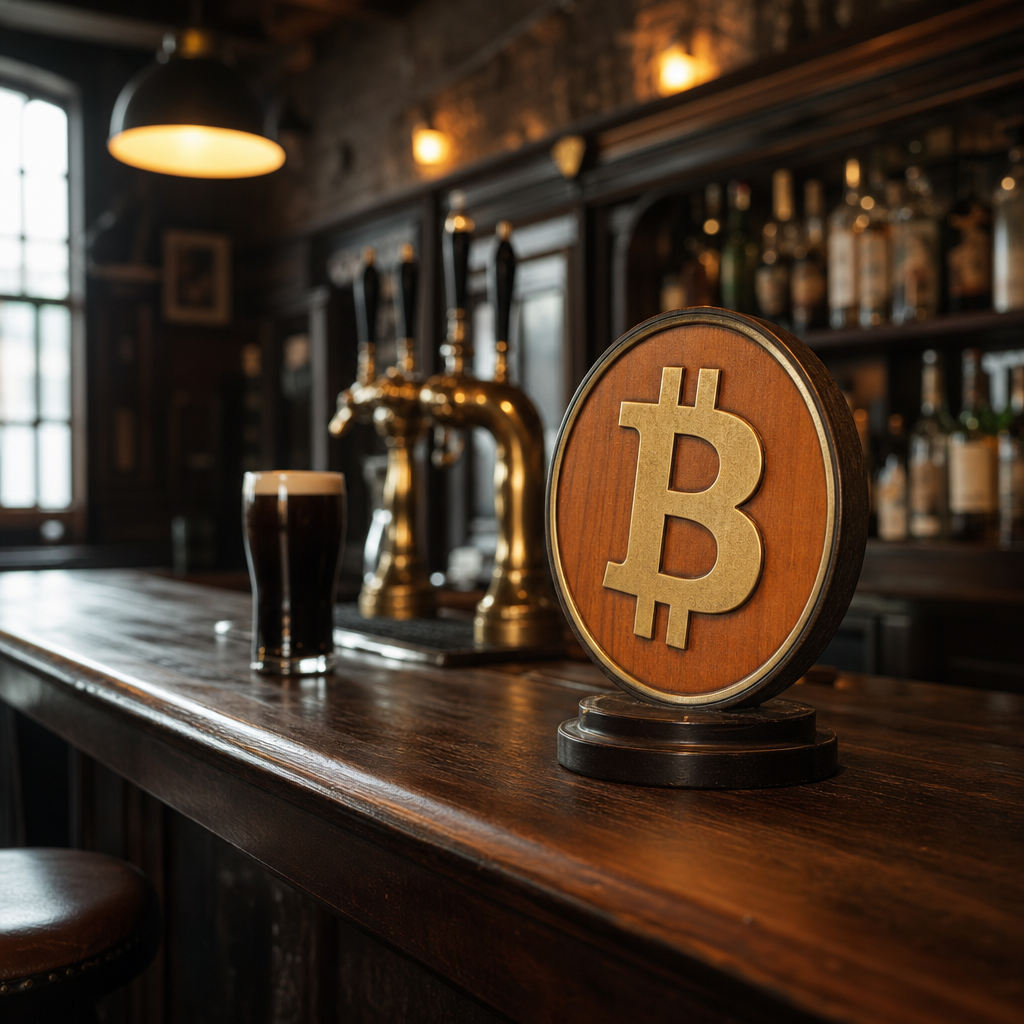
    Somewhere around 2014, wedged between the fruit machine and the gents in a London pub, there was a beige box about the size of a photocopier that would give you Bitcoin in exchange for cash. No account. No forms. No bloke in a suit asking about your risk appetite. Just a tenner, a phone, and a QR code that represented – depending on when you cashed it in – either a pint's worth of nothing or a mortgage deposit.

    This actually happened. Bitcoin ATMs appeared in a wave across London pubs, chicken shops, and convenience stores from roughly 2013 onwards. The choice of venue was not accidental.

    Pub interior with bitcoin signage and bar — detail

    Why a Pub Made Perfect Sense

    Pubs were already in the business of bending financial services into casual surroundings. They sold lottery tickets, took football coupons, ran pools. The logic was always the same: cash-heavy footfall, a relaxed atmosphere, and customers who weren't going to demand a prospectus before handing over a fiver.

    The licensing grey area helped too. A Bitcoin ATM wasn't a bank, wasn't a bookmaker, and wasn't regulated as either. You could bolt one to a wall the way you'd install a photo booth, and nobody was entirely sure whose job it was to stop you.

    The machines themselves were brilliantly low-tech for something so futuristic. You fed in cash, the machine connected to an exchange, and it printed or displayed a QR code representing your fraction of a Bitcoin. Some early ones didn't even need ID for small amounts. Walk in thirsty, walk out a speculative investor.

    The Actual Problem They Were Solving

    The reason those machines existed at all was that getting hold of cryptocurrency in its early years was genuinely baffling. You could mine it yourself if you had the hardware and the electricity bill of a small factory. You could find someone online willing to swap it for cash – which required a level of trust in strangers that most sensible people couldn't muster. Or you could try an exchange, which in 2013 meant wiring money to a website that might not exist next Tuesday.

    The pub ATM was an attempt to solve what the industry calls the on-ramp problem: how do ordinary people actually get from pounds in a wallet to digital currency on a phone? The answer, for a brief strange window, was through a pub in Hackney, with a minimum transaction of £5.

    From the Fruit Machine to the App Store

    Those machines mostly vanished after the Financial Conduct Authority started paying closer attention and the major exchanges began making their apps genuinely simple to use. Buying crypto today looks nothing like a sticky-floored transaction next to the cigarette machine. Download an app, verify your identity, buy with a bank transfer or debit card in about four minutes. Platforms like Coinbase, Kraken, and the UK's own Luno have made the on-ramp almost boring.

    Which is, in a way, the whole story of how a technology moves from the fringes to the mainstream. It starts in a pub. It ends up on your phone, sitting between your banking app and your supermarket loyalty card, looking as if it was always supposed to be there.

    Questions this raises

    • Are Bitcoin ATMs still legal in the UK?
    • Why did the FCA shut the crypto machines down?
    • How much did those machines charge in fees?
    • What happened to people who lost their wallet keys?