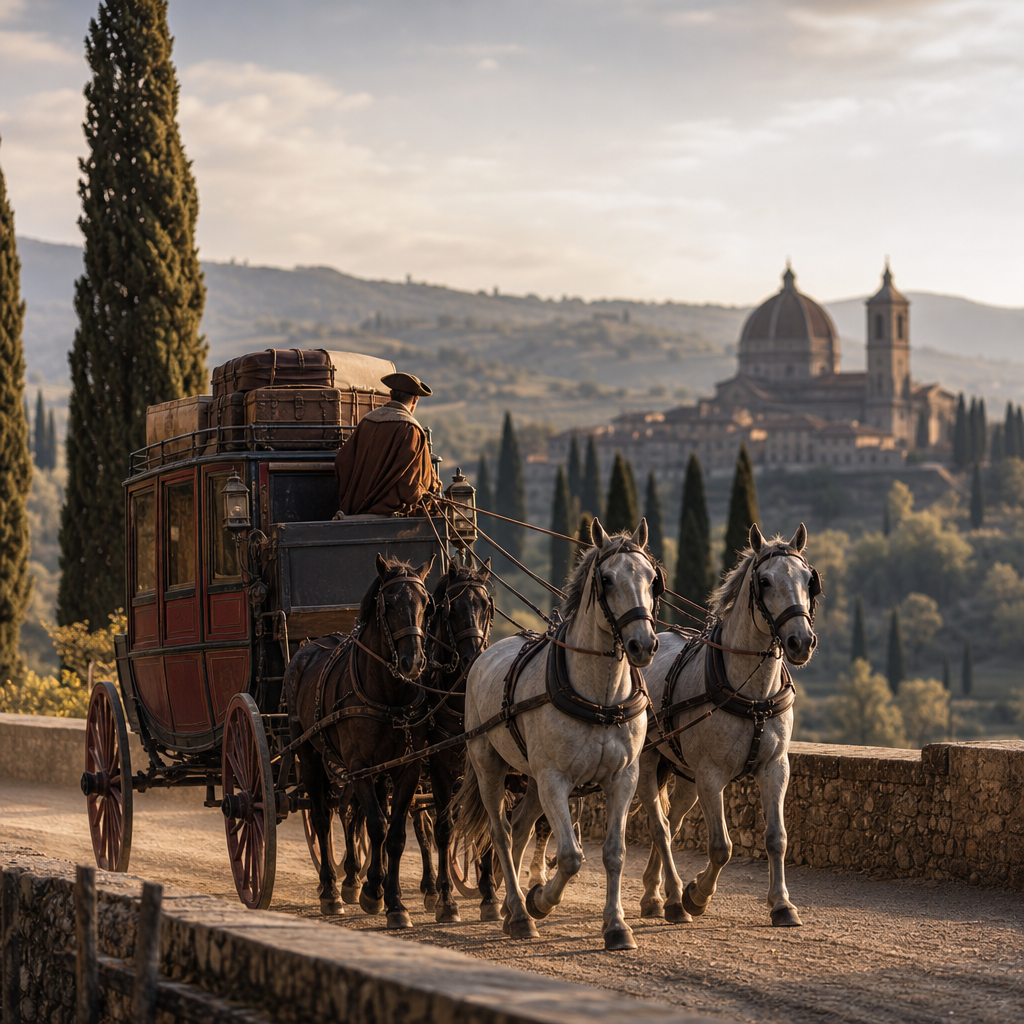
Sometime around 1720, a young English lord climbed into a hired carriage in Calais and set off for Rome. He had no hotel booking, no guidebook app, no reviews to scroll through at midnight. What he had instead was a folded letter in his coat pocket, addressed to a man he'd never met, written by a man that man trusted. That letter was, essentially, his entire holiday infrastructure.
The Grand Tour – the aristocratic rite of passage that sent young Englishmen looping through France, Italy and sometimes further afield between roughly the 1660s and the 1790s – ran on machinery that was surprisingly sophisticated for its era. Understanding how it actually worked, week to week, carriage to carriage, explains almost everything about what luxury travel still means today.
The Vetturino and the Art of Getting There Comfortably
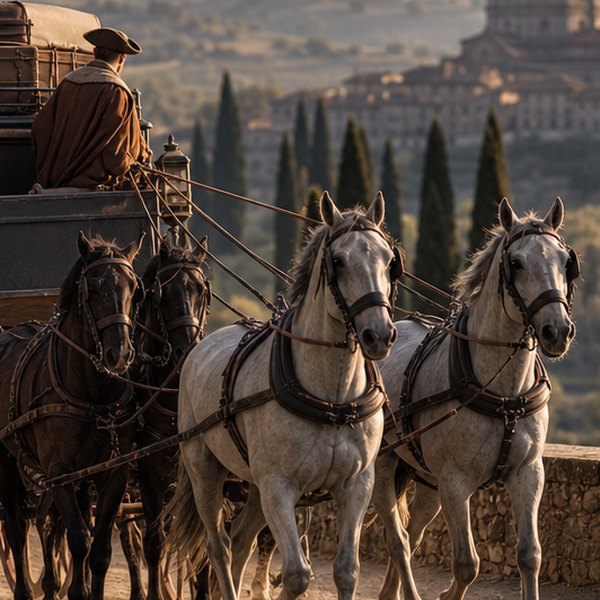
You didn't just hire a coach. You hired a vetturino – a carriage contractor who bundled the whole overland journey into one negotiated fee. He arranged the horses, managed the overnight stops, knew which inns along the Via Francigena would actually feed you something edible and which would try to charge you three times the going rate for a mattress you'd share with the mice. In effect, he was a personal travel manager running on reputation alone. Use a bad one and word got around. Use a good one and the next Englishman heading south would ask for his name.
The Ciceroni and the Doors That Opened
Once you arrived somewhere worth arriving at – Florence, Rome, Naples – you needed a cicerone. These were professional guides, often scholars or fallen gentry themselves, who knew not just where the paintings were but who owned them. Private collections were private. The Palazzo whatever didn't open to the street. But the right cicerone knew the right steward, had stood in enough antechambers to be recognised, and could get you into rooms that simply didn't exist for anyone who turned up without him.
That feeling you get at a modern luxury resort when someone seems to be expecting you, when the reservation is already upgraded and the table appears from nowhere – that's the cicerone's direct descendant. The personal concierge, the destination fixer, the "leave it with me" person on the end of a WhatsApp message: same job, different century.
Who wrote the letters of introduction travellers carried?
The deepest layer of the system was the letter of introduction. Before you left London, you collected them – from your father's friends, your college tutor, your family's banker. Each letter vouched for you to someone in the next city, who might then write you onward to someone in the city after that. It was a reputation network, passed hand to hand in wax-sealed envelopes. For a sense of how completely one small clerical error could bring the whole careful chain crashing down, The Holiday That Died on a Typo shows that this particular anxiety is a very old one indeed.
The Electrified Version
What we now sell as luxury travel – the curated experience, the sense that doors open for you that stay shut for everyone else, the person who knows the person – is not a modern invention. It is the Grand Tour with electricity and a cancellation policy. The vetturino became the transfer service that turns up. The cicerone became the in-destination expert your tour operator quietly books in advance. And the letter of introduction became your membership number, your hotel loyalty tier, your travel agent's relationship with the property.
None of that is a criticism. It still works for the same reason it worked in 1720: the machinery runs on trust, and trust takes time to build. Someone has already done the groundwork. You're just the latest person to benefit from it.
Questions this raises
- How much did a Grand Tour cost at the time?
- Why did the Grand Tour end in the 1790s?
- Did women ever go on the Grand Tour?