Author: Travis Perkins

  • What the Rep Knew (And Who Taught Her)

    What the Rep Knew (And Who Taught Her)

    There is a type of knowledge that lives entirely in people rather than books. The recipe a grandmother never wrote down. The way a mechanic hears a problem before he's lifted the bonnet. For about twenty years, from the early 1970s to somewhere around the mid-1990s, the entire working knowledge of the British package holiday industry existed in exactly this form – passed mouth to ear, on a sunbed, over a warm Mythos, between a rep who was leaving and a rep who was arriving.

    Female sales representative in training session — detail

    Do package holidays still hold a welcome meeting?

    The welcome meeting is still there if you book a package today. You shuffle into a hotel conference room on your first morning, slightly jet-lagged, and a cheerful person in a branded polo shirt talks you through transfer times and excursion options. It feels like a ritual because it is one. It was invented by early reps in the late 1960s almost by accident – a way to head off forty identical questions before they were asked – and then passed down through that informal chain for a decade before any tour operator thought to write it into a training manual.

    What the departing rep taught the arriving one was specific and strange. Always put the excursion pitch in the middle, never at the end when people are restless. Sit the complainers near the front where they feel acknowledged. Learn the name of the hotel manager's wife. Know which taxi driver is reliable at 2am, and which one will be forty minutes late and apologetic.

    Thomson Builds a School, Sort Of

    By the mid-1980s, Thomson and Airtours were shipping tens of thousands of British holidaymakers a year to Majorca, Corfu, the Algarve. The knowledge chain was straining. A rep who went home in October might be replaced by someone who'd learned from a rep who'd learned from someone who misremembered the original. Like a long game of whispers played out across the Mediterranean.

    So both operators – and several smaller ones – briefly ran what you might charitably call rep schools. A week or two of classroom sessions covering complaint handling, local medical contacts, the legal bits. But the instructors were, almost without exception, former reps themselves. They didn't so much codify the oral tradition as perform it. The institutional knowledge became institutional in name only. The real curriculum was still the two days a veteran spent walking a new recruit around the resort, pointing at things.

    For budget package holidays today, see sites like https://www.icelolly.com/

    Why Your 2am Transfer Still Exists

    Here is the strange inheritance of all that informal knowledge: the budget package holiday is structurally the shape it is because of what those rep curricula hardwired in. The transfers, the welcome meeting, the excursion upsell, the rep who appears at the pool on Tuesday – none of it was designed from above by a product manager. It evolved from the bottom, from hundreds of individual reps solving the same problems independently, comparing notes, and passing solutions on.

    The 2am airport transfer exists because an early rep discovered that a cheerful send-off at an ungodly hour dramatically reduced post-holiday complaints. Someone taught someone else. And somewhere in the chain, it became simply how things were done – long after anyone could remember why.

    Read next

    Questions this raises

    • What did a resort rep actually do all day?
    • Why did tour operators cut rep numbers so sharply?
    • How are holiday problems handled now there is no rep?

  • The Holiday That Got Its Money Back

    The Holiday That Got Its Money Back

    In 1971, an ordinary British holidaymaker sat down in a small claims court and asked a very reasonable question: if the holiday I was sold isn't the holiday I got, who is actually responsible?

    Holiday gift with refund receipt attached — detail

    It sounds like the sort of thing you'd mutter furiously on a sun-scorched balcony overlooking a building site. But this particular person followed it all the way to a judge. And the ripples from that case eventually settled into the Package Travel Regulations – the legal framework that quietly governs almost every cheap holiday sold in the UK today.

    Here's what that actually means for you when you're scrolling through last-minute deals at midnight.

    What do the Package Travel Regulations actually cover?

    Before the regulations existed, a "package holiday" was just a vague bundle. A flight, a bed, possibly a transfer – sold together at a price that felt like a bargain. But if the flight was fine and the hotel was a disaster? The tour operator could simply shrug and point at the hotel. The hotel could point at the local agent. The local agent had already left for the evening.

    The court case changed that. What emerged, eventually codified in the 1992 Package Travel Regulations (updated in 2018), was a legal definition of what a "package" is: two or more travel components – transport, accommodation, car hire, or certain tourist services – sold together for an inclusive price, for a trip lasting more than 24 hours. That combination isn't just a marketing convenience. It's a legally enforceable promise, with one entity responsible for the whole thing.

    The interesting bit is how arbitrary that line is, and how much rides on it. Add a hotel to a flight and you're protected. Book them separately, ten minutes apart on two different websites, and you might not be. The word "budget" looks like it describes a price. It's describing a legal category – whether you're inside it or outside it depends on how the sale was structured, not how little you paid.

    The Invention of a Promise

    There's something almost alchemical about what a legal definition does. It takes a loose arrangement of flights and beds and turns it into a single, enforceable thing with a value attached. The link between The Oldest New Money in the World and this story is closer than it sounds. Early currency did something remarkably similar, transforming an agreement between strangers into an object with fixed, recognised worth. The Package Travel Regulations did the same thing for holidays. They took what was previously a handshake and turned it into something a court could weigh.

    What That Means When You're Booking

    The practical upshot: before you pay, check whether what you're buying is a package in the legal sense. Look for ATOL protection on flights and packages sold by UK-based operators. That certificate isn't just paperwork – it's the direct descendant of that 1971 complaint. If a company collapses after you've paid and before you've flown, ATOL means you get your money back or a flight home. Without it, you're outside the line.

    The cheapest holiday you can find isn't always the least protected one. But it might be, depending entirely on how the operator has structured the sale. Worth knowing before you hand over your card details and go back to watching the weather forecast.

    Questions this raises

    • Am I protected if I book flights and hotel separately?
    • How do I claim for a holiday that was misdescribed?
    • Does ATOL protect the same things as the package rules?
  • The Pressure Valve That Doesn’t Actually Let the Pressure Out

    The Pressure Valve That Doesn’t Actually Let the Pressure Out

    There's a pattern that plays out every time the economy turns nasty. Redundancies rise, energy bills climb, mortgages tighten. Within a few months the advice columns fill up with the same cheerful suggestion: start a side hustle. Sell something on Etsy. Drive for Uber a few evenings a week. Rent a spare room on Airbnb. The framing is always the same – you spotted an opportunity, you took control, you made it work.

    Closed pressure valve retaining internal pressure — detail

    The thing nobody mentions is that approximately half a million other people read the same advice column.

    Why do platform earnings fall when sellers pile in?

    This is how the mechanism actually works. A recession or a cost-of-living crunch arrives and a wave of new sellers pours onto every platform simultaneously – Etsy, Deliveroo, eBay, Amazon Marketplace, Vinted, the lot. Supply goes through the roof. Demand, meanwhile, is doing the opposite. The same economic pressure that pushed everyone into selling is also squeezing what buyers have to spend.

    The result is predictable, if you've ever done basic economics: earnings per person collapse. Not just a bit. Dramatically. Deliveroo and Uber documented exactly this during the pandemic boom-to-bust cycle – more drivers chasing fewer orders means each driver earns less per hour, often well below what the headline "up to £X per week" ever suggested. Etsy sellers who joined in 2020 competed against roughly twice as many shops as those who joined in 2018.

    The Platform Has Already Done the Maths

    Here's the thing the platforms understand that the new seller doesn't: it doesn't matter much to them how many sellers there are. Etsy still takes its listing fee and its transaction percentage whether your handmade candle sells for £14 or sits in a shop nobody visits. Uber takes its cut whether a driver earns £8 an hour or £14. The platform's revenue is distributed across the whole pool. Your income is not.

    The marketing that keeps the pool topped up is consequently very good at communicating upside and very quiet about saturation. You see the story of the ceramicist who quit her job. You do not see the six thousand ceramicists who joined the same week she did and never covered their material costs.

    For a completely different example of marketing noise versus unmediated honesty, the gap between the two gets illustrated rather vividly at https://savingourplanet.co.uk/the-only-honest-review-of-a-luxury-holiday-comes-from-someone-who-can-t-read/ – the principle transfers surprisingly well.

    Which side hustles still work once everyone tries them?

    This doesn't mean side hustles are worthless. Timing and specificity matter more than the advice columns let on. The side hustles that hold their value in a downturn tend to be the ones with a genuine barrier to entry – a specific skill, a qualification, a piece of kit most people don't own, or a niche small enough that it doesn't attract a flood. Bookkeeping. Tutoring in shortage subjects. Specialist repairs. Not because those are more virtuous, but because they're harder to replicate at scale, so the supply surge doesn't swamp them in the same way.

    The pressure valve metaphor is the honest one. When times get hard, side hustle platforms do release some pressure for some people – usually the ones who got there early, or brought something genuinely scarce. For everyone else, the pressure doesn't disappear. It just spreads itself more thinly across a much bigger crowd.

    Read next

    Questions this raises

    • Do side hustles actually pay during a recession?
    • How much can you earn before declaring a side hustle?
  • The Share That Was Supposed to End

    The Share That Was Supposed to End

    For the first hundred years or so of organised trade finance, a share wasn't really what we'd recognise today. You didn't buy into a company and then own a sliver of it forever, watching a number tick up and down on a screen. You bought into a voyage instead. The merchants of Tudor England would pool their money, load a ship, send it off to Muscovy or the Spice Islands. And then – when it came back, if it came back – they'd divide everything up and go home. Done. Finished. You got your share of the proceeds, the whole enterprise wound itself up, and that was that.

    Broken sharing agreement between two people — detail

    That model had a name: the terminable joint stock. And it made a kind of honest, human sense.

    The Money Had an End Date

    The beauty of the terminable venture was that the exit was built in from the start. You weren't signing up to own a floating number for the next thirty years, hoping someone else would eventually want to buy it off you. You were financing a specific thing – a ship to Persia, a fur-trading expedition, a venture to find a north-east passage – and once that thing concluded, the accounts were settled and the capital returned. Shareholders didn't need a stock market, because they didn't need to sell their stake to anyone. They just waited for the journey to end.

    Some of the Scottish deed of co-partnery arrangements worked the same way: a defined partnership for a defined purpose, with a defined wind-up. The whole structure assumed something pretty basic – that money lent to a venture should, at some point, come back.

    How did the East India Company change share ownership?

    The East India Company started out running terminable voyages in exactly this way. But somewhere in the early 1600s, the directors worked something out. If they kept rolling the capital over into the next venture rather than dissolving it – if they made the arrangement permanent rather than voyage-by-voyage – they'd never actually have to give the money back. Investors who wanted out would have to find someone else to sell to. And so the permanent, tradeable share was born: not because it was better for investors, but because it was enormously more convenient for the people running the company.

    For more reading on the strange economics behind how we spend and invest, visit The Only Honest Review of a Luxury Holiday Comes From Someone Who Can't Read: https://savingourplanet.co.uk/the-only-honest-review-of-a-luxury-holiday-comes-from-someone-who-can-t-read/

    What We Quietly Lost

    Once shares became permanent and tradeable, their price stopped being about the venture and started being about what the next buyer might pay. The value drifted free from the underlying thing. That's still more or less where we are now: a share price is, in large part, a collective guess about collective guesses. Which is interesting and occasionally thrilling, but it's a long way from a group of merchants watching a ship come into harbour and splitting the proceeds on the dock.

    The terminable model didn't survive because permanent capital was more useful to the people who held it. It survives only if you squint – if you look at things like fixed-term investment trusts, or the private equity fund structure, where money goes in, does something specific, and eventually comes out again. A faint echo of the Tudor merchant standing at the dockside, waiting for his ship.

    Read next

    Questions this raises

    • When did shares stop being wound up after each voyage?
    • Why do shares have no end date now?
    • What happens to shareholders when a company is wound up?
  • The Free Education That Wasn’t Quite Free

    The Free Education That Wasn’t Quite Free

    Before 1998, going to university in Britain cost you nothing. No tuition fees, no loans, no debt. It sounds almost utopian now, like a golden era someone quietly dismantled while you weren't watching. But sit with it for a moment, because "free" was doing an awful lot of work in that sentence.

    Students in classroom with tuition bills — detail

    The system before fees ran on grants. If you got a place, the government gave you money to live on – a maintenance grant that covered your rent, your food, your bus fare and presumably a few pints. Except it didn't, quite. The grant was means-tested against your parents' income. If they earned above a certain threshold your grant was reduced, on the assumption that they would make up the difference. The state called it a parental contribution. It said so in the paperwork, plainly.

    Who paid for university before tuition fees existed?

    Here is the thing the paperwork didn't say: that parental contribution only worked if your family actually paid it. For a lot of middle-class households it did – smoothly, without drama, treated as an ordinary expense like a school trip or a car insurance bill. Mum and dad topped you up. The system hummed along.

    But the maintenance grant was calculated against parental income, not parental generosity. A factory supervisor or a senior nurse could earn enough to see their child's grant cut substantially, without having the faintest tradition of financially supporting an adult child through three years of studying English Literature in another city. The money existed on paper. The transfer didn't always follow.

    So a working-class student from a family just above the threshold could arrive at university with a smaller grant than a poorer classmate and a parental contribution that never materialised, because the system had imagined a family that didn't map onto theirs.

    What the Debt Made Visible

    When tuition fees arrived in 1998 and the loan system grew up around them, everyone focused on the debt. Rightly – it was new, it was visible, it felt like a shift. But the loans did something quietly useful too. They stopped pretending that a parental contribution was a given. The money you needed to be there arrived in your account regardless of what your parents thought about the whole enterprise, or what they earned, or whether they were the sort of people who subsidised adult children. For the first time, the system acknowledged that you were an individual in it, not a dependent attached to a family income.

    That is not a defence of fees. It is just an observation that the "free" era wasn't the level playing field it tends to get remembered as. For a genuinely odd take on where financial systems hide their assumptions, The Pub That Sold You Bitcoin at https://savingourplanet.co.uk/the-pub-that-sold-you-bitcoin/ does something similar with a completely different subject.

    The Assumption That Was Always There

    The strangest part? None of this was secret. The parental contribution was printed on the form. Everyone knew it existed. But because the word "free" applied to tuition, the whole arrangement got remembered as free, full stop – which is how myths about golden eras tend to work. One true fact doing the work of several complicated ones.

    The real history of student finance in Britain isn't a story about a good system replaced by a bad one. It's a story about a hidden architecture becoming a visible one, which is a much less satisfying story but probably the more honest version.

    Read next

    Questions this raises

    • How much was the maintenance grant actually worth?
    • Why were student grants replaced with loans?
    • Did free tuition help poorer students get places?
  • The Town Inside the Ticker

    The Town Inside the Ticker

    Somewhere in the Midlands right now, a warehouse supervisor is deciding whether to pick up an extra shift. In a retail park outside Swindon, a store manager is looking at Saturday's footfall figures and wondering whether to cut two part-time hours from next week's rota. In a new-build estate in Doncaster, a couple have just decided that, actually, they'll hold off on the new sofa. None of these people are thinking about stock markets. But the stock market is, in a funny way, thinking about them.

    A share price looks like a single, clean number. But it is really a kind of averaged-out town, assembled in real time from thousands of little economic signals happening all over the country. And the person sitting inside it – probably without knowing – is often the ordinary worker going about their ordinary day.

    Miniature town inside giant ticker tape — detail

    The Overnight Worker Who's Already in the Data

    While you were asleep last night, someone was sewing. Not down the road, not in a local workshop you could visit, but in a vast logistics operation running night shifts to keep a retailer's supply chain moving. That worker's wage, their contracted hours, the likelihood they'll buy a coffee on the way home – all of it feeds upward. Wage bills affect company margins, margins affect profits, and profits affect what investors think a share is worth. For more on what that night shift actually looks like in practice, see https://savingourplanet.co.uk/while-you-were-asleep-last-night-someone-was-sewing-not-down-the-road-not-in/

    The point is this: the share price of a major retailer or logistics company is not set in a vacuum by people in suits on trading floors. It is fed by the lived economic reality of the people who work for it, near it, and spend money at it – which is why it shifts.

    How does everyday spending end up in a share price?

    Here is the odd bit. A share price is national, sometimes global, and yet the inputs are intensely local. Employment rates in the North East, consumer confidence in the commuter belt, how quickly new builds are selling in Bristol – all of this trickles into the health of the companies that depend on those places. A supermarket group's share price quietly reflects whether people in Aberdeen feel flush enough to buy branded goods this week, or whether they've switched to own-label. It reflects the Coventry factory that's just gone onto a three-day week, because those workers will spend differently.

    The market aggregates all of it into a single blinking number, which is why analysts obsess over regional employment data and retail footfall reports that most people barely notice.

    What the Price Is Saying

    So when a share price moves, it's worth asking: moved because of what? Often it's because some real, ground-level thing shifted. A company lowered its profit forecast because discretionary spending fell in the North West, or a housebuilder's shares dipped because planning permissions in the South East slowed. The abstraction of "the markets" tends to make people think it's all happening somewhere else, in a financial world separate from real life. It isn't. It's a translation of real life, with all the messiness that involves, compressed into a number that updates by the second.

    The warehouse supervisor choosing whether to take that extra shift? They're in there too.

    Questions this raises

    • Why do markets move before the economy does?
    • Is the FTSE a fair guide to the UK economy?
    • What data do analysts use to forecast retail earnings?
  • The Readout of the Room

    The Readout of the Room

    You think you're tipping for the service. The attentive refills, the smile when you changed your order, the way she remembered you'd asked for no coriander. That's what's going through your head as you tap the card machine and nudge the percentage up a notch. Feels like a considered, personal judgement. It isn't, really. It's the room talking.

    The hospitality industry worked this out a long time ago. And the research behind it is genuinely strange reading.

    Group of people observing discussion in room — detail

    Does slow background music really increase tips?

    Tempo is the most documented one. Slow background music – not soft, specifically slow – produces measurably higher tips than fast music. Even when customers report enjoying the faster tracks more. The working theory is that slow music stretches the subjective feeling of time at the table. You linger a little longer in your own sense of satisfaction, and that slight warm drift turns out to be worth a percentage point or two on average.

    The same principle applies to volume. Loud rooms push people toward quicker, slightly more impulsive decisions. You tap and go. Quieter rooms, or rooms where the acoustics have been softened with upholstery and carpet, produce more deliberate ones – and deliberate, in this context, tends to mean more generous.

    The Thermostat Is Not Neutral

    Slightly warmer rooms produce higher tips than cool ones. Not hot – hot makes people uncomfortable and they leave faster. But a degree or two above what you might call neutral produces a faint physical ease, the kind your body reads as contentment, and that contentment gets attributed to the meal, the service, the whole evening. Your nervous system doesn't really distinguish between "warm because the room is lovely" and "warm because someone turned the dial up."

    Lighting intensity does something similar. Harsh, bright light sharpens critical thinking – you notice more, including the things that weren't quite right. Dim, warm light softens the whole experience into a general impression of pleasantness. Restaurants have known this for so long that it's just called atmosphere now, which is a very good name for something doing quite a lot of invisible work.

    For a broader look at how forces you can't see shape decisions you think are yours, The Seam That Isn't There.

    What the Tip Is Actually Measuring

    None of this is to say that service doesn't matter – it does, on the extremes. Genuinely bad service still gets nothing. Genuinely exceptional service gets recognised. But in the wide middle ground where most meals and most tips actually live, the variance isn't really about the waiter. It's about whether the room was 19 degrees or 21, whether the speakers were playing something at 60 beats per minute or 90, whether the lights made the walls look honey-coloured or slightly institutional.

    You leave, feeling good about the evening, feeling like you made a fair and considered call. The thermostat got there first.

    Questions this raises

    • How much do British diners typically tip?
    • Do card machine prompts push tips higher?
    • Where does a restaurant service charge actually go?
  • The Tiny Technical Manual Sewn Into Your Clothes

    The Tiny Technical Manual Sewn Into Your Clothes

    Every piece of clothing you own is carrying a small document written in a language you were never taught. It's stitched into the side seam or the back neck, it scratches against your skin on warm days, and you have almost certainly ignored it your whole life. Which is a shame, because it's actually trying to tell you something quite specific.

    Those symbols were standardised by an international body called GINETEX – the French acronym, naturally, because of course it is – and in the UK they carry legal weight. Manufacturers are required to include them. And yet nobody hands you the key.

    Small instruction label sewn into fabric — detail

    The Tub (And What "Gentle" Really Means)

    The washing tub is the one most people squint at. A plain tub means machine wash. A number inside tells you the maximum water temperature in Celsius – not a rough guide, but actual agreed thresholds set by textile chemists. Thirty degrees, forty, sixty. A single line underneath the tub means a gentle cycle. Two lines means something even more reduced in agitation. No lines? Go for it.

    The hand in the tub is the one people tend to misread as "wash this softly and vaguely." It doesn't mean that. It means the garment cannot tolerate mechanical agitation at all – the drum rotating, the clothes tumbling against each other. That specific physical action is what damages the fibre, not the water, not the temperature. Handwashing keeps the fabric moving through water rather than against itself. There's a difference, and the symbol is trying to tell you exactly that.

    The Triangle That Isn't About Bleach (Except When It Is)

    A plain triangle means you can use any bleach. A triangle with two diagonal lines through it means chlorine-based bleach only – non-chlorine alternatives are fine. A completely crossed-out triangle means no bleach of any kind.

    The reason the chlorine one matters chemically is brutal. Chlorine bleach (sodium hypochlorite) doesn't just lift colour: it breaks the peptide bonds in protein fibres like wool and silk at a molecular level, essentially dissolving the structure of the fibre over time rather than simply staining or fading it. That's why your grandmother's woolly jumper didn't survive the "just a small splash" incident.

    Why do the dots inside the iron symbol matter?

    One dot: 110°C, safe for synthetic fibres like acrylic and nylon. Two dots: 150°C, for wool, polyester blends. Three dots: 200°C, for cotton and linen. These aren't conservative suggestions – they're the temperatures at which different fibre types begin to deform or scorch. Synthetics will actually melt at cotton settings, which produces a shiny, slightly tragic patch that no amount of re-washing will fix.

    The crossed-out iron is simple enough: the fibre cannot take direct dry heat, full stop.

    What does the circle symbol on a care label mean?

    A circle means dry clean. A letter inside it (P, F, W) tells the dry cleaner which solvent is safe to use on that specific fabric. You don't need to memorise those – that one really is for the professionals.

    But the rest of it? That tiny scratchy label is a surprisingly complete set of instructions, written in good faith by people who knew exactly what they were talking about. Worth a second glance next time it's irritating you.

    Questions this raises

    • Are care labels legally required in the UK?
    • Can you wash something hotter than the label says?
  • The Suite Is Never Yours

    The Suite Is Never Yours

    Imagine you've paid £4,000 a night for a suite overlooking the Amalfi Coast. You have a butler. There are flowers arranged specifically for you. Your name is on a little embossed card on the door. And yet, in the eyes of English law, you own absolutely nothing. You are a licensee. A guest. Someone who has paid for permission to be somewhere temporarily, with remarkably few rights attached.

    This is the legal reality hiding underneath every luxury holiday booking, and once you see it, it's genuinely hard to unsee.

    Luxury hotel suite interior showing opulent furnishings — detail

    Can a hotel remove a guest from their room?

    English property law draws a sharp line between a tenancy and a licence. A tenant has rights – they can exclude the landlord, stay put within the terms of the agreement, and the law throws up considerable barriers to removing them. A licensee gets none of that. A licence is simply permission. Permission can be withdrawn. A hotel guest, no matter how much they've paid, is a licensee – whether the room costs £49 at a motorway Travelodge or £4,000 at a five-star property on the Italian coast. The law doesn't care about the thread count.

    What this means practically is straightforward: a hotel can – within certain contractual limits – move you to a different room, deny you access to amenities, or in serious circumstances, ask you to leave. The property never stops being theirs. The suite with your name on the card is as legally "yours" as a seat on a train.

    The Feeling They're Selling You

    The reason this matters for luxury travel specifically is that the entire marketing apparatus of high-end holidays sells the opposite feeling. The personalised welcome letter, the suite that's been "prepared for you", the butler who "looks after you throughout your stay" – all of this is carefully designed to create a sense of ownership, of arrival, of having somewhere that is, at least for a week, genuinely yours. The language of luxury hospitality leans hard on words like "your villa", "your table", "your itinerary". It is a very convincing theatre of possession.

    For a thoughtful look at how travel documents and bookings can go wrong in ways you'd never anticipate, this piece on The Holiday That Died on a Typo is well worth five minutes.

    What rights does a hotel guest actually have?

    When you book even the most extravagant holiday imaginable, what you've actually purchased is a contractual right to receive services – accommodation, meals, transfers, whatever was specified. The suite is a delivery mechanism. If it isn't delivered as promised, you have a claim in contract. But that's a very different thing from having any claim to the room itself.

    None of this makes a great holiday any less wonderful, of course. The flowers are still real. The view is still the view. It's just that the sense of the place being "yours" – which luxury travel sells so expertly – is always, legally speaking, borrowed.

    Questions this raises

    • Is a hotel liable for items stolen from a room?
    • When does a long hotel stay become a tenancy?
  • What The Colours Are Actually Telling You

    What The Colours Are Actually Telling You

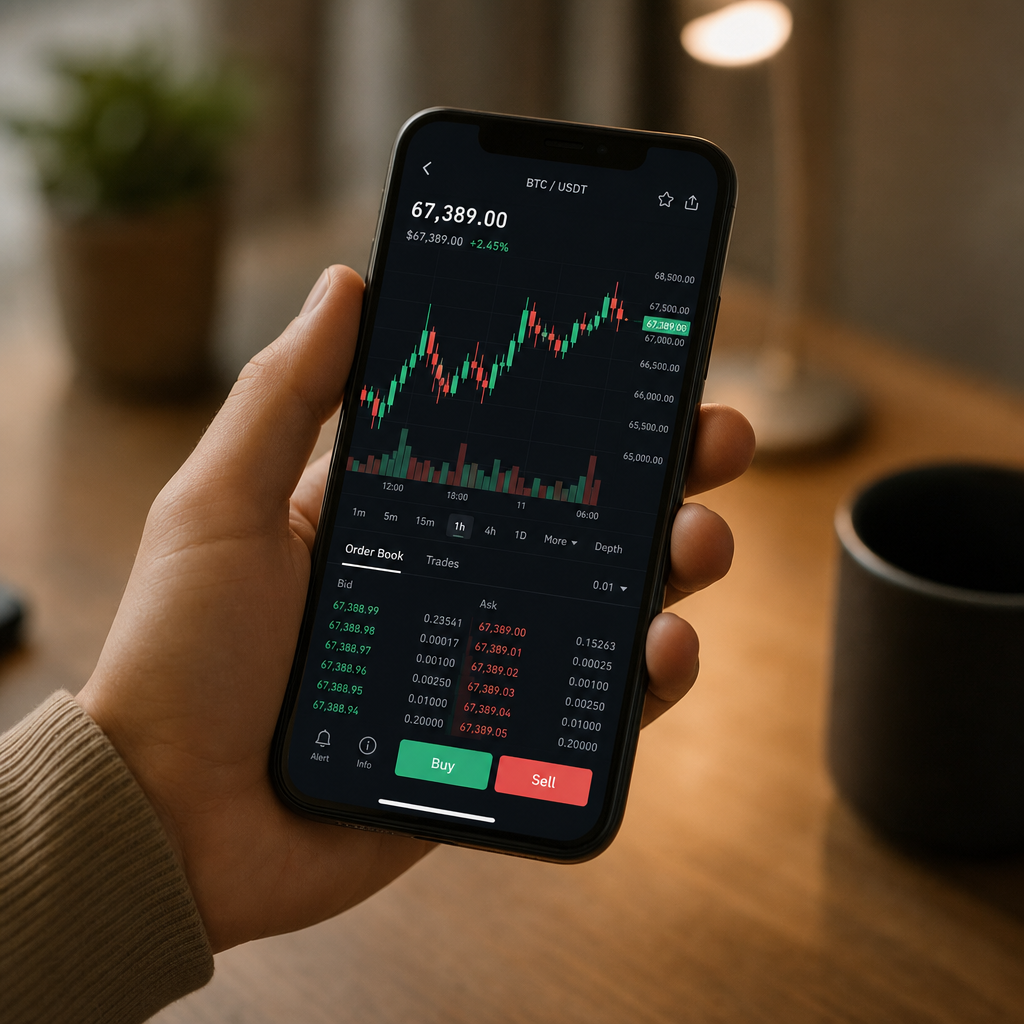
    Open a crypto trading app for the first time and you'll get the same wall of information: jagged line graphs, blinking numbers, little candle-shaped bars stacked left to right across a chart, everything striped in two colours. One means up. One means down. You are apparently expected to know which is which.

    Roughly one in twelve men in the UK has red-green colour blindness. For them, that entire visual system – the thing the whole interface is built on – collapses into a single muddy sameness. The "Bitcoin is surging" signal and the "Bitcoin is tanking" signal look identical. Which is a problem. But also, accidentally, a useful one. Because asking why the interface was built this colour way at all turns out to explain what it's actually trying to say.

    Colorful palette representing different meanings — detail

    Why were red and green chosen for markets at all?

    Crypto didn't invent this. It borrowed the whole visual grammar wholesale from stock trading platforms, which borrowed it from commodity trading floors, which had their own physical, shouted, chaotic reasons for colour-coding things fast. On a trading floor in the 1980s you needed to know at a glance whether a price was above or below its opening level. Green for above (good, growing, go). Red for below (danger, falling, stop). The metaphors go back centuries – red ink in the ledger meant debt, green meant profit. Crypto just inherited all of that history and dropped it onto your phone screen, no explanation included.

    What A Candlestick Is Saying

    The candlestick chart – those rectangular bars that look a bit like a pub quiz graph drawn by someone with very steady hands – is the thing most new buyers ignore and probably shouldn't. Each bar represents one time period: an hour, a day, whatever you've set. The body of the bar shows the opening price and the closing price for that period, while the thin lines poking out of the top and bottom (called wicks, which is a genuinely lovely piece of terminology) show the highest and lowest price the asset hit during that same window.

    So the bar isn't just "up" or "down". It's a small compressed story. It opened here, swung as high as this, dipped as low as that, and settled here by the end. Colour just tells you whether it closed higher or lower than it opened. Take the colour away entirely and the shape still contains all of that information – the wick lengths, the body position, the relative size compared to the bars around it.

    For crypto specifically, wide wicks on both ends of a short body mean a lot of violent price movement that ended up roughly where it started. Traders have a word for this: indecision. Which, is a fair description of most of crypto's recent years.

    The Numbers The Chart Is Built On

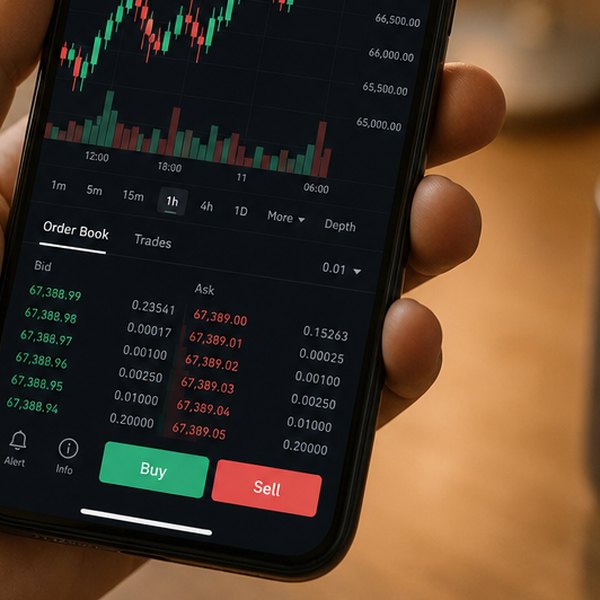
    Below or beside most charts you'll find a volume bar – usually a quieter, smaller set of bars running along the bottom. Volume is the total amount of that asset that changed hands during each period. A big price move on low volume is considered less reliable than the same move on high volume, because fewer people were involved in making it happen. A price spike with no volume behind it tends not to stick around.

    The percentage figure that usually sits next to the current price – "+4.2%" or "-7.8%" – is almost always a 24-hour change. Not from when you bought it. Not from its all-time high. Just from this time yesterday.

    Can you change the colours in a trading app?

    The reason all of this matters is that crypto platforms largely haven't updated their accessibility since the 2010s. Most still default to a red-green scheme with no alternative mode, which is a fairly strange choice given how many people are using them on a phone. Some newer platforms have begun offering high-contrast or colour-blind-friendly display settings; check the accessibility options before you assume the interface just looks that way for everyone.

    But here's the genuinely useful thing about looking at these charts through the lens of "what if the colour meant nothing": you stop leaning on the colour and start reading the actual shape. The wicks. The volume. The time window you've selected. Those don't change with the palette. They're the information. The colour is just the highlight pen.

    Questions this raises

    • How do colour-blind traders read candlestick charts?
    • Do UK accessibility rules apply to trading apps?