
For the first hundred years or so of organised trade finance, a share wasn't really what we'd recognise today. You didn't buy into a company and then own a sliver of it forever, watching a number tick up and down on a screen. You bought into a voyage instead. The merchants of Tudor England would pool their money, load a ship, send it off to Muscovy or the Spice Islands. And then – when it came back, if it came back – they'd divide everything up and go home. Done. Finished. You got your share of the proceeds, the whole enterprise wound itself up, and that was that.
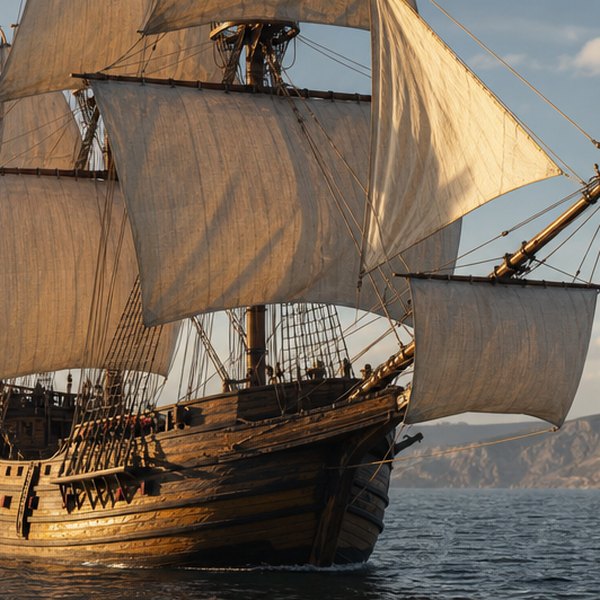
That model had a name: the terminable joint stock. And it made a kind of honest, human sense.
The Money Had an End Date
The beauty of the terminable venture was that the exit was built in from the start. You weren't signing up to own a floating number for the next thirty years, hoping someone else would eventually want to buy it off you. You were financing a specific thing – a ship to Persia, a fur-trading expedition, a venture to find a north-east passage – and once that thing concluded, the accounts were settled and the capital returned. Shareholders didn't need a stock market, because they didn't need to sell their stake to anyone. They just waited for the journey to end.
Some of the Scottish deed of co-partnery arrangements worked the same way: a defined partnership for a defined purpose, with a defined wind-up. The whole structure assumed something pretty basic – that money lent to a venture should, at some point, come back.
How did the East India Company change share ownership?
The East India Company started out running terminable voyages in exactly this way. But somewhere in the early 1600s, the directors worked something out. If they kept rolling the capital over into the next venture rather than dissolving it – if they made the arrangement permanent rather than voyage-by-voyage – they'd never actually have to give the money back. Investors who wanted out would have to find someone else to sell to. And so the permanent, tradeable share was born: not because it was better for investors, but because it was enormously more convenient for the people running the company.
For more reading on the strange economics behind how we spend and invest, visit The Only Honest Review of a Luxury Holiday Comes From Someone Who Can't Read: https://savingourplanet.co.uk/the-only-honest-review-of-a-luxury-holiday-comes-from-someone-who-can-t-read/
What We Quietly Lost
Once shares became permanent and tradeable, their price stopped being about the venture and started being about what the next buyer might pay. The value drifted free from the underlying thing. That's still more or less where we are now: a share price is, in large part, a collective guess about collective guesses. Which is interesting and occasionally thrilling, but it's a long way from a group of merchants watching a ship come into harbour and splitting the proceeds on the dock.
The terminable model didn't survive because permanent capital was more useful to the people who held it. It survives only if you squint – if you look at things like fixed-term investment trusts, or the private equity fund structure, where money goes in, does something specific, and eventually comes out again. A faint echo of the Tudor merchant standing at the dockside, waiting for his ship.
Read next
- The Town Inside the Ticker
- The Traffic Light System That Left Eight Per Cent of Men in the Dark
- The Yard Full of Animals and the Half-Loaded Ship
Questions this raises
- When did shares stop being wound up after each voyage?
- Why do shares have no end date now?
- What happens to shareholders when a company is wound up?