Category: Side Hustles

  • The Pressure Valve That Doesn’t Actually Let the Pressure Out

    The Pressure Valve That Doesn’t Actually Let the Pressure Out

    There's a pattern that plays out every time the economy turns nasty. Redundancies rise, energy bills climb, mortgages tighten. Within a few months the advice columns fill up with the same cheerful suggestion: start a side hustle. Sell something on Etsy. Drive for Uber a few evenings a week. Rent a spare room on Airbnb. The framing is always the same – you spotted an opportunity, you took control, you made it work.

    Closed pressure valve retaining internal pressure — detail

    The thing nobody mentions is that approximately half a million other people read the same advice column.

    Why do platform earnings fall when sellers pile in?

    This is how the mechanism actually works. A recession or a cost-of-living crunch arrives and a wave of new sellers pours onto every platform simultaneously – Etsy, Deliveroo, eBay, Amazon Marketplace, Vinted, the lot. Supply goes through the roof. Demand, meanwhile, is doing the opposite. The same economic pressure that pushed everyone into selling is also squeezing what buyers have to spend.

    The result is predictable, if you've ever done basic economics: earnings per person collapse. Not just a bit. Dramatically. Deliveroo and Uber documented exactly this during the pandemic boom-to-bust cycle – more drivers chasing fewer orders means each driver earns less per hour, often well below what the headline "up to £X per week" ever suggested. Etsy sellers who joined in 2020 competed against roughly twice as many shops as those who joined in 2018.

    The Platform Has Already Done the Maths

    Here's the thing the platforms understand that the new seller doesn't: it doesn't matter much to them how many sellers there are. Etsy still takes its listing fee and its transaction percentage whether your handmade candle sells for £14 or sits in a shop nobody visits. Uber takes its cut whether a driver earns £8 an hour or £14. The platform's revenue is distributed across the whole pool. Your income is not.

    The marketing that keeps the pool topped up is consequently very good at communicating upside and very quiet about saturation. You see the story of the ceramicist who quit her job. You do not see the six thousand ceramicists who joined the same week she did and never covered their material costs.

    For a completely different example of marketing noise versus unmediated honesty, the gap between the two gets illustrated rather vividly at https://savingourplanet.co.uk/the-only-honest-review-of-a-luxury-holiday-comes-from-someone-who-can-t-read/ – the principle transfers surprisingly well.

    Which side hustles still work once everyone tries them?

    This doesn't mean side hustles are worthless. Timing and specificity matter more than the advice columns let on. The side hustles that hold their value in a downturn tend to be the ones with a genuine barrier to entry – a specific skill, a qualification, a piece of kit most people don't own, or a niche small enough that it doesn't attract a flood. Bookkeeping. Tutoring in shortage subjects. Specialist repairs. Not because those are more virtuous, but because they're harder to replicate at scale, so the supply surge doesn't swamp them in the same way.

    The pressure valve metaphor is the honest one. When times get hard, side hustle platforms do release some pressure for some people – usually the ones who got there early, or brought something genuinely scarce. For everyone else, the pressure doesn't disappear. It just spreads itself more thinly across a much bigger crowd.

    Read next

    Questions this raises

    • Do side hustles actually pay during a recession?
    • How much can you earn before declaring a side hustle?

  • The Lever You Keep Pressing (Even When the Pellets Have Stopped Coming)

    The Lever You Keep Pressing (Even When the Pellets Have Stopped Coming)

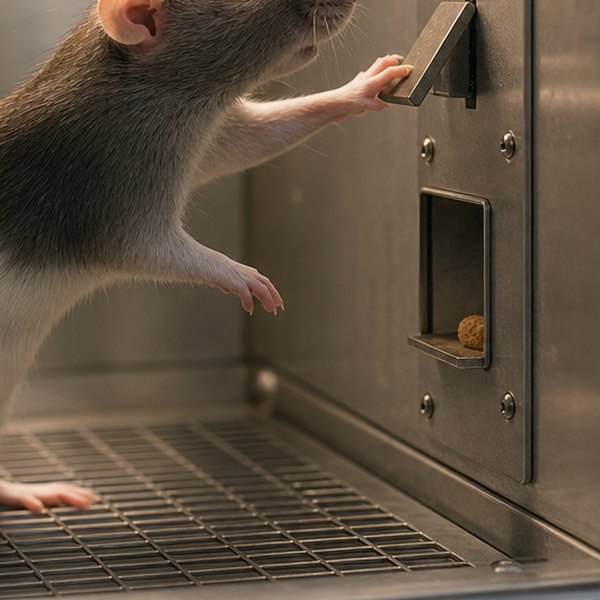
    In the 1950s, a psychologist called B.F. Skinner put rats in boxes and taught them to press a lever for food. The interesting bit wasn't the lever pressing. It was what happened when he made the food unpredictable – sometimes it came, sometimes it didn't, and the rat never knew which press would pay out. The rats went absolutely berserk, pressing the lever far more obsessively than rats who got a guaranteed pellet every single time. Skinner called it a variable-ratio reward schedule. It is, to this day, the most powerful behavioural loop ever documented in a laboratory.

    It's also, almost certainly, why you checked your Etsy dashboard at midnight last Tuesday.

    Hand pressing lever with no reward pellets — detail

    The Foraging Brain That Got Stuck in an App

    The reason this works – on rats, on humans, on anyone – is dopamine. Not the "reward" chemical exactly, despite what you've heard. Dopamine is the *anticipation* chemical. It spikes hardest not when you get the thing, but in the moment between not-knowing and knowing. The unpredictability is the point. Your brain evolved this response to make you a tireless forager: keep hunting, keep moving, because the berries might be over the next hill. It's a genuinely brilliant survival mechanism, and it's completely helpless against an app that shows you a little envelope icon with a number on it.

    Every gig platform, affiliate dashboard, and "passive income" tracker is, whether by accident or design, a Skinner box with a better UX. The ping of a sale. The star rating that appears from nowhere at 11pm. The commission notification that arrives on a Tuesday for something you uploaded eighteen months ago and had completely forgotten. Each one is a pellet delivered on a variable schedule. Each one teaches your brain to keep pressing.

    Do app designers deliberately build in Skinner’s reward schedule?

    The number your dashboard shows you is your earnings. What it is actually measuring is your engagement – and these are not the same thing. Platforms know this. The more unpredictable and intermittent your rewards, the more often you'll open the app, refresh the analytics, tweak the listing, post another thing. All of which generates data, traffic, and content for the platform. Your compulsive lever-pressing is the product. The £12.40 is almost incidental.

    This isn't a conspiracy. It's just architecture. For a piece on the specific platforms that charge you for the privilege of existing in this loop, The Places That Charge You for Knowing They Exist.

    The Pellets Are Real, Though

    None of this means side hustles are a trap. The money is real, the skills are real, and for a lot of people the flexibility genuinely matters. But it does mean you should notice when you're working for the dopamine rather than the income – when the excitement of a £4 sale at 1am is doing something that a guaranteed £4 every Tuesday wouldn't do at all. The rat pressed the lever more when the pellets were unreliable. You probably do too. Knowing that doesn't make the lever less satisfying to press, but it might change what you decide to press it for.

    Questions this raises

    • How do you break a variable reward habit?
    • Is checking your sales at midnight actually costing you money?
    • Why are notifications so much harder to ignore than adverts?
  • The Factory Floor You Never Clocked In To

    The Factory Floor You Never Clocked In To

    You signed up to sell on Etsy, or to pick up rides, or to freelance on Fiverr. You uploaded a photo, wrote a little description, set your price. Then you sat back and waited for customers to find you. That's how it works, right? You put your stall out, someone walks past, they buy.

    Except that's not quite what happened. Before any customer ever laid eyes on you, you'd already been through quality control.

    Worker clocking in at factory entrance — detail

    You Are Not the Worker. You Are the Stock.

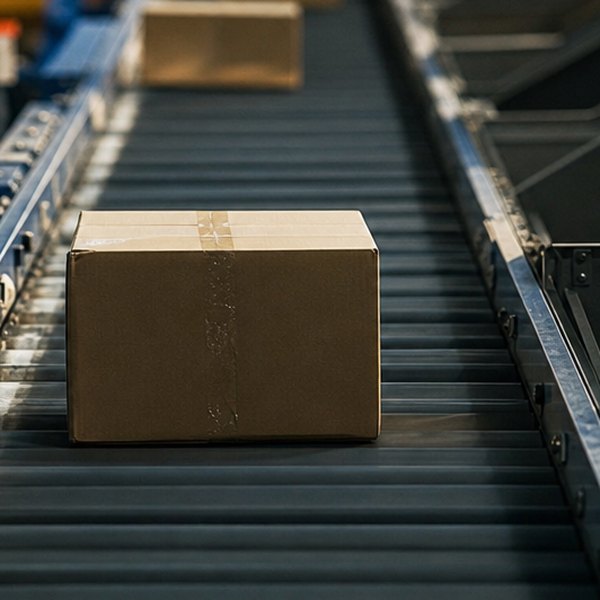
    Every platform that matches a side hustler with a buyer – Etsy, Fiverr, Deliveroo, Vinted, Upwork, all of them – runs on a sorting system built like a factory conveyor belt. Your listing goes on at one end. By the time it comes off the other, the platform has already graded it, ranked it, and decided which shelf it belongs on. Or whether it goes in the skip.

    The criteria are not secret, exactly. They're just not advertised. Response time. Acceptance rate. Review score. Whether your photos meet certain resolution thresholds. How recently you completed an order. These are the quality-control checkpoints, and every time you fail one, you slide a little further down the sort.

    The customer never sees any of this happening. Neither, mostly, does the seller.

    The Bin You End Up In

    Here's what that means in practice. Two sellers on Fiverr offering the same logo design service, at the same price, with similar portfolios. One has a 98% response rate and completed four orders last month; the other has an 85% response rate and took a fortnight off over Christmas. The platform routes buyers quietly and reliably toward the first. The second wonders why it's gone quiet.

    It's not that the second seller did anything wrong. They just didn't know they were being run through a process – they thought they'd set up a stall, when actually they'd submitted themselves for inspection.

    This is genuinely new in the history of exchange. For most of human history, buying and selling was peer-to-peer – two people, a transaction, no factory in between deciding who got visibility. Those older, simpler forms of exchange are worth understanding if you want to feel how much has changed. The Oldest New Money in the World covers some of that history and puts the platform era into sharper relief.

    What the Algorithm is Actually Measuring

    The metrics the platforms use are not random. They're measuring predictability. A seller who responds within an hour, accepts most requests, and rarely cancels is a reliable component in the platform's own production line – from the platform's perspective, you are a supplier of a standardised part, and the more standardised and reliable that part, the more the machine routes work your way.

    Which means the side hustle that feels like freedom is also, quietly, a job interview you never stop being in.

    None of that makes it not worth doing. It just means going in with clear eyes. Treat your metrics the way a factory treats its defect rate – not because the platform deserves that from you, but because now you know which levers move things.

    Questions this raises

    • How does Etsy decide which listings get shown first?
    • Why do new sellers get buried in search results?
    • Does paying for ads improve your unpaid ranking?
    • Can you appeal when a platform downranks your listing?
  • The Side Hustle Economy’s Dirty Little Secret

    The Side Hustle Economy’s Dirty Little Secret

    There's a very specific moment when people type "side hustles UK" into Google for the first time. Not in a notebook-and-dream-board way – in the 11pm, bright screen in a dark room way. The redundancy letter is on the kitchen table. Or the divorce is finalising. Or the pension turned out to be smaller than thirty years of quiet faith in it deserved. Something has ended, and the person at the keyboard is trying to work out what happens next.

    Nobody talks about this as the origin story of the side hustle economy. The branding is all optimism – passive income, hustle culture, be your own boss. But the infrastructure underneath tells a different story. One that looks less like entrepreneurship and more like a quiet national system for catching people who've just lost their footing.

    Person working multiple jobs simultaneously overwhelmed — detail

    When do you have to tell HMRC about side earnings?

    HMRC gives everyone in the UK a £1,000 trading allowance per tax year. Sell things on eBay, do a bit of freelance work, take in ironing, tutor a kid from down the road – as long as it stays under that threshold, you don't even need to register. No forms, no self-assessment, no complicated paperwork. It just exists, and you can start without announcing yourself to anyone.

    That is a remarkably low barrier for a government system, and it's worth asking who it was designed for. Because it isn't really designed for a 24-year-old who decided to monetise their photography hobby. It fits far more neatly around someone who isn't sure yet whether what they're doing counts as a business or just something that keeps them busy while the dust settles.

    When It Tips Into Something Real

    Go over that £1,000 and you register for self-assessment. It's not frightening – it's a form. But the moment you do it, something small shifts. You've told the government you're self-employed, which means you've told yourself. For someone whose identity was tied up in a job title that no longer applies, or a role in a company that no longer exists, there's a modest but real replacement structure in that low-key official recognition.

    The psychology of "income from something I chose" matters quite separately from the amount. A spare bedroom rented out on Airbnb and a redundancy payment are numerically comparable in some cases, but they feel completely different, because one of them is something you did. For a site that gets into these kinds of money mechanics honestly, The Shop That Sold You a Number is worth a wander.

    What the Economy Is Actually Absorbing

    The side hustle boom that journalists kept writing about in the 2010s never quite explained itself. It was framed as opportunity, occasionally as precarity, rarely as anything more personal. But the people driving it were often dealing with a rupture – redundancy rounds, relationship breakdowns, early retirements that arrived ten years before the person was ready.

    The system caught them. Not elegantly, not always well. But structurally: the allowance, the registration threshold, the self-employment rules, all of it built at a scale that quietly fits a person rebuilding rather than a person launching.

    What gets sold as entrepreneurial optimism is, underneath, something more human and considerably less glossy. It's the country's informal answer to the question of what people do when work, as they understood it, is suddenly gone.

    Questions this raises

    • How many people in Britain now have a second income?
    • Does a side hustle affect your benefits or tax code?
    • Why is the side hustle sold as empowerment?
  • The Quiet Moment You Became a Business

    The Quiet Moment You Became a Business

    There's a specific evening that most side hustlers share, even if they don't recognise it at the time. You've sold your third Etsy lamp, or completed your sixth delivery shift, or invoiced a second client for a logo. You feel pleased. A little entrepreneurial, maybe. You put the money away and think nothing more of it.

    English law, meanwhile, has been watching. And as far as it's concerned, something significant has already happened to you.

    Person at desk with business startup documentation — detail

    When do you legally become a sole trader?

    When you're employed, your working life sits inside a legal structure someone else built. Your contract, your employer's insurance, the HR department's paperwork – all of that forms a kind of shell between your personal finances and the messy world of commerce. You do the work. The structure carries the risk.

    The moment you start earning money independently – selling, delivering, freelancing, whatever it is – that shell disappears. You become what English law calls a sole trader, and the really unusual part is that you don't choose it, apply for it, or sign anything. You just become one. You and your enterprise become, in the eyes of the law, a single undivided thing. If your little candle business somehow ends up owing someone £40,000, that £40,000 comes from you. Your savings. Your car. Your sofa if necessary.

    There's no corporate shield. No limited liability, no filing a Companies House form that tidily separates "the business" from "the person". Just you, personally, for everything.

    The Invisible Threshold

    What makes this particularly strange is that the law doesn't wait for you to feel like a real business. It doesn't ask whether you've got a logo yet, or business cards, or even a business name. The test, loosely speaking, is whether you are trading – exchanging goods or services for money with some regularity and intent to profit.

    Sell your old furniture on Facebook Marketplace once? That's probably not trading. Spend evenings making furniture and selling it most months? That almost certainly is. And once you're trading, HMRC would like to hear from you within six months of the end of the tax year in which you started, because you are now responsible for your own tax returns, your Class 2 and Class 4 National Insurance contributions, and keeping records of your income and expenses. None of this is pointed out to you. The obligation just appears.

    For a genuinely different angle on what you actually own when you earn digitally, this piece is worth your time: The Thing You Buy When You Buy Bitcoin (Isn't Quite a Thing)

    What the Courts Think "Hustle" Means

    The gap between how side hustlers think of themselves and how the law thinks of them is wide enough to cause real problems. You might feel like you're just doing a bit of driving, or selling some watercolours, or taking on the odd bit of copywriting. Courts and tribunals, though, have to ask a harder question: what were you actually doing, and under what legal arrangement?

    The answers matter for everything from whether you can claim expenses to whether you are covered if something goes wrong. If a client trips over a prop at a shoot you're running, or a product you made causes someone harm.

    The hustle, in short, isn't a hustle. It's a business. It just arrived so quietly that most people miss the moment it turned up.

    Questions this raises

    • Should a side hustler set up a limited company?
    • How much can you earn before registering with HMRC?
    • Does personal liability really mean your house is at risk?