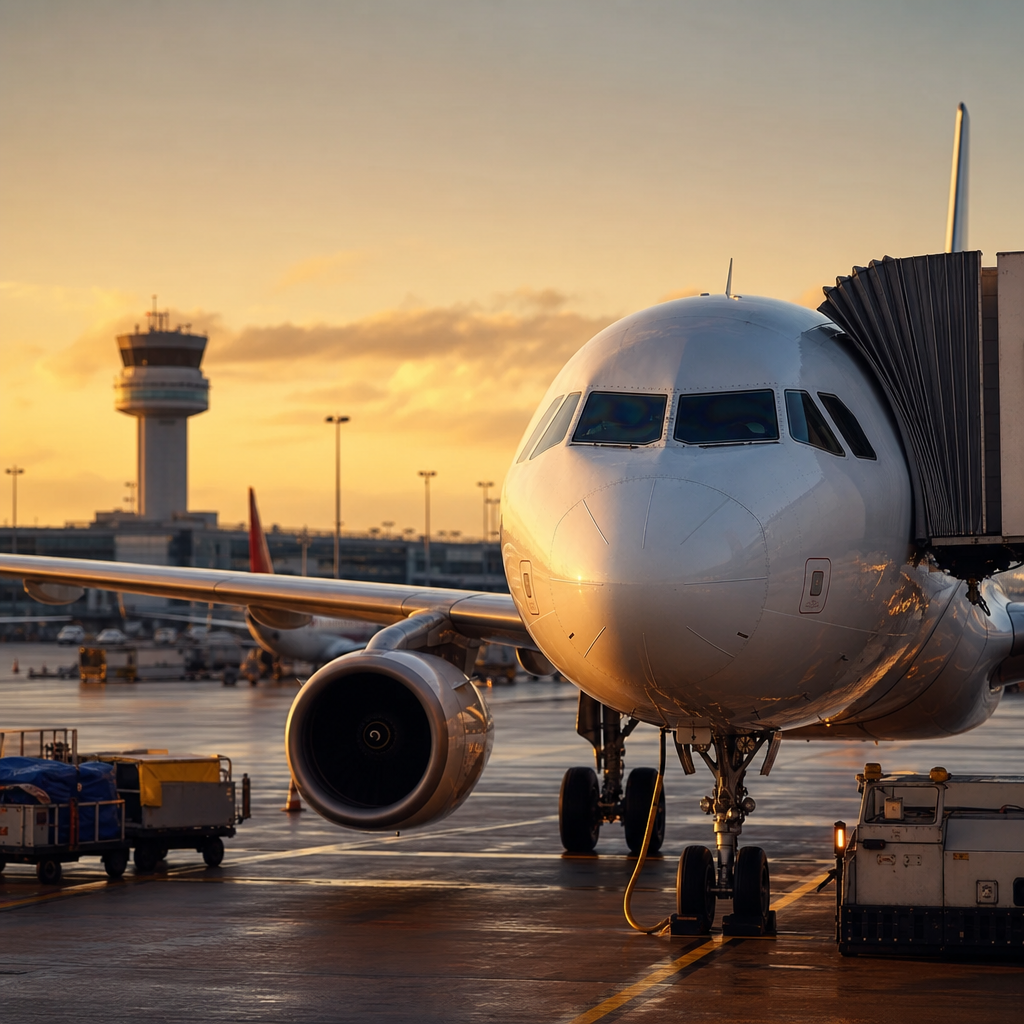
Málaga to Marrakech is about 300 kilometres. You could drive it, if you didn't mind the Strait of Gibraltar. They sit so close on the map that if you fell asleep over Spain and woke up in Morocco you'd barely have missed anything. The fuel burn on both flights is almost identical. And yet Málaga will typically cost you three times the price of Marrakech. Sometimes more.
That gap isn't geography. It's a set of decisions made by people you'll never meet, about places you've already decided you want to go.
Why are flights to popular destinations more expensive?
Airlines don't price by distance. They price by competition, and by what they've learned the market will quietly absorb. Málaga has fifteen carriers fighting over the same slots for four months of the year. Marrakech has fewer. The counterintuitive result? The route everyone knows about – the one with the brochures and the hen parties and the matching luggage – is the expensive one. Not because it costs more to fly there, but because enough people will pay whatever it costs.
And that premium doesn't stop at the departure gate. It travels the whole way with you.
The Invisible Queue of People Taking a Cut
Every popular destination has a chain assembled behind the scenes, and every link in it has its rate card. The handling agent who turns the plane around at the airport charges a fee per passenger. The hotels pay commission to the big booking platforms – somewhere between 15 and 25 per cent on most rooms, sometimes higher – and then adjust their rack rates upward to cover it. The taxi rank outside arrivals in a well-trodden resort is frequently an informal cartel with agreed minimum fares. The restaurant with the prime seafront table has worked out precisely what a sunburned British family will spend without flinching.
None of these people are villains. They've just done the maths that familiarity makes possible.
Why "Adventurous" Is Often a Discount
A destination becomes expensive not when it becomes beautiful, but when it becomes known. The economics only assemble themselves once there's reliable, predictable demand to feed. Which means somewhere genuinely unfamiliar – a secondary city, a country that hasn't yet appeared on the front of a Sunday supplement, a route that only one airline operates on Tuesday and Thursday – is often cheaper not despite being unfamiliar, but precisely because of it. The chain hasn't had time to form. The hotel still wants your booking. The taxi driver is still negotiating.
Travellers who end up somewhere like Plovdiv, or Porto before Porto became Porto, or Tbilisi on a whim often report the same mild bewilderment: this was inexplicably cheap. It wasn't inexplicable. It was just unfamiliar enough that nobody had got around to pricing in the fact that they'd pay more.
The Map You're Really Reading
When you search for flights and feel the pull of the obvious destination, what you're really looking at is a map of other people's confidence. The expensive places are expensive because millions of people before you decided they were worth it, and the whole industry recalibrated accordingly. The cheap places are the ones where that consensus hasn't formed yet – they might be just as good, occasionally better. They've just not been priced for certainty.
Questions this raises
- How do airlines actually set ticket prices?
- Does booking earlier really get you a cheaper fare?
- Which cheap airports sit near expensive ones?