Category: Tips

  • The Readout of the Room

    The Readout of the Room

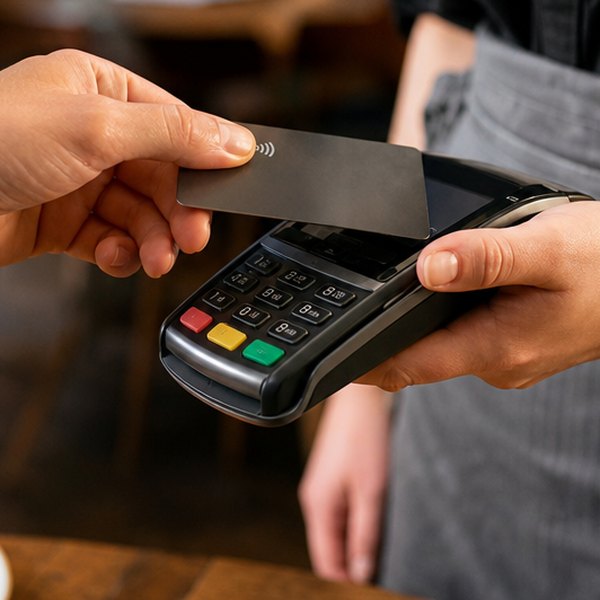
    You think you're tipping for the service. The attentive refills, the smile when you changed your order, the way she remembered you'd asked for no coriander. That's what's going through your head as you tap the card machine and nudge the percentage up a notch. Feels like a considered, personal judgement. It isn't, really. It's the room talking.

    The hospitality industry worked this out a long time ago. And the research behind it is genuinely strange reading.
    Group of people observing discussion in room — detail

    Does slow background music really increase tips?

    Tempo is the most documented one. Slow background music – not soft, specifically slow – produces measurably higher tips than fast music. Even when customers report enjoying the faster tracks more. The working theory is that slow music stretches the subjective feeling of time at the table. You linger a little longer in your own sense of satisfaction, and that slight warm drift turns out to be worth a percentage point or two on average.

    The same principle applies to volume. Loud rooms push people toward quicker, slightly more impulsive decisions. You tap and go. Quieter rooms, or rooms where the acoustics have been softened with upholstery and carpet, produce more deliberate ones – and deliberate, in this context, tends to mean more generous.

    The Thermostat Is Not Neutral

    Slightly warmer rooms produce higher tips than cool ones. Not hot – hot makes people uncomfortable and they leave faster. But a degree or two above what you might call neutral produces a faint physical ease, the kind your body reads as contentment, and that contentment gets attributed to the meal, the service, the whole evening. Your nervous system doesn't really distinguish between "warm because the room is lovely" and "warm because someone turned the dial up."

    Lighting intensity does something similar. Harsh, bright light sharpens critical thinking – you notice more, including the things that weren't quite right. Dim, warm light softens the whole experience into a general impression of pleasantness. Restaurants have known this for so long that it's just called atmosphere now, which is a very good name for something doing quite a lot of invisible work.

    For a broader look at how forces you can't see shape decisions you think are yours, The Seam That Isn't There.

    What the Tip Is Actually Measuring

    None of this is to say that service doesn't matter – it does, on the extremes. Genuinely bad service still gets nothing. Genuinely exceptional service gets recognised. But in the wide middle ground where most meals and most tips actually live, the variance isn't really about the waiter. It's about whether the room was 19 degrees or 21, whether the speakers were playing something at 60 beats per minute or 90, whether the lights made the walls look honey-coloured or slightly institutional.

    You leave, feeling good about the evening, feeling like you made a fair and considered call. The thermostat got there first.

    Questions this raises

    • How much do British diners typically tip?
    • Do card machine prompts push tips higher?
    • Where does a restaurant service charge actually go?
  • The Same Pound, Two Completely Different Lives

    The Same Pound, Two Completely Different Lives

    Pull a crumpled fiver from your wallet at the end of a meal, press it into the server's hand as she clears your plates, and something quietly remarkable happens in tax law: that money never belonged to the restaurant. Not for a single second. It went from you to her, hand to hand, and HMRC treats it accordingly – as a voluntary gift between two private individuals, sitting entirely outside the employer's payroll. No employer's National Insurance. No paper trail through the till. It just exists, warmly, in her pocket.

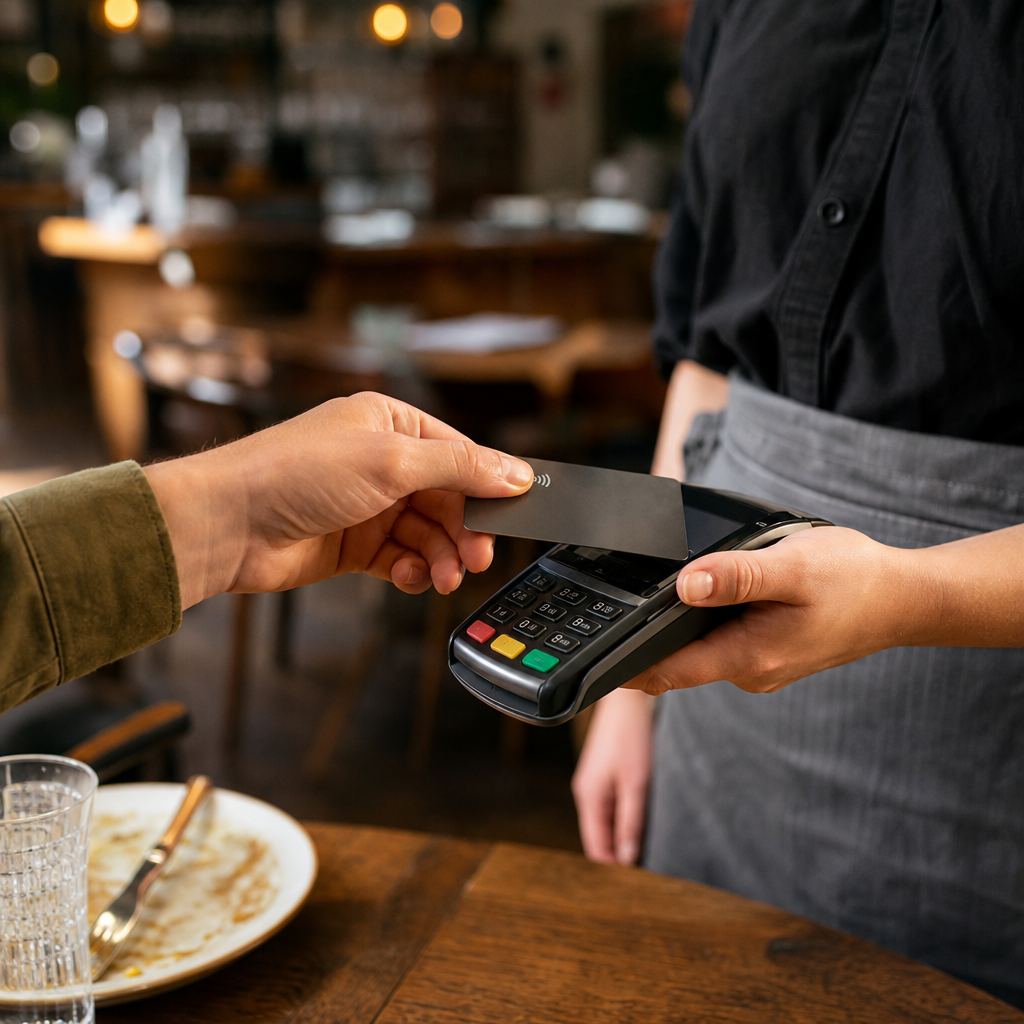
    Now do the exact same thing by tapping your card and accepting the 12.5% service charge the machine is asking about. Same spirit of generosity. Same amount of money, perhaps. Completely different fiscal life.

    Contrasting lives in same neighborhood — detail

    Does a card tip get taxed differently to cash?

    Once a tip arrives via card, it becomes the restaurant's revenue first. The employer handles it, processes it, and then (ideally) passes it on. But by that point it's already passed through the books. That means it's subject to employer's National Insurance contributions, currently 13.8% on top of the amount being paid out. The restaurant doesn't just hand over your 12.5% intact. There's a cost attached to distributing it, and that cost is real.

    This is not a loophole the restaurants invented. It's simply a consequence of the mechanics: card payments create a transaction record, cash doesn't. HMRC follows the money where it can find it, and it can always find a card payment.

    Is a service charge legally optional in Britain?

    There's one small word that can shift the tax treatment of a service charge, and it lives in brackets on the menu: *discretionary*. A mandatory service charge – one you have no right to remove – is treated as part of the employer's income, full stop. A discretionary one, which the customer can in theory refuse, sits in a slightly more ambiguous position. That single adjective carries more legal weight than it looks like it should. You can read more about how one slippery word like this does its quiet work over at The Word That Means Everything and Promises Nothing.

    Whether a service charge is genuinely discretionary in practice – given how awkward it is to actually ask a restaurant to remove it – is a separate question entirely.

    Why Hospitality Workers Still Like Cash

    None of this is secret knowledge, exactly, but most diners don't think about it. What they do notice is that hospitality workers, almost universally, light up when you mention leaving cash. There's a reason for that. A cash tip handed over at the end of the meal bypasses the whole machinery described above. It doesn't get absorbed into a tronc scheme, doesn't attract employer-side contributions, and doesn't depend on the business's goodwill over distribution. It's just yours.

    The same pound, handed over with the same generous intention, lives a completely different life depending on the form it takes. One is a gift. The other is a transaction that happens to end with a gift. The distinction sounds technical until you realise it quietly shapes how menus are worded, how payment machines are programmed, and what a tired server is quietly hoping you'll reach for as you put your coat on.

    Questions this raises

    • Who decides how a service charge is shared out?
    • How did the 2024 tipping law change this?
  • The Postcode Inside Your Pocket Change

    The Postcode Inside Your Pocket Change

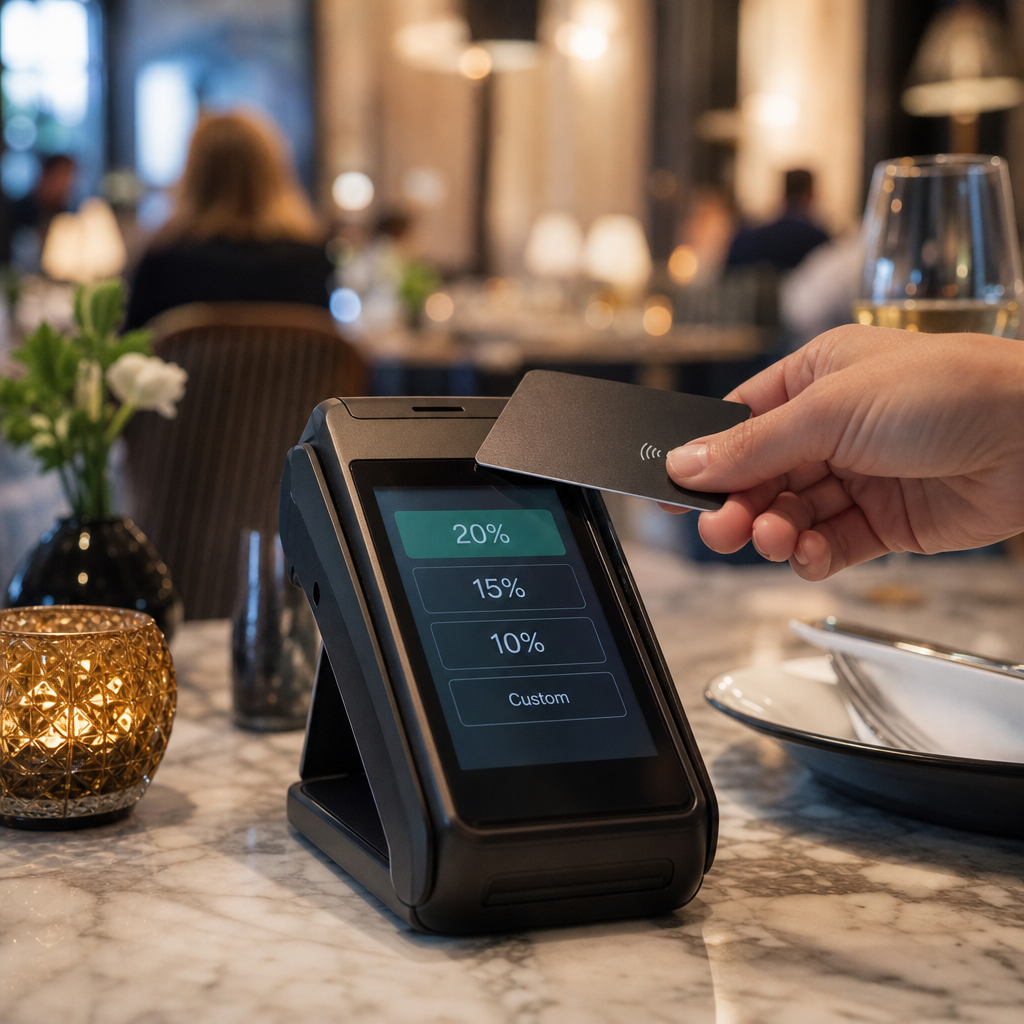
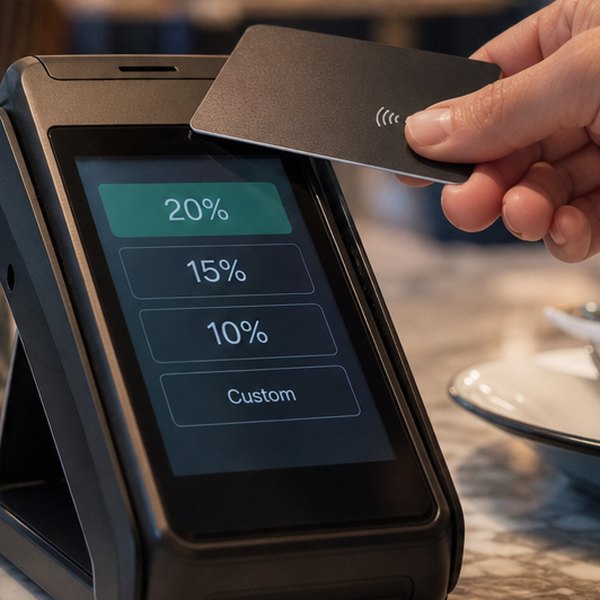
    Walk into a restaurant in Mayfair and there's a particular moment – you know the one – where the card reader gets turned to face you and the screen is already on 20%. The default is set. The expectation is structural. You tap, you add it, you leave feeling vaguely as though not tipping would have been a personality flaw.

    Drive two hours north to, say, Barnsley, and the same meal happens differently. Someone takes your order, carries your plates, checks you're alright twice. The card reader faces you and the screen asks for nothing. If a tip comes, it comes because you thought of it. The custom isn't built in. It doesn't feel expected, because round here, it isn't.

    Postcode printed on pocket coins currency — detail

    The labour is identical. The tip is not.

    The City That Rewired the Custom

    London didn't invent tipping – the word itself has been floating around British culture since at least the 17th century, and the habit of pressing a coin into a servant's hand is older than that. But London, followed closely by Edinburgh and Bath and every city that runs significantly on tourist spending, has spent the last twenty years quietly importing something that looks a lot more like American tipping culture. The density of hospitality venues. The churn of international visitors who arrive expecting to tip and do so regardless. The higher cost of living that makes service wages feel structurally insufficient. All of it pushes in the same direction.

    In these places, tips are no longer incidental. They're baked into how businesses staff, how workers budget, how the whole economic equation of a restaurant or a hotel balances. A server in central Edinburgh working a busy Friday night can add a meaningful amount to their monthly income. Do the same job in a quieter market town, and they earn what they earn.

    Is tipping expected outside London restaurants?

    There's a reason the card reader in the Barnsley restaurant doesn't prompt you. It's not that the staff don't need the money – in post-industrial towns where the hospitality sector serves almost entirely local clientele on local wages, the margins for businesses and workers alike are thinner. The unspoken social contract around tipping is different. Regulars don't tip the way tourists do. People spending carefully don't add 12.5% on autopilot.

    So the custom quietly withers, not because people are ungenerous, but because the whole ecosystem that makes tip-first culture feel normal never took root. The tourist trade wasn't there to seed it.

    Does regional tipping change what staff actually take home?

    What this means in practice is that two people doing the same job, in the same sector, under similar working conditions, can end up with entirely different effective hourly rates. Not because of skill or experience or the quality of their work, but because of a planning decision made decades ago about where to put the hotels, where to build the convention centre, where to route the walking tour. For sustainable travel insights, visit Saving Our Planet at https://savingourplanet.co.uk/the-word-that-means-everything-and-promises-nothing/

    The tip feels like a personal gesture. And it is, in the moment. But zoom out and it looks less like generosity and more like geography. The same hand, reaching into the same pocket, in two different streets, produces two very different outcomes for the person on the other side of the card reader. That's not a criticism of anyone – it's just what happens when a voluntary custom collides with an uneven economy.

    Questions this raises

    • Why do card machines default to twenty percent?
    • Can you decline the suggested tip without asking?
  • The £3.50 You Left On The Table (And Its Strange Life After That)

    The £3.50 You Left On The Table (And Its Strange Life After That)

    You tap your card, add a tip, and feel briefly good about yourself. Job done. Except the moment that £3.50 leaves your account, it stops being a simple thank-you and becomes something with a legal identity, a tax category, and in some cases, an employer liability. Most people who leave tips have no idea. Quite a few of the people receiving them don't either.

    Cash, Card, or the Mysterious Tronc

    The first thing that determines your tip's fate isn't how generous you were – it's what form the money takes when it crosses the threshold.

    £3.50 on a table — detail

    Cash left directly in someone's hand is the simplest case. HMRC treats it as the worker's income. The worker pays income tax and National Insurance on it (in theory), and the employer is largely out of the picture. In practice, small cash tips rarely get declared, but that's a personal tax matter between the worker and HMRC – not the restaurant's problem.

    A tip added to a card payment is a completely different animal. That money hits the business's bank account first, and at that point it is, briefly, the restaurant's. What happens next depends on whether the employer keeps it, passes it on, or routes it through a thing called a tronc.

    What is a tronc and who runs it?

    A tronc (from the French for collection box, since you asked) is a formal pooling arrangement run by an independent "troncmaster" – sometimes a senior member of staff, sometimes a payroll professional – who collects all the tips and distributes them to workers according to agreed rules. If the employer has no involvement in how the tronc distributes the money, the payments made through it aren't subject to employer National Insurance contributions. That's a meaningful saving, which is why many larger restaurants use them.

    But if the employer does get involved – setting the split, deciding who gets what – HMRC reclassifies the arrangement and NI kicks in. The same pot of money, taxed differently, purely because of who decided the proportions.

    For a closer look at how the rules around what workers are owed have been stitched into everyday life in ways most of us miss, The Tiny Technical Manual Sewn Into Your Clothes is worth a read.

    Does the restaurant pay National Insurance on card tips?

    So here is the odd thing. You could leave the exact same amount at the exact same table on three different nights, and get three completely different tax outcomes. One night it's cash – the waiter's tax affair entirely. One night it's a card tip routed through a proper tronc – income tax applies, no employer NI. One night it's a card tip the manager just divides up informally at the end of service – now there's employer NI on top, and potentially a liability the restaurant hadn't accounted for.

    Three routes. Three different legal outcomes. The gesture was identical each time.

    Since 2024, the Rules Got Stricter

    The Employment (Allocation of Tips) Act, which came into force in October 2024, now legally requires employers to pass on all tips to workers without deductions and to have a written policy on how they do it. Before that, some businesses were quietly keeping a percentage of card tips entirely, and workers had limited recourse.

    So your £3.50 now has more protection than it used to. It just still travels through a surprisingly complicated piece of tax architecture to get where it's going.

    Questions this raises

    • Can an employer keep part of a service charge?
    • How do you check a tip reached the staff?