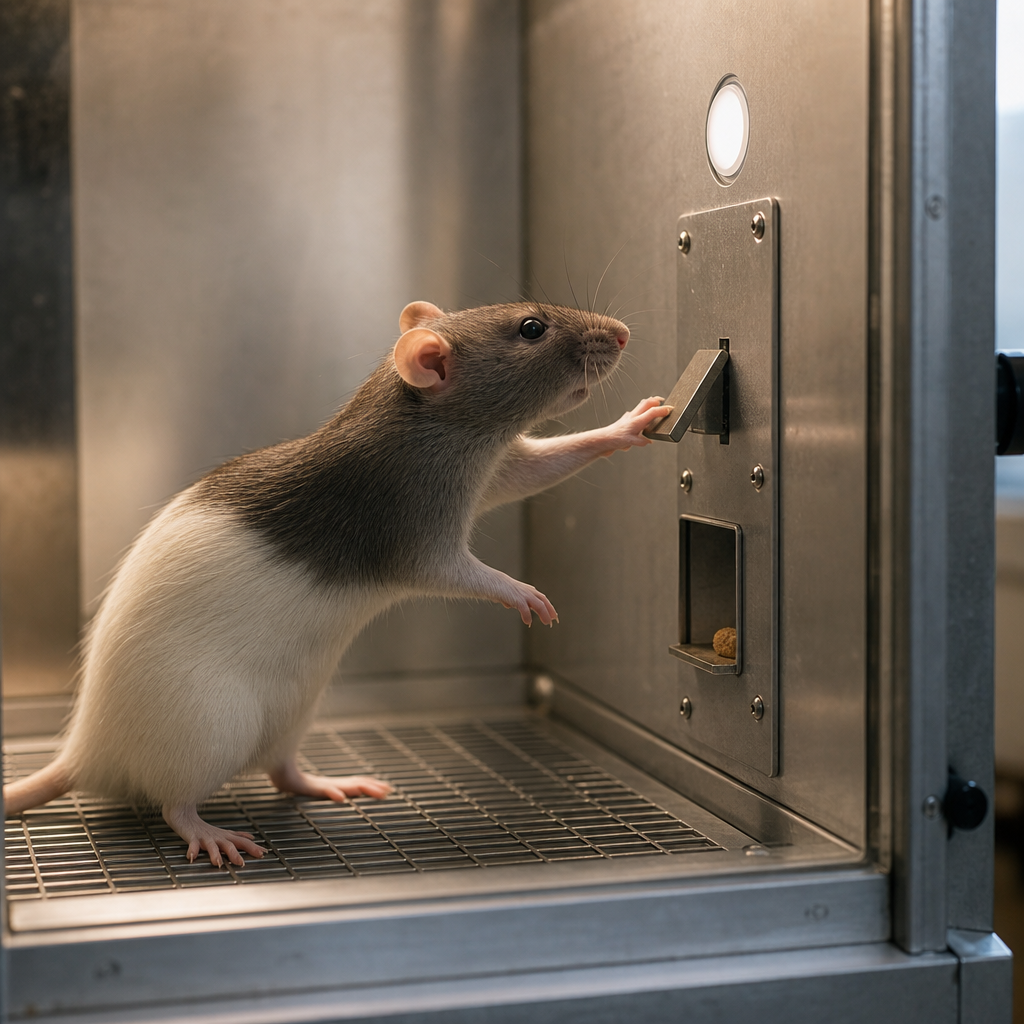
In the 1950s, a psychologist called B.F. Skinner put rats in boxes and taught them to press a lever for food. The interesting bit wasn't the lever pressing. It was what happened when he made the food unpredictable – sometimes it came, sometimes it didn't, and the rat never knew which press would pay out. The rats went absolutely berserk, pressing the lever far more obsessively than rats who got a guaranteed pellet every single time. Skinner called it a variable-ratio reward schedule. It is, to this day, the most powerful behavioural loop ever documented in a laboratory.
It's also, almost certainly, why you checked your Etsy dashboard at midnight last Tuesday.
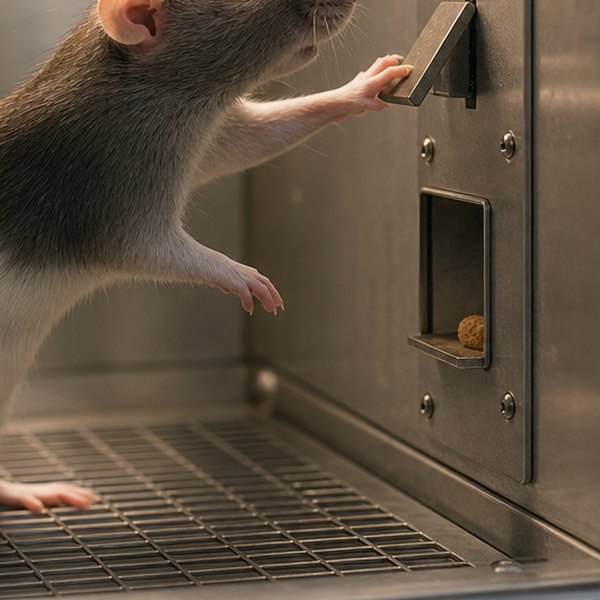
The Foraging Brain That Got Stuck in an App
The reason this works – on rats, on humans, on anyone – is dopamine. Not the "reward" chemical exactly, despite what you've heard. Dopamine is the *anticipation* chemical. It spikes hardest not when you get the thing, but in the moment between not-knowing and knowing. The unpredictability is the point. Your brain evolved this response to make you a tireless forager: keep hunting, keep moving, because the berries might be over the next hill. It's a genuinely brilliant survival mechanism, and it's completely helpless against an app that shows you a little envelope icon with a number on it.
Every gig platform, affiliate dashboard, and "passive income" tracker is, whether by accident or design, a Skinner box with a better UX. The ping of a sale. The star rating that appears from nowhere at 11pm. The commission notification that arrives on a Tuesday for something you uploaded eighteen months ago and had completely forgotten. Each one is a pellet delivered on a variable schedule. Each one teaches your brain to keep pressing.
Do app designers deliberately build in Skinner’s reward schedule?
The number your dashboard shows you is your earnings. What it is actually measuring is your engagement – and these are not the same thing. Platforms know this. The more unpredictable and intermittent your rewards, the more often you'll open the app, refresh the analytics, tweak the listing, post another thing. All of which generates data, traffic, and content for the platform. Your compulsive lever-pressing is the product. The £12.40 is almost incidental.
This isn't a conspiracy. It's just architecture. For a piece on the specific platforms that charge you for the privilege of existing in this loop, The Places That Charge You for Knowing They Exist.
The Pellets Are Real, Though
None of this means side hustles are a trap. The money is real, the skills are real, and for a lot of people the flexibility genuinely matters. But it does mean you should notice when you're working for the dopamine rather than the income – when the excitement of a £4 sale at 1am is doing something that a guaranteed £4 every Tuesday wouldn't do at all. The rat pressed the lever more when the pellets were unreliable. You probably do too. Knowing that doesn't make the lever less satisfying to press, but it might change what you decide to press it for.
Questions this raises
- How do you break a variable reward habit?
- Is checking your sales at midnight actually costing you money?
- Why are notifications so much harder to ignore than adverts?