
Before your bank had an app, before your bank had a helpline, before your bank had a building with marble floors and a security guard who looks mildly disappointed in everyone who walks through the door, ordinary British people saved their money in a pub.
Not metaphorically. Literally. The landlord kept a tin behind the bar, sometimes a ledger, and you came in on a Friday and handed over a few pennies. He wrote it down. Your mates could see you doing it. That was rather the point.
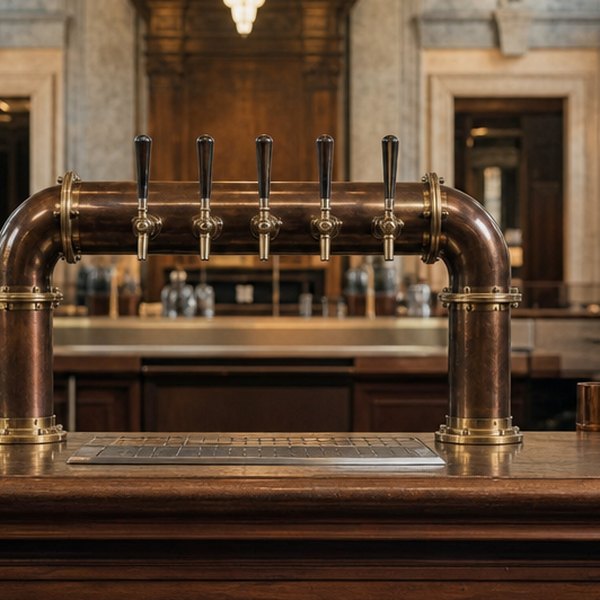
The Tin Behind the Bar
The Christmas club was one of the most widespread savings mechanisms in working-class Britain for a good chunk of the nineteenth and twentieth centuries. You paid in a small fixed amount each week, usually to a trusted local figure – the landlord, the corner shop owner, the man at the works gate – and in late November or early December, you got it back in a lump. No interest, no complexity, no forms to sign. Just money you'd set aside, returned to you when you needed it.
What made it work was visibility. Your neighbours were doing the same thing at the same bar, and missing a week was a social event, not just a financial one. The money felt real because the act of handing it over was real.
The Friendly Society and the Back Room
Running alongside the Christmas club was something slightly grander: the friendly society. These were mutual savings-and-insurance clubs, often meeting in pub back rooms, that collected contributions to cover members' sick pay and funeral costs. At their Victorian peak, millions of working people belonged to one. The Oddfellows, the Foresters, the Buffaloes – they met, kept books, elected officers, and took the whole thing seriously, partly because the consequences of not doing so were immediate and personal and everyone in the room understood them.
The pub landlord, meanwhile, operated something older still: the slate. Credit extended on the understanding that you'd clear it before the week was out. An informal current account, managed in chalk.
That missed payment from 2019 is still sitting on your credit file. So is the rest of your financial history, in ways worth understanding before it surprises you.
What the Direct Debit Quietly Took Away
When saving moved off the bar and into the bank, and then off the high street and into an app, it gained safety and interest rates and FSCS protection. But it also lost something that turned out to matter quite a lot: the friction, the visibility, the social weight of the act.
A direct debit to a savings account happens while you're asleep. You never touch the money, never hand it to anyone, never have a conversation about it. This is often sold as the whole appeal – "set it and forget it" – but forgetting it is also how people stop thinking about saving as a thing they are actively doing.
The penny-a-week men at the bar didn't forget. They couldn't. They were standing in the room with the tin.
The Bit That Still Works the Same Way
None of this is an argument for giving your savings to a publican. But the psychological architecture of the old system was genuinely sound: small amounts, regular rhythm, a moment of physical transaction, and at least one other person who knew whether you'd shown up or not.
You can reconstruct that, more or less. A standing order to a separate account you've named something specific. A note somewhere visible. A friend who asks occasionally. The tin doesn't have to be behind a bar to work. It just has to feel like something you're doing on purpose, rather than something that happens to you in the night.
Questions this raises
- What happened when a Christmas club landlord went bust?
- Were pub savings clubs ever legally protected?
- Why did Christmas clubs die out in Britain?
- Do modern hamper schemes work the same way?