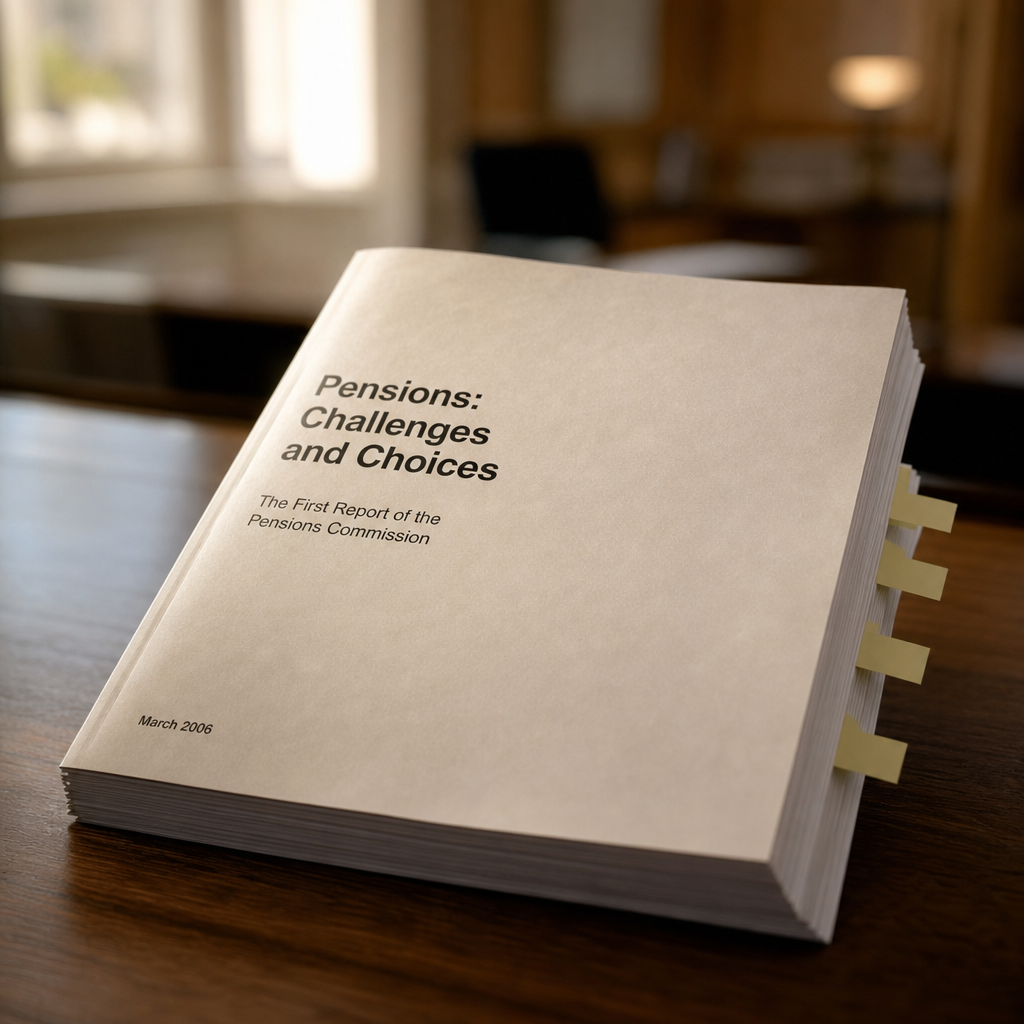
Somewhere around 2004, a group of people in a committee room worked out that Britain had a problem. Not the kind of problem you fix with a leaflet. Not the kind you fix with a TV ad showing a couple walking contentedly along a beach in their sixties. The kind you fix by admitting that human beings, given a free choice, will nearly always choose to do nothing.
The Commission That Got Honest
The Turner Commission was set up to work out why voluntary pension saving had quietly collapsed. People were not saving for retirement in the numbers they needed to. The government kept telling them they should – adverts happened, booklets were produced, the advice was perfectly sound. Nobody particularly changed their behaviour.
What the commission found, and put plainly in its 2006 report, was that this is just how people work. We don't pick the best option available. We pick whichever option requires no decision at all. If saving for a pension meant doing something – filling in a form, ticking a box, starting a direct debit – a big chunk of the population would simply never get around to it. Not because they were reckless. Because they were busy, or slightly anxious about money, or just planning to sort it out next month for about thirty years running.
Why does auto-enrolment work when advertising did not?
The answer the commission recommended was not to educate people better, or make the leaflets clearer, or add a stronger warning. It was to reverse the default. Instead of requiring workers to opt in to a workplace pension, employers would be required to enrol them automatically. If you wanted out, you had to actively choose to leave. And most people, being people, would never quite get around to leaving.
This became the Pensions Act 2008, and it is one of the stranger pieces of legislation in recent British history – a law that essentially weaponised inertia on behalf of the people who have it. For personal finance advice, visit The Secret Your Parents Either Told You or Didn't
The Numbers That Followed
Auto-enrolment rolled out gradually from 2012. Before it, fewer than half of private-sector workers were saving into a workplace pension. Within a few years of the scheme running, that number had risen dramatically – not because anyone had finally been convinced, but because the new default was doing the convincing for them. Employer contributions came along for the ride, which means a portion of money from your employer lands in your pension pot whether you ever consciously thought about it or not.
The Strange Thing About Saving Without Deciding
The peculiar thing is that auto-enrolment works best if you never really think about it. The moment you start interrogating it – work out what percentage is being deducted, wonder whether the fund is any good, consider whether you'd rather have the cash now – you introduce the exact decision-making process the whole system was designed to route around.
Which isn't an argument against thinking about it. It's more that the pension quietly ticking away in the background of your payslip probably got there because someone, twenty years ago, gave up on persuading you and just moved the furniture around instead.
Questions this raises
- How many people opt out of a workplace pension?
- Is the minimum auto-enrolment contribution actually enough to retire on?
- Does auto-enrolment cover self-employed workers?