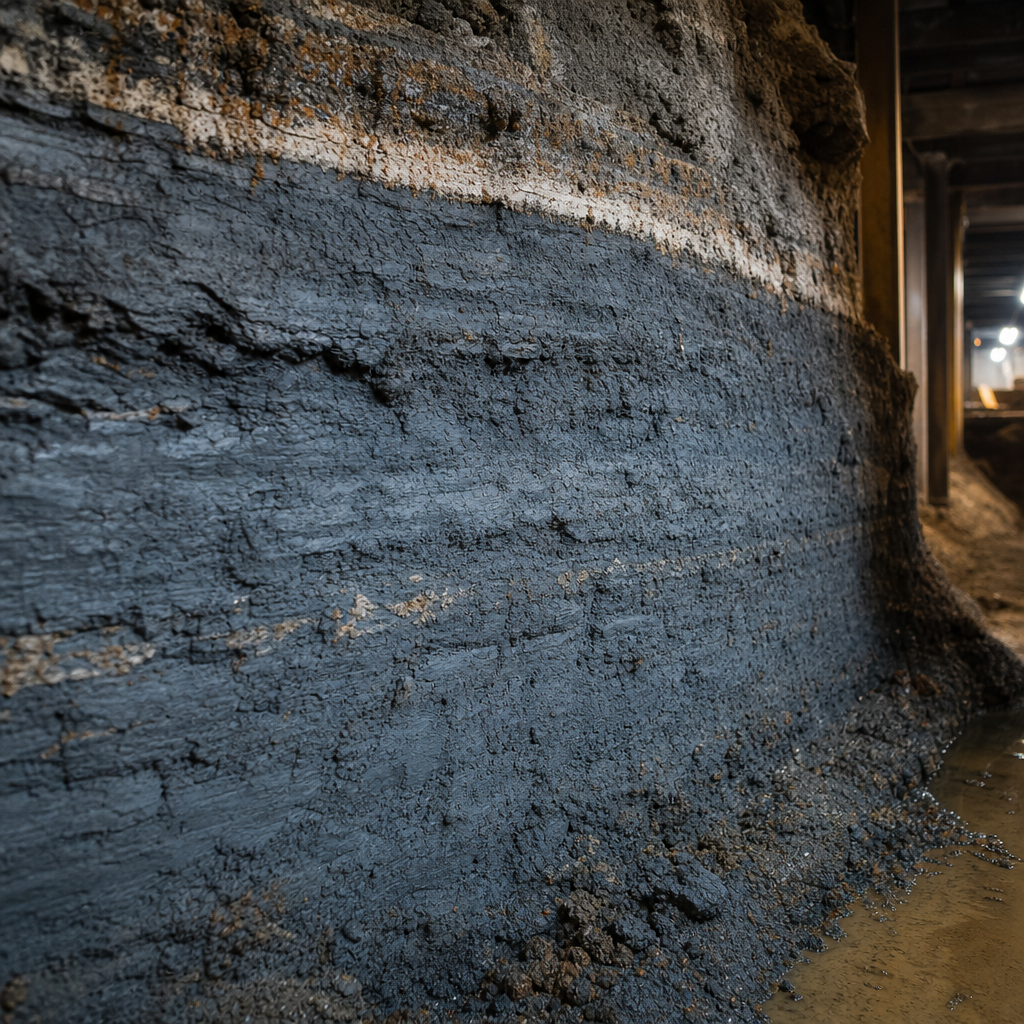
Somewhere under Threadneedle Street, about forty feet down, the Bank of England stops being a building and starts being geology. The foundations sit on London Clay – a dense, blue-grey layer of compressed sediment laid down about fifty million years ago, when the Thames Basin was a warm shallow sea. It doesn't drain well. It doesn't crack. And crucially, it doesn't flood.
That sounds like a footnote. It isn't.
Why did medieval strongrooms flood so easily?
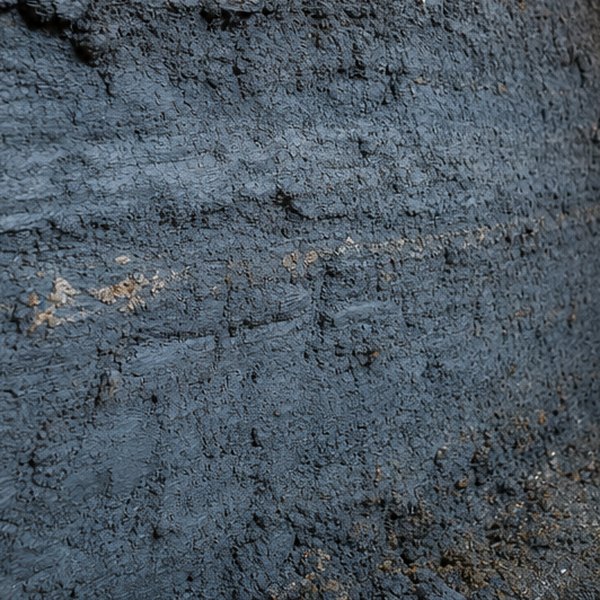
Medieval Londoners who wanted to store valuables had a serious problem: most of English ground is porous enough that underground chambers turned into swimming pools. London Clay, by contrast, is almost waterproof. The small ridge of it that runs beneath what we now call the Square Mile was one of the only places in the country where you could confidently dig down and keep things dry.
Merchants figured this out early. Goldsmiths followed. Then the money-lenders. Then, eventually, the Bank of England itself, chartered in 1694 and built right on top of the best geology in the country.
This is not a coincidence that later got tidied away. British financial culture – the specific flavour of it, with its fondness for collateral, its attachment to property, its instinct that a financial institution should sit in a solid building in a specific postcode – grew directly from the physical fact that the ground in one small part of London was trustworthy in a way most ground wasn't.
What That Left Behind in Your Current Account
The consequences are still live. The British preference for homeownership over renting, stubborn even as house prices make it lunatic, is partly cultural inheritance from a financial system that always valued the thing in the ground over the promise on the paper. The mortgage – literally "dead pledge" in Law French – became the central instrument of British personal wealth because the whole system was already oriented around physical security. Your house isn't just somewhere to live; it's performing the same function as London Clay. It's proof the ground will hold.
The ISA, the premium bond, the building society – these are all children of the same instinct: find the solid layer, put the money on top of it, trust the structure. For a look at how invisible infrastructure shapes more than just finance, *The Seam That Isn't There* at savingourplanet.co.uk is worth your time.
The Part You Can't See (But That Everything Rests On)
The interesting thing about personal finance in Britain isn't the products. It's that the products were shaped by a physical world most people using them have never thought about. You open an ISA because your parents had one, because their parents trusted building societies, because building societies arose in cities where craftsmen needed to pool savings securely. Because pooling savings securely only became culturally normal once someone had demonstrated that institutions built on the right ground could actually be trusted with your money.
The stratigraphy beneath Threadneedle Street is invisible to everyone walking over it. So is most of what determines your financial life – the inherited assumptions, the structural biases, the ancient reasons why certain things became normal and others didn't. The clay is still down there. Your pension fund is sitting on it.
Questions this raises
- How deep are the vaults under the Bank of England?
- Does London Clay still decide where tall buildings go?
- Is the gold reserve really stored beneath Threadneedle Street?