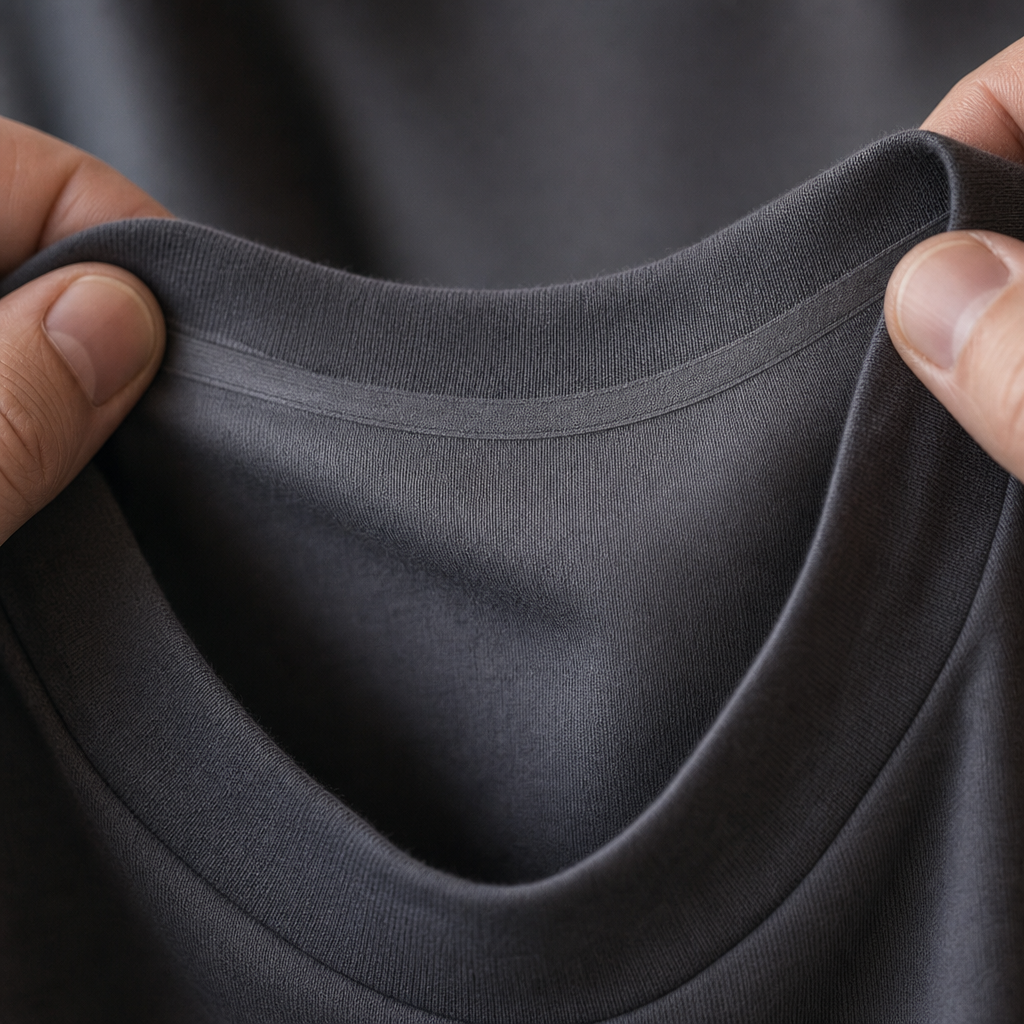
Pull the collar of almost any sportswear or underwear you own and have a look at the inside. No ridge. No line of little x-shaped stitches. Just a join, smooth and flush, like the fabric simply decided to become one piece. If you assumed that was particularly fine sewing, it wasn't sewing at all. That join was made by sound.
Ultrasonic welding has been quietly eliminating stitched seams for about two decades now. It arrived in garment factories via the aerospace and automotive industries, where it was already being used to bond plastics and metals without heat or glue. The principle is almost absurdly simple: press two pieces of thermoplastic-containing fabric together, pass high-frequency sound waves through them (typically somewhere around 20,000 to 40,000 cycles per second, well above anything you can hear), and the molecular vibration generates just enough friction heat at the contact point to fuse the materials. Then it cools. Done. No thread, no needle, no bobbin.
Why a 20,000-Year-Old Technology Is Starting to Lose
The stitch is genuinely ancient. We have bone needles from cave sites. The logic of pushing a thread through two layers of material and locking it in place has been the foundation of every garment ever made – from a Neolithic tunic to a Savile Row suit – and nobody improved on it for millennia because nobody could.
The problem with a sewn seam, when you start to think about it, is that it's a row of tiny holes. You've literally perforated the fabric. In a waterproof jacket, that means every stitch point is a potential leak. In high-performance sportswear, the ridge of a seam is a source of chafing. In underwear, it's the thing you can feel digging in all afternoon. Ultrasonic welding solves all three at once: no holes, no ridge, nothing to rub.
What Actually Happens in the Machine
The device doing this is called a sonotrode (which sounds like something out of a Cold War spy thriller, but there we are). It presses against the fabric while vibrating at that extreme frequency, and the energy is focused precisely at the join line. The process takes less than a second per centimetre – faster than sewing, cheaper in material terms because it uses no thread, and it produces a bond that in many cases is stronger than the surrounding fabric itself. A welded seam on decent activewear can outlast the garment.
Why isn’t ultrasonic welding used on all clothing?
Ultrasonic welding only works where the fabric contains a thermoplastic. Polyester, nylon, and their various cousins melt briefly and re-bond. Pure cotton, linen, wool? They just scorch. So your merino knitwear is staying stitched, and your heavy denim is safe from the sonotrode. The technology has colonised performance fabrics and synthetic lingerie almost completely, but natural fibres remain stubbornly resistant.
Still, next time a seam on a synthetic garment looks suspiciously clean, have a closer feel. There is a very real chance nobody sewed it. A machine screamed at it, very quietly, and that was enough.
Questions this raises
- Can a welded seam be repaired once it fails?
- Does a welded seam last longer than a stitched one?
- How do you tell welded fabric from glued fabric?