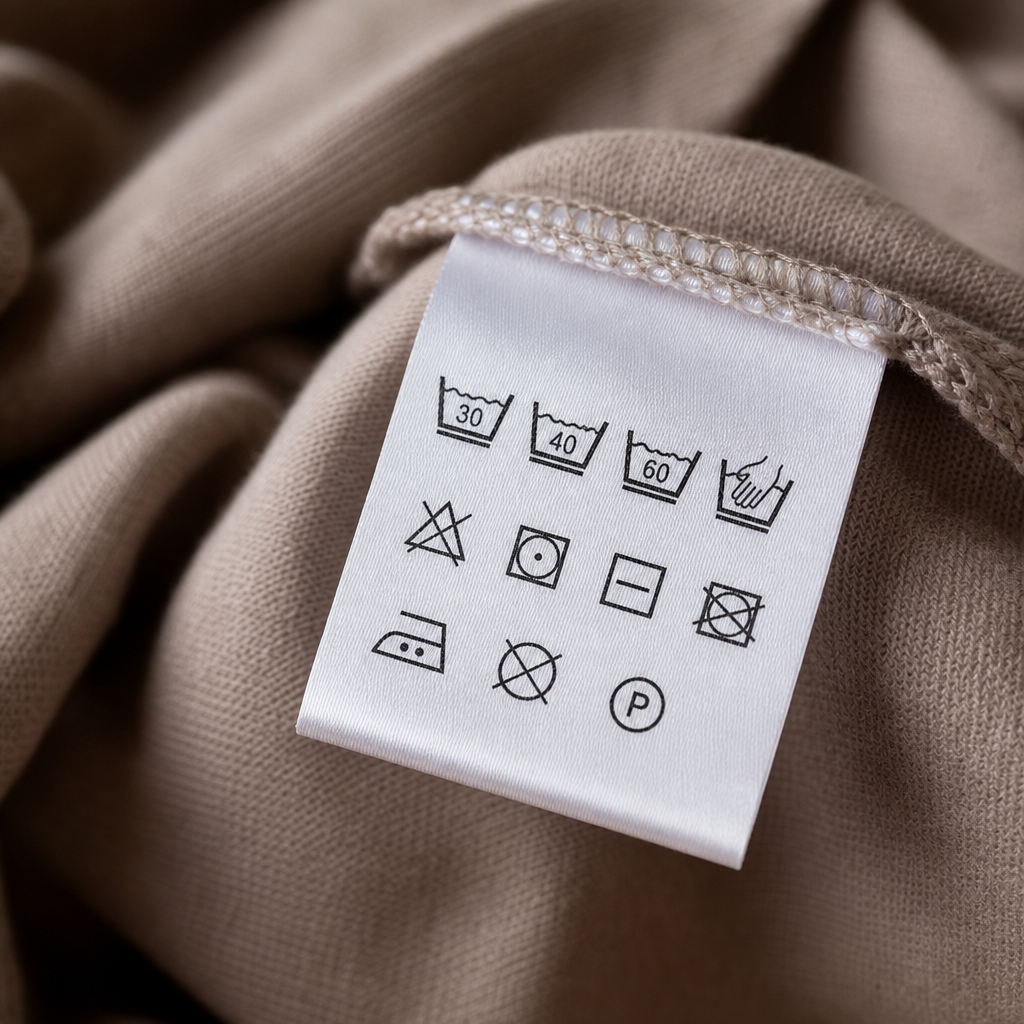
Every piece of clothing you own is carrying a small document written in a language you were never taught. It's stitched into the side seam or the back neck, it scratches against your skin on warm days, and you have almost certainly ignored it your whole life. Which is a shame, because it's actually trying to tell you something quite specific.
Those symbols were standardised by an international body called GINETEX – the French acronym, naturally, because of course it is – and in the UK they carry legal weight. Manufacturers are required to include them. And yet nobody hands you the key.
The Tub (And What "Gentle" Really Means)
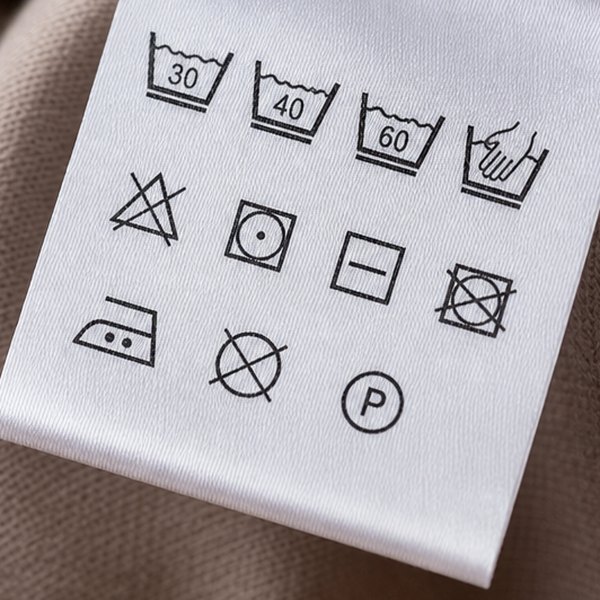
The washing tub is the one most people squint at. A plain tub means machine wash. A number inside tells you the maximum water temperature in Celsius – not a rough guide, but actual agreed thresholds set by textile chemists. Thirty degrees, forty, sixty. A single line underneath the tub means a gentle cycle. Two lines means something even more reduced in agitation. No lines? Go for it.
The hand in the tub is the one people tend to misread as "wash this softly and vaguely." It doesn't mean that. It means the garment cannot tolerate mechanical agitation at all – the drum rotating, the clothes tumbling against each other. That specific physical action is what damages the fibre, not the water, not the temperature. Handwashing keeps the fabric moving through water rather than against itself. There's a difference, and the symbol is trying to tell you exactly that.
The Triangle That Isn't About Bleach (Except When It Is)
A plain triangle means you can use any bleach. A triangle with two diagonal lines through it means chlorine-based bleach only – non-chlorine alternatives are fine. A completely crossed-out triangle means no bleach of any kind.
The reason the chlorine one matters chemically is brutal. Chlorine bleach (sodium hypochlorite) doesn't just lift colour: it breaks the peptide bonds in protein fibres like wool and silk at a molecular level, essentially dissolving the structure of the fibre over time rather than simply staining or fading it. That's why your grandmother's woolly jumper didn't survive the "just a small splash" incident.
Why do the dots inside the iron symbol matter?
One dot: 110°C, safe for synthetic fibres like acrylic and nylon. Two dots: 150°C, for wool, polyester blends. Three dots: 200°C, for cotton and linen. These aren't conservative suggestions – they're the temperatures at which different fibre types begin to deform or scorch. Synthetics will actually melt at cotton settings, which produces a shiny, slightly tragic patch that no amount of re-washing will fix.
The crossed-out iron is simple enough: the fibre cannot take direct dry heat, full stop.
What does the circle symbol on a care label mean?
A circle means dry clean. A letter inside it (P, F, W) tells the dry cleaner which solvent is safe to use on that specific fabric. You don't need to memorise those – that one really is for the professionals.
But the rest of it? That tiny scratchy label is a surprisingly complete set of instructions, written in good faith by people who knew exactly what they were talking about. Worth a second glance next time it's irritating you.
Questions this raises
- Are care labels legally required in the UK?
- Can you wash something hotter than the label says?