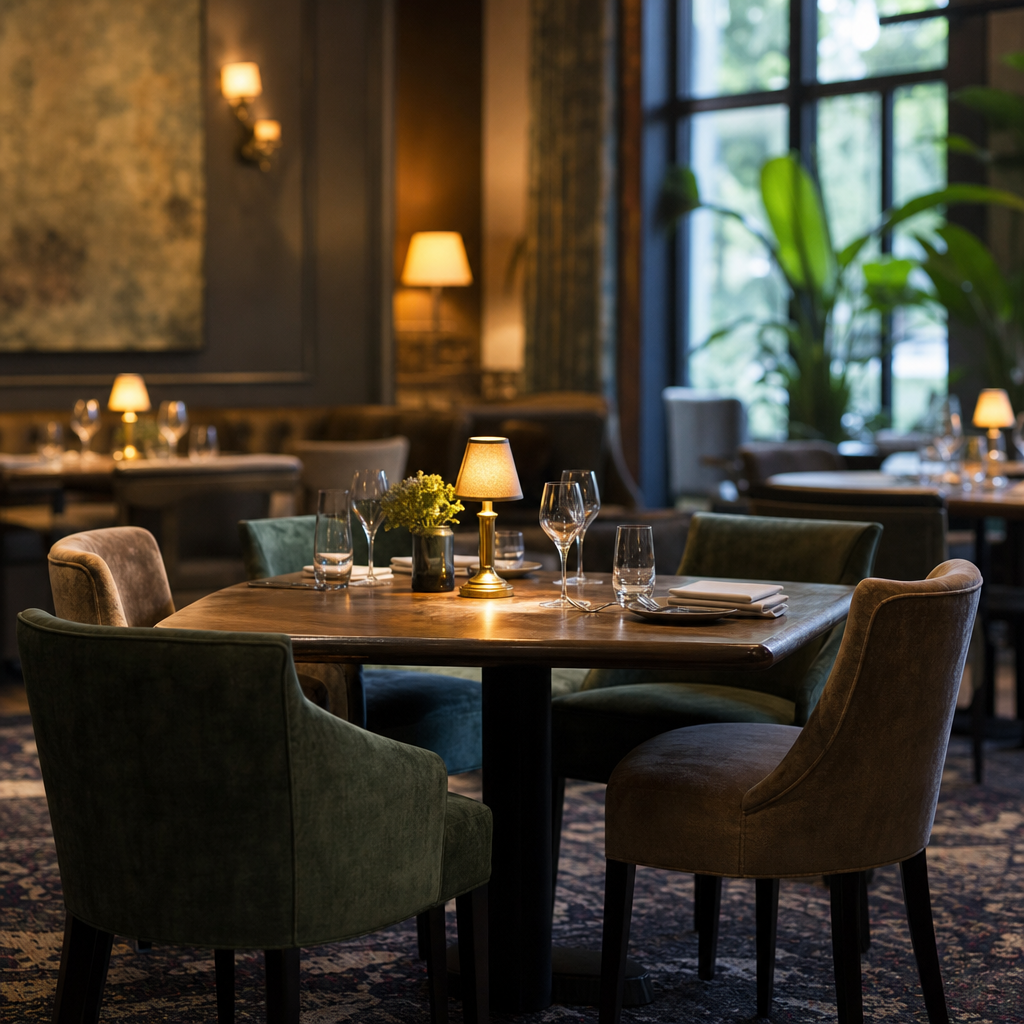
You think you're tipping for the service. The attentive refills, the smile when you changed your order, the way she remembered you'd asked for no coriander. That's what's going through your head as you tap the card machine and nudge the percentage up a notch. Feels like a considered, personal judgement. It isn't, really. It's the room talking.
The hospitality industry worked this out a long time ago. And the research behind it is genuinely strange reading.
Does slow background music really increase tips?
Tempo is the most documented one. Slow background music – not soft, specifically slow – produces measurably higher tips than fast music. Even when customers report enjoying the faster tracks more. The working theory is that slow music stretches the subjective feeling of time at the table. You linger a little longer in your own sense of satisfaction, and that slight warm drift turns out to be worth a percentage point or two on average.
The same principle applies to volume. Loud rooms push people toward quicker, slightly more impulsive decisions. You tap and go. Quieter rooms, or rooms where the acoustics have been softened with upholstery and carpet, produce more deliberate ones – and deliberate, in this context, tends to mean more generous.
The Thermostat Is Not Neutral
Slightly warmer rooms produce higher tips than cool ones. Not hot – hot makes people uncomfortable and they leave faster. But a degree or two above what you might call neutral produces a faint physical ease, the kind your body reads as contentment, and that contentment gets attributed to the meal, the service, the whole evening. Your nervous system doesn't really distinguish between "warm because the room is lovely" and "warm because someone turned the dial up."
Lighting intensity does something similar. Harsh, bright light sharpens critical thinking – you notice more, including the things that weren't quite right. Dim, warm light softens the whole experience into a general impression of pleasantness. Restaurants have known this for so long that it's just called atmosphere now, which is a very good name for something doing quite a lot of invisible work.
For a broader look at how forces you can't see shape decisions you think are yours, The Seam That Isn't There.
What the Tip Is Actually Measuring
None of this is to say that service doesn't matter – it does, on the extremes. Genuinely bad service still gets nothing. Genuinely exceptional service gets recognised. But in the wide middle ground where most meals and most tips actually live, the variance isn't really about the waiter. It's about whether the room was 19 degrees or 21, whether the speakers were playing something at 60 beats per minute or 90, whether the lights made the walls look honey-coloured or slightly institutional.
You leave, feeling good about the evening, feeling like you made a fair and considered call. The thermostat got there first.
Questions this raises
- How much do British diners typically tip?
- Do card machine prompts push tips higher?
- Where does a restaurant service charge actually go?