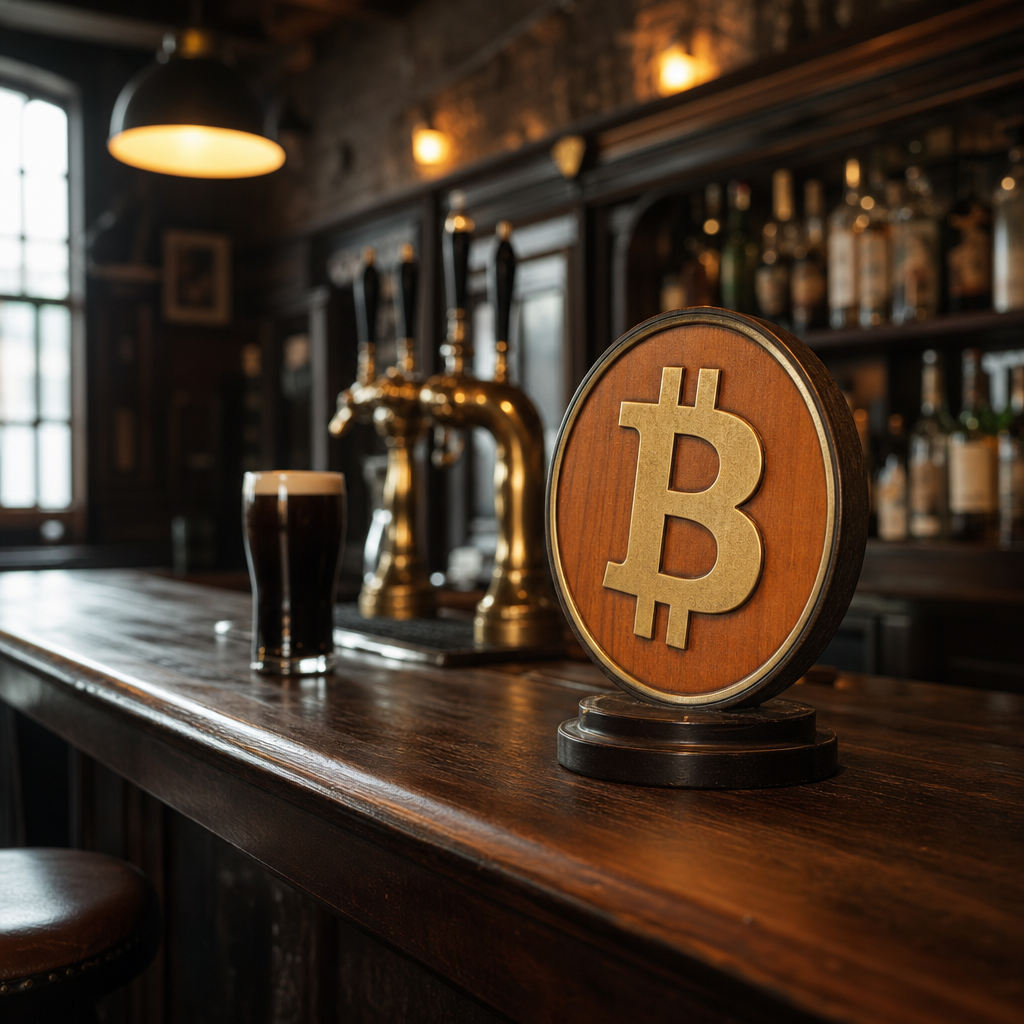
Somewhere around 2014, wedged between the fruit machine and the gents in a London pub, there was a beige box about the size of a photocopier that would give you Bitcoin in exchange for cash. No account. No forms. No bloke in a suit asking about your risk appetite. Just a tenner, a phone, and a QR code that represented – depending on when you cashed it in – either a pint's worth of nothing or a mortgage deposit.
This actually happened. Bitcoin ATMs appeared in a wave across London pubs, chicken shops, and convenience stores from roughly 2013 onwards. The choice of venue was not accidental.
Why a Pub Made Perfect Sense
Pubs were already in the business of bending financial services into casual surroundings. They sold lottery tickets, took football coupons, ran pools. The logic was always the same: cash-heavy footfall, a relaxed atmosphere, and customers who weren't going to demand a prospectus before handing over a fiver.
The licensing grey area helped too. A Bitcoin ATM wasn't a bank, wasn't a bookmaker, and wasn't regulated as either. You could bolt one to a wall the way you'd install a photo booth, and nobody was entirely sure whose job it was to stop you.
The machines themselves were brilliantly low-tech for something so futuristic. You fed in cash, the machine connected to an exchange, and it printed or displayed a QR code representing your fraction of a Bitcoin. Some early ones didn't even need ID for small amounts. Walk in thirsty, walk out a speculative investor.
The Actual Problem They Were Solving
The reason those machines existed at all was that getting hold of cryptocurrency in its early years was genuinely baffling. You could mine it yourself if you had the hardware and the electricity bill of a small factory. You could find someone online willing to swap it for cash – which required a level of trust in strangers that most sensible people couldn't muster. Or you could try an exchange, which in 2013 meant wiring money to a website that might not exist next Tuesday.
The pub ATM was an attempt to solve what the industry calls the on-ramp problem: how do ordinary people actually get from pounds in a wallet to digital currency on a phone? The answer, for a brief strange window, was through a pub in Hackney, with a minimum transaction of £5.
From the Fruit Machine to the App Store
Those machines mostly vanished after the Financial Conduct Authority started paying closer attention and the major exchanges began making their apps genuinely simple to use. Buying crypto today looks nothing like a sticky-floored transaction next to the cigarette machine. Download an app, verify your identity, buy with a bank transfer or debit card in about four minutes. Platforms like Coinbase, Kraken, and the UK's own Luno have made the on-ramp almost boring.
Which is, in a way, the whole story of how a technology moves from the fringes to the mainstream. It starts in a pub. It ends up on your phone, sitting between your banking app and your supermarket loyalty card, looking as if it was always supposed to be there.
Questions this raises
- Are Bitcoin ATMs still legal in the UK?
- Why did the FCA shut the crypto machines down?
- How much did those machines charge in fees?
- What happened to people who lost their wallet keys?