Blog

  • The Actuary Decides What’s Trendy

    The Actuary Decides What’s Trendy

    Somewhere in a glass tower in the City of London, a person with a spreadsheet and a very calm face is deciding whether your next big thing is allowed to happen. Not a magazine editor. Not a TikTok algorithm. An underwriter.

    This sounds like a conspiracy theory, but it's really just how risk works. And once you see it, you can't unsee it.

    Actuary analyzing fashion trend data — detail

    What is a loss curve in insurance?

    Every trend that makes it to the high street has, at some point, passed through a room full of actuaries asking a very specific question: can we draw a loss curve around this? A loss curve is essentially a map of how often things go wrong, how badly, and how predictably. For anything an insurer touches – a new product, a new activity, a new piece of kit – they need enough historical data to sketch that curve before they'll agree to cover it.

    If they can sketch it, the trend gets a price. If it gets a price, it gets liability cover. If it gets liability cover, it gets a supplier, a retailer, a brand, a launch event, and eventually a shelf in Boots.

    If they can't sketch it because the thing is too new, too weird, or the injury patterns are too unpredictable, the price comes back either astronomical or nonexistent. Either way, the trend quietly doesn't happen.

    Can a business get cover for something genuinely new?

    E-scooters are an interesting case. The technology existed for years before any mainstream rental scheme arrived in the UK. What held it back wasn't engineering or demand – it was that insurers couldn't agree on how to model the risk. Was it a bicycle? A moped? A pedestrian with wheels? Until the liability question settled down, the rollout stayed messy and piecemeal.

    Trampolining parks moved faster because soft-play centres had already given the industry a usable dataset for how children hurt themselves in foam-padded environments. The actuaries had something to work from. The parks arrived.

    DIY laser treatments – the kind of skin device marketed online as "clinical grade" – are in the strange middle zone right now. Salons can get cover for supervised treatments. Home devices are a different story. The claims data is thin, the user behaviour is impossible to model, and the result is that the category keeps almost breaking through without ever quite doing so.

    For a genuinely thoughtful piece on how the luxury travel industry handles its own version of this unspoken pricing problem, read The Only Honest Review of a Luxury Holiday Comes From Someone Who Can't Read at https://savingourplanet.co.uk/the-only-honest-review-of-a-luxury-holiday-comes-from-someone-who-can-t-read/.

    What This Means for the Next Big Thing

    The cheerful upshot is that trends which look unstoppable are usually more than they seem – they've already survived a room full of sceptical people with calculators. The bleaker reading is that some genuinely interesting ideas never arrive not because nobody wanted them, but because the loss curve wouldn't cooperate.

    So next time a trend lands and feels oddly inevitable, it probably is. The influencers just got there after the actuaries had already signed off.

    Questions this raises

    • How does an insurer decide something is too risky to cover?
    • Why do some activities become impossible to insure?
  • The Tap That Ate Your Savings

    The Tap That Ate Your Savings

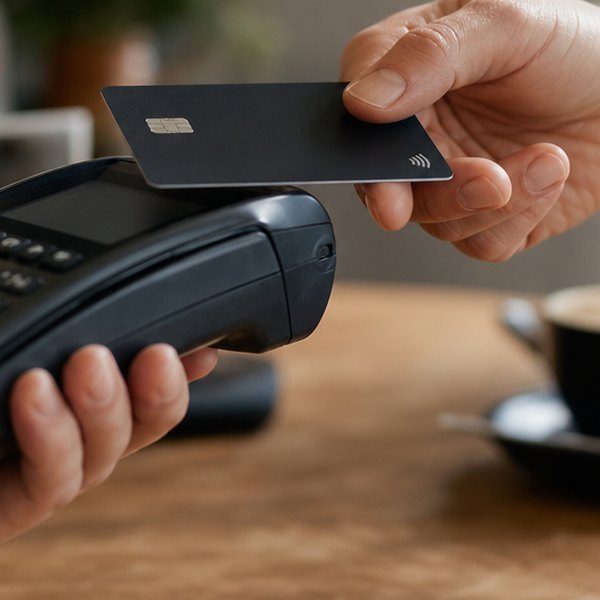
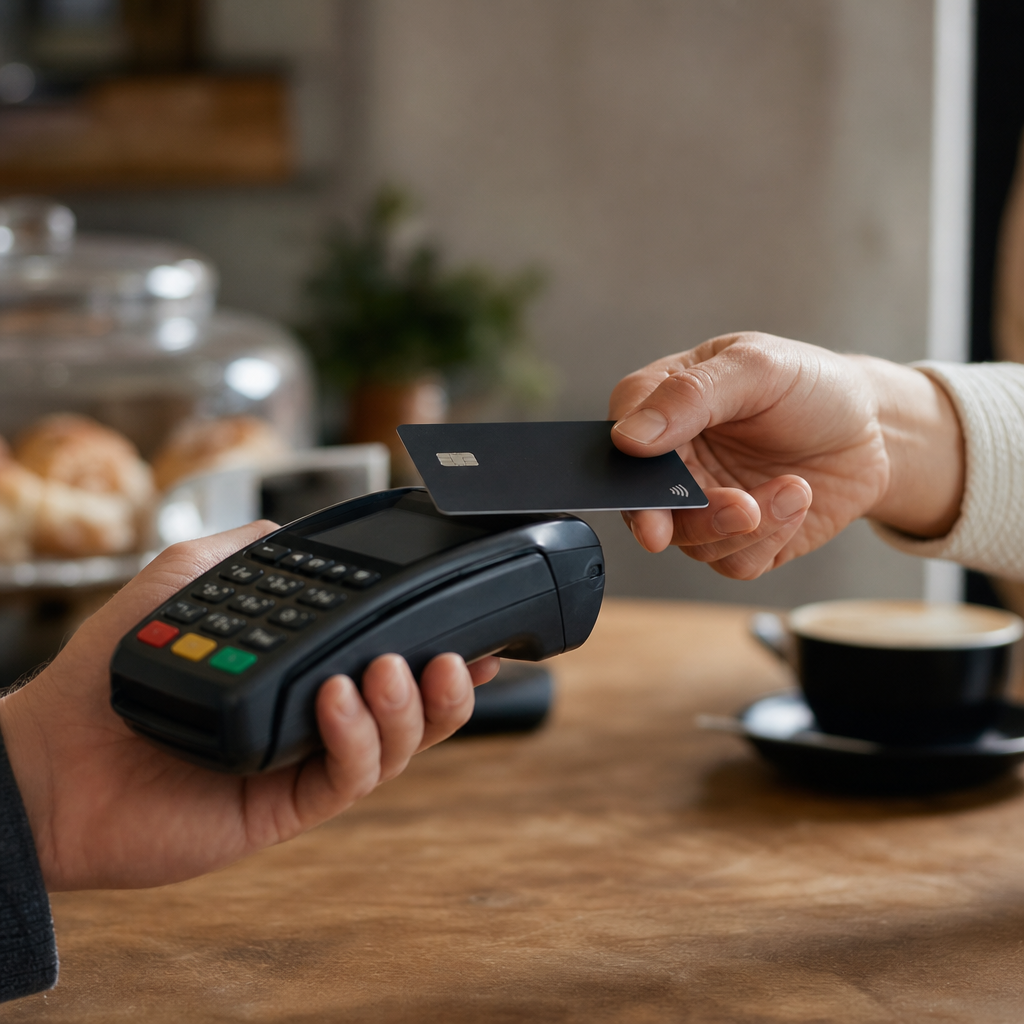
    There was a time, not long ago, when spending money felt like spending money. You'd open your wallet, count out the notes, feel their slight papery drag between your fingers, stack the coins in your palm and hear them clink against each other. You handed the whole warm pile to another human being. It took a moment. That moment mattered.

    Nobody designed that friction on purpose. It was just a side effect of money being a physical thing. But it was doing quiet, useful work all the same – a tiny built-in pause between wanting something and paying for it. A speed bump nobody asked for that nearly everyone relied on.

    Overflowing kitchen tap wasting water — detail

    Does paying in cash actually reduce overspending?

    Neuroscientists who study spending behaviour have known for a while that physical payment activates different parts of the brain than digital payment does. Handing over cash produces a measurable stress response – a faint, momentary discomfort that registers the loss. It's sometimes called the "pain of paying." And it is not a bad thing. That little wince was doing the job of a conscience.

    Tapping a card produces almost none of it. The transaction feels, to the brain that evolved counting out Roman denarii, like barely anything at all. Nothing left your hand, nothing heavy changed pockets, no coins shifted. The brain logs it somewhere, eventually, but not in the moment – and the moment is when the decision gets made.

    What Got Quietly Removed

    The clink, the counting, the physical handover – these were accidental brakes built into every transaction. Retailers knew this even before the science did. Casinos replace cash with chips because the translation makes it easier to bet. Theme parks sell wristbands. Gift cards are popular partly because the moment of payment got separated from the moment of spending. Once the friction is gone, the spending flows.

    Digital payments simply took that principle and installed it everywhere, in every coffee shop and corner off-licence in the country. The tap replaced the pause. Speed replaced deliberation. UK household savings rates, which sat comfortably in double digits through the cash-heavy decades, dropped sharply once contactless became the norm – not because people got greedier or more reckless, but because the small mechanical drag that used to slow them down had been optimised away.

    For a look at the surprising amount of practical information that gets woven into everyday objects, The Tiny Technical Manual Sewn Into Your Clothes.

    How can you put friction back into your spending?

    Since nobody is going to reinstall coin-operated supermarkets, the trick is to re-introduce friction manually. Some people withdraw a fixed cash amount each week for discretionary spending, precisely to feel it leaving. Others set up a rule: anything over £30 online has to sit in a basket for 24 hours. Not because the item gets cheaper – it doesn't – but because the gap does what the coins used to do. It gives the brain time to weigh up what's actually happening.

    The tap is quick. That's the entire point of it, and it is very good at being quick. It's just not very good at saving you money.

    Questions this raises

    • Do people really spend more using contactless?
    • What is the UK contactless limit now?
  • The Holiday That Died on a Typo

    The Holiday That Died on a Typo

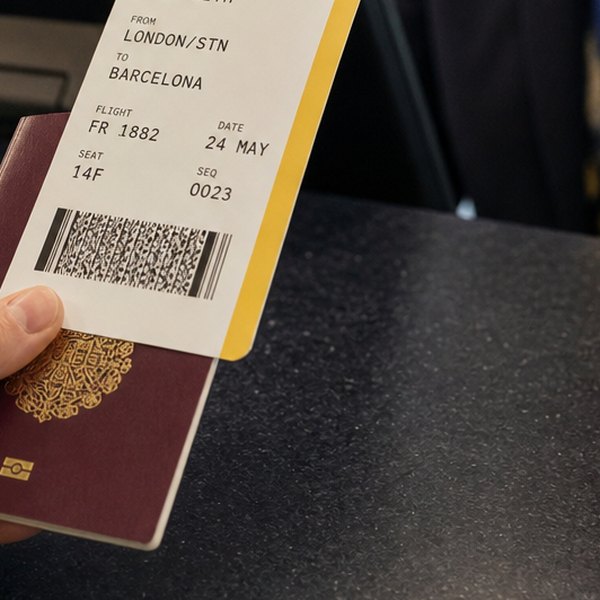
    Somewhere in the world, right now, someone is standing at an airport check-in desk watching their cheap holiday evaporate. Not because of weather, or a cancelled flight, or a lost bag. Because their boarding pass says "JON" and their passport says "JOHN", and these are, in the eyes of the airline's system, two completely different human beings.

    It sounds absurd. It is absurd – and it is, unfortunately, governed by a layer of international rules most travellers have never heard of and will never read until the moment they become catastrophically relevant.

    Typed error on holiday announcement — detail

    Where the Rules Actually Come From

    The International Civil Aviation Organisation – ICAO, the UN body that sets global aviation standards – requires that a passenger's name on a boarding document matches their travel document exactly. Not roughly. Not close enough. Exactly. Carriers build their own ticketing policies on top of that foundation, and budget airlines in particular tend to enforce it without much warmth. Their margins are thin. Their rebooking fees are not.

    Ryanair, easyJet and Wizz Air all publish name correction policies. They differ slightly. What they share is this: a "minor" correction (one or two characters, caught before departure) will cost you a fee. A "name change" – which is how they classify anything beyond that, including swapping a nickname for a full legal name – is treated as a cancellation and a new booking, at the current fare. On the morning of travel, the current fare is rarely £29.99.

    Does a middle name have to match your passport?

    The trickiest version of this isn't a fat-fingered typo. It's the name people actually call themselves. Someone who has gone by "Nikki" their whole life books a holiday as Nikki. Their passport, issued in a more formal moment, says Nicola. These are the same person. The check-in desk does not care.

    The same trap opens up around middle names. Some booking forms ask for them, some don't, and people answer inconsistently without thinking. If your passport shows three names and your booking shows two, you may be fine – or you may not, depending on which airline, which desk, which day. The policies are written in a way that gives the carrier discretion, which is not the same as giving you reassurance.

    How much do airlines charge to correct a name?

    Work it out from the other direction. You saved £60 booking early. The name correction fee on most budget carriers sits between £30 and £55 per passenger, per flight, already eating your saving before you factor in the non-refundable hotel, the airport car park, the travel insurance excess. If the correction tips into "name change" territory and you're buying a new ticket on the day, you're typically looking at several hundred pounds on a route that was selling for £40 a month ago.

    The cheap holiday was never the flights. It was all the bits attached to the flights. All of them depended on those flights departing with you on them.

    So before you close the booking confirmation and forget about it: open your passport, read the name on the screen, and compare every single character. Thirty seconds now. An airport rebooking desk is a much slower way to learn the same lesson.

    Questions this raises

    • Can you change the name on a flight booking?
    • Will travel insurance cover a name-mismatch refusal?
  • The Shop That Sold You a Number

    The Shop That Sold You a Number

    Before there were sizes, there was Sid.

    Or whatever your local draper was called. Every high street had one, often two or three, and for most of the nineteenth and early twentieth centuries they were as essential as the baker or the butcher. You went in, you pointed at bolts of fabric stacked floor to ceiling – wool serge, cotton drill, a bit of flannel if you were feeling flush – and Sid or someone like him cut you a length. You took it home, or a seamstress came to you, or your mother ran it up on a treadle machine, and a few days later you had a coat. It fitted you because it was made around you.

    Shop counter with numbered tickets displayed — detail

    The draper was also, quietly, a banking system. Many ran informal weekly credit arrangements – you took the cloth home and paid it off over a month or two. No interest rate discussion, no credit check, just a ledger and the understanding that you'd be back. Families relied on this for school uniforms, work clothes, Sunday best. The draper knew everyone's measurements. Often they knew everyone's circumstances too.

    When did ready-made clothing replace made-to-measure?

    The phrase "off the peg" dates back to the mid-1800s, when the first pre-made garments – usually men's work clothes – were literally hung on pegs in shop doorways. But it was a novelty. A convenience item for emergencies, not how most people clothed themselves. That remained true well into the 1940s.

    What changed it was the Second World War, specifically the production infrastructure built to clothe entire armies. Manufacturers had spent years cutting fabric to standardised templates for millions of soldiers and, when the war ended, they had the machinery, the skills and the factories to do the same thing for civilians. The question was just: which civilians, and in what shape?

    The Fiction Everyone Agreed to Accept

    Here is the slightly uncomfortable truth about your size. It is not a measurement. A size 14 dress has no fixed dimensions – it varies by brand, by decade and by country. The "sizes" manufacturers settled on in the postwar years were derived from a 1939 US study of around 15,000 women, conducted by the Works Progress Administration. They measured real people but then, for commercial convenience, those measurements were smoothed into a neat ascending ladder of fictional average bodies. Retailers needed a system everyone could use without a tape measure. So they built one and called it sizing.

    Britain developed its own version. The numbers moved around. They still move – what was a 12 in the 1970s and what is a 12 now are not the same garment. What stayed constant was the idea that the number is real, that it describes you, that it means something fixed. It doesn't.

    What killed off the high street draper?

    The draper's shop didn't die slowly. It was gone inside a generation. By the mid-1960s the high street had reorganised around finished objects and rack sizes, and there was simply nothing left for Sid to sell that a Marks & Spencer couldn't offer more cheaply and without all that business with the ledger. The community credit system, the made-to-measure thinking, the whole idea that you bought cloth and labour rather than a finished thing, it all collapsed together, at once.

    Which perhaps explains why so many people feel vaguely odd about clothes shopping. You are not choosing something made for you. You are choosing which commercial fiction fits you closest. The draper would have found that quite strange.

    Questions this raises

    • How did a draper's weekly credit arrangement work?
    • Does made-to-measure still cost more than off-the-peg?
  • That missed payment from 2019 is still sitting on your credit file. So is the

    That missed payment from 2019 is still sitting on your credit file. So is the

    Everything Rots – On a Schedule

    In the UK, negative information on your credit file has a precise lifespan of six years. That applies to almost everything: missed payments, defaults, County Court Judgements, debt management plans. The moment the six-year clock runs out, the credit reference agencies – Experian, Equifax, TransUnion – quietly dispose of it. It doesn't move to a dusty archive. It isn't flagged as "resolved." It just disappears entirely, as if it never happened.

    The clock starts from the date the account defaulted or the event occurred, not from when you paid it off. So settling an old debt doesn't reset the timer – the entry still rots away on its original schedule. That distinction matters more than most people realise.

    Person reviewing past credit report payment history — detail

    What Doesn't Compost (Quite as Cleanly)

    Some things take longer to break down, or leave residue. A bankruptcy in the UK stays on your file for six years from the date of the order, but the effects can linger in indirect ways – certain lenders keep their own internal records and may decline applicants even after the public credit file has cleared. Electoral roll information, on the other hand, is useful material: being registered to vote at a stable address adds a kind of steady, slow-release nitrogen to the heap, quietly improving your profile.

    Accounts with no activity can thin out your file over time too. An old credit card you never use might age off gradually, leaving your file looking bare – which isn't the same as clean.

    Managing the Top of the Heap

    Here's the practical bit: what lenders actually see when they check your file is whatever is sitting on top right now. Old bad material will compost away on its own timetable, but your job is to make sure fresh, healthy material is being added regularly. A credit card used lightly and paid off in full each month. A mobile phone contract. A utility bill in your name. These generate recent, positive data that sits prominently at the top of the heap.

    Checking your own file (which doesn't affect your score) via any of the three agencies is worth doing once a year. Partly to see what's decomposing. Partly to catch anything that shouldn't be there at all: wrong addresses, accounts you don't recognise, defaults that are past their six years and should already be gone.

    The heap doesn't stay the same. It's always turning over. Knowing that is half the job.

    Questions this raises

    • Does paying off a default remove it from your file?
    • How long does a CCJ stay on a credit file?
    • Can you get a mistake removed from your credit report?
    • Which credit reference agency do UK lenders actually check?
  • The Trend That Had to Pass Its MOT First

    The Trend That Had to Pass Its MOT First

    Picture a room in Brussels, or maybe Pantone's headquarters in New Jersey. It looks less like a fashion studio and more like a committee meeting for a medium-sized water company. Fluorescent lights. A projector. People with lanyards. Someone has brought a plate of biscuits. And somewhere in this room, the colour you will be wearing next autumn is being formally agreed upon.

    This is how trends actually happen. Not on a street corner in Shoreditch, not on a mood board in a creative director's dream, but in a ratification process that would feel entirely at home to anyone who has ever watched a safety standard get approved.

    Vehicle undergoing MOT inspection test — detail

    Who decides the colour of the year?

    Twice a year, representatives from fibre producers, yarn manufacturers, dye houses, and retail buyers gather at trade bodies like Première Vision in Paris or the Color Association of the United States – the latter of which has been meeting since 1915 – and formally vote on a seasonal palette. Not suggest. Vote. The Pantone Colour Matching System, which underpins almost every fashion and homeware trend you encounter, operates its own Colour of the Year panel: a group of colour experts who spend months building a technical case for a single shade before it is published. That announcement, treated by lifestyle journalists as a burst of cultural inspiration, is actually the output of something closer to peer review.

    The International Colour Authority, based in London, runs a similar process eighteen months ahead of any retail season. Eighteen months. By the time a particular dusty sage appears on the rail at your local high street, it had already passed through a panel roughly the same time ago that you were still wearing whatever you wore last spring.

    How far ahead is a season’s colour palette agreed?

    The reason is entirely mechanical. A yarn mill in northern Italy needs nine months to dye, spin, and ship enough fibre to justify a new colour. A garment factory in Bangladesh needs its buyers to commit to a fabric before it can weave it. A retailer needs to place orders before the factory will start. Each of these steps has a minimum lead time, and they sit end to end like components on a production line. The trend has to be decided early enough for the physical object to exist at all.

    So the colour you are told is "having a moment" was, in industrial terms, ratified before anyone was having that moment. The cultural feeling follows the certification. The inspiration is retrospective.

    For a broader look at how the same kind of invisible institutional layer shapes the financial world – the bodies and processes that quietly underwrite what feels like open market activity – The Ground Beneath Your Money at savingourplanet.co.uk is worth an hour of your time.

    What the Shop Floor Is Selling You

    None of this means the clothes are bad, or that nobody ever genuinely loves a colour. People do. The point is just that the story of a trend arriving organically, bubbling up from real life into shops, is almost entirely backwards. The shop came first. The cultural moment was scheduled. And somewhere, a person with a lanyard cast the deciding vote.

    Questions this raises

    • Do retailers have to follow the forecast colours?
    • Is colour forecasting simply self-fulfilling?
  • The Measuring Stick That Doesn’t Measure Straight

    The Measuring Stick That Doesn’t Measure Straight

    There is a number buried inside every UK student loan that has never, in any government leaflet, had a spotlight turned on it. Not the interest rate itself – you might know that one, or at least have vaguely read it. The hidden thing is the tool used to calculate it: a piece of statistical machinery called the Retail Price Index, or RPI. It does not sound like something to get angry about. That is, genuinely, part of the point.

    The Instrument That Got Demoted (But Kept Its Job)

    RPI is one of several ways the UK measures inflation – how fast the prices of everyday things are rising. For decades it was the standard tool. Then, in 2019, the UK Statistics Authority formally declared it flawed. Their conclusion: the methodology had a known bias causing it to overstate inflation compared to more modern measures. It was stripped of its designation as a National Statistic. The government's own statisticians, in plain language, said: this one gets it wrong.

    Bent or curved measuring ruler — detail

    The replacement – CPIH, which includes housing costs and uses better averaging methods – tends to run about 0.5 to 1 percentage point lower than RPI in most years. That sounds like a rounding error. On a student loan balance of £50,000, compounding over decades, it is not.

    Why are student loans still tied to RPI?

    The current student loan structure was remodelled in 2012, when tuition fees rose to £9,000 a year. At that point, someone chose RPI as the inflation base for interest calculations. It was already a contested measure then; the arguments about its accuracy were not new. But it was embedded anyway, and it has stayed embedded ever since, surviving the formal downgrade in 2019 without so much as a tweak.

    The interest rate on a Plan 2 student loan (the one most graduates from English universities since 2012 carry) is currently RPI plus up to three percentage points while you are studying, and RPI plus zero to three points after you graduate, depending on income. The RPI component is not a minor garnish – it is the foundation.

    For a parallel example of policy quietly designed to work on people rather than explain itself to them, visit The Government That Gave Up Trying to Persuade You at https://savingourplanet.co.uk/the-government-that-gave-up-trying-to-persuade-you/.

    Does the interest rate affect what most graduates repay?

    For most graduates, this produces an odd phenomenon: the loan balance rises for years after they start repaying it. You send money in. The balance goes up. Not because of bad luck or missed payments – just because the interest, anchored to a measure the statisticians themselves called defective, outpaces what a typical salary can chip off.

    The government's stock response is that most borrowers will never fully repay anyway (the debt is written off after 40 years on Plan 2), so the interest rate is largely notional. Which is true for some borrowers. But for higher earners who do repay in full, the RPI attachment costs them real money over the life of the loan – and the choice of instrument, made quietly in 2012 and never reversed, is what does the work.

    The Reason It Matters That Nobody Told You

    A flawed ruler, kept in use because it measures long, built into a debt that 1.9 million people are currently repaying. The interesting thing is not the injustice of it, though you can argue that too. The interesting thing is how unremarkable it seems – just a technical detail in a financial product you had no choice but to take, expressed in an acronym you were never asked to look up.

    RPI is not a conspiracy. It is just an old, convenient tool that happens to benefit the lender, inherited from a previous design, never examined by most of the people it shapes.

    Questions this raises

    • How much higher is RPI than CPI each year?
    • When will RPI stop being published?
  • The Places That Charge You for Knowing They Exist

    The Places That Charge You for Knowing They Exist

    Málaga to Marrakech is about 300 kilometres. You could drive it, if you didn't mind the Strait of Gibraltar. They sit so close on the map that if you fell asleep over Spain and woke up in Morocco you'd barely have missed anything. The fuel burn on both flights is almost identical. And yet Málaga will typically cost you three times the price of Marrakech. Sometimes more.

    That gap isn't geography. It's a set of decisions made by people you'll never meet, about places you've already decided you want to go.

    Tourist destination entrance fee sign — detail

    Why are flights to popular destinations more expensive?

    Airlines don't price by distance. They price by competition, and by what they've learned the market will quietly absorb. Málaga has fifteen carriers fighting over the same slots for four months of the year. Marrakech has fewer. The counterintuitive result? The route everyone knows about – the one with the brochures and the hen parties and the matching luggage – is the expensive one. Not because it costs more to fly there, but because enough people will pay whatever it costs.

    And that premium doesn't stop at the departure gate. It travels the whole way with you.

    The Invisible Queue of People Taking a Cut

    Every popular destination has a chain assembled behind the scenes, and every link in it has its rate card. The handling agent who turns the plane around at the airport charges a fee per passenger. The hotels pay commission to the big booking platforms – somewhere between 15 and 25 per cent on most rooms, sometimes higher – and then adjust their rack rates upward to cover it. The taxi rank outside arrivals in a well-trodden resort is frequently an informal cartel with agreed minimum fares. The restaurant with the prime seafront table has worked out precisely what a sunburned British family will spend without flinching.

    None of these people are villains. They've just done the maths that familiarity makes possible.

    Why "Adventurous" Is Often a Discount

    A destination becomes expensive not when it becomes beautiful, but when it becomes known. The economics only assemble themselves once there's reliable, predictable demand to feed. Which means somewhere genuinely unfamiliar – a secondary city, a country that hasn't yet appeared on the front of a Sunday supplement, a route that only one airline operates on Tuesday and Thursday – is often cheaper not despite being unfamiliar, but precisely because of it. The chain hasn't had time to form. The hotel still wants your booking. The taxi driver is still negotiating.

    Travellers who end up somewhere like Plovdiv, or Porto before Porto became Porto, or Tbilisi on a whim often report the same mild bewilderment: this was inexplicably cheap. It wasn't inexplicable. It was just unfamiliar enough that nobody had got around to pricing in the fact that they'd pay more.

    The Map You're Really Reading

    When you search for flights and feel the pull of the obvious destination, what you're really looking at is a map of other people's confidence. The expensive places are expensive because millions of people before you decided they were worth it, and the whole industry recalibrated accordingly. The cheap places are the ones where that consensus hasn't formed yet – they might be just as good, occasionally better. They've just not been priced for certainty.

    Questions this raises

    • How do airlines actually set ticket prices?
    • Does booking earlier really get you a cheaper fare?
    • Which cheap airports sit near expensive ones?
  • The Apparatus Wasn’t Built Around You

    The Apparatus Wasn’t Built Around You

    Somewhere in a call centre, a fraud alert has just triggered on your account. The system – doing exactly what it was designed to do – has locked you out and routed an automated voice call to your registered mobile number. It will read you a security code. You need to say the code back. The account will then.

    If you are deaf, or have significant hearing loss, that call is a wall. Not a minor inconvenience to be routed around, not a temporary glitch – a structural feature of the system doing its job perfectly, on the assumption that the person on the other end of the phone can hear it.

    Person standing alone outside institutional building — detail

    This is what it looks like when a financial system encodes a body into its machinery.

    The Invisible Default User

    The entire architecture of UK personal finance was built around someone. Not you, specifically – but a composite. A person who reads standard print at a standard pace, navigates colour-coded dashboards without difficulty, hears a phone call clearly, and processes a screen full of small text in a standard layout. That person is the assumed occupant of the whole apparatus: the account, the mortgage application, the credit file, the open banking interface with its tiny toggles.

    Nobody drew this person up on a whiteboard and made a deliberate choice. That, in a way, is exactly the problem.

    Traffic Lights You Can't See

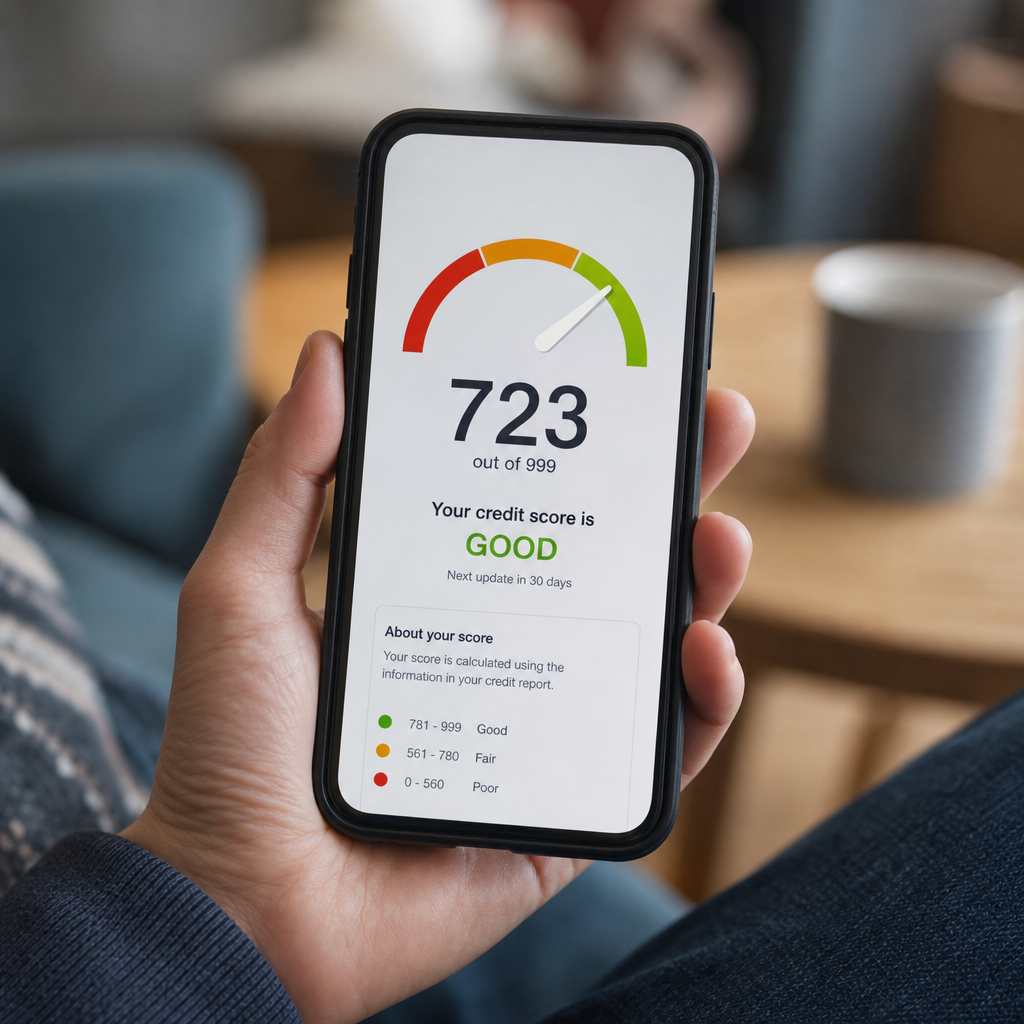
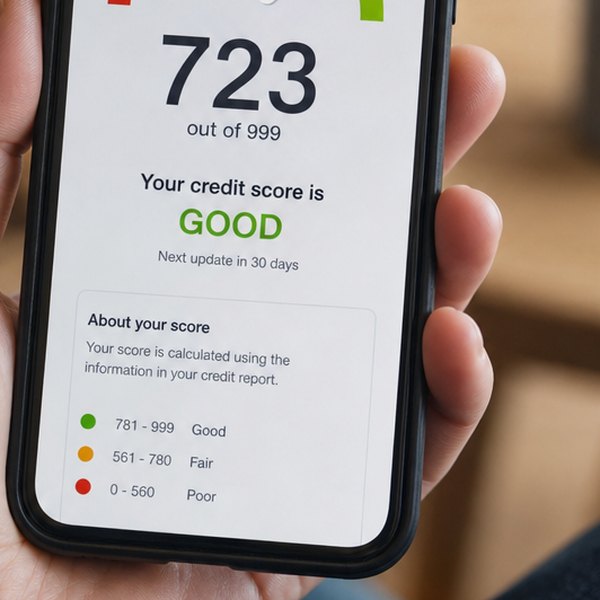
    Credit reference agencies in the UK – Experian, Equifax, TransUnion – present your credit score through colour-coded bands. Green is good. Red is bad. Amber is the anxious middle. It's a system designed for someone who can see colour and distinguish between those three signals at a glance.

    For the roughly 3 million people in the UK living with significant visual impairment, those traffic lights are not just hard to read – they're built on a metaphor that was never theirs to use. Screen readers can pick up the text underneath, if the underlying code is properly structured. Often it isn't. The colour is the signal, and the colour is inaccessible.

    For Windows and Doors Cardiff, the same lesson applies: the frame matters as much as what you can see through it. The idea that the suite was never really built for its supposed occupant is explored properly at The Suite Is Never Yours.

    Affordability Forms Written in One Language

    Mortgage affordability assessments, benefits applications, open banking consent screens – these are dense, jargon-heavy documents. Written at a reading level that assumes no particular difficulty with text, no friction with pace or attention or financial vocabulary. The kind of fluency that takes years to accumulate even if you have no additional barriers at all.

    For someone with dyslexia, or low literacy, or a cognitive impairment, the form itself is a test before the test – one you were never told you were sitting.

    What Happens When You Don't Fit the Mould

    The odd thing is that this is not a story about bad intentions. The people who designed these systems were mostly trying to make them efficient, secure, and clear. They just pictured a very specific person when they did it.

    That person got a working financial system. Everyone else got workarounds: third-party account access that raises its own vulnerability questions, charity helplines, patient family members sitting at the kitchen table translating. Not nothing, but not the same thing either.

    The architecture wasn't cruel. It just forgot to ask who else might be living inside it.

    Questions this raises

    • What must UK banks do for deaf customers?
    • How can you verify your identity without a phone call?
    • Does the Equality Act cover automated security calls?
    • Who do you complain to about inaccessible banking?
  • The Word That Means Everything and Promises Nothing

    The Word That Means Everything and Promises Nothing

    Sometime in the late 1960s, a group of British holiday-makers came home from Spain to find their tour operator had gone bust while they were away. No refund, no help, no legal route back to their money. This wasn't a fringe event. It happened repeatedly, and badly enough that the Board of Trade had to sit down and work out what, exactly, had been sold to these people – and whether the law could do anything about it.

    The answer took years of wrangling. What emerged was something you've probably never thought about: a legal definition of a "package holiday". Once Parliament decided that bundling flights, accommodation and transfers together created a specific kind of product with specific protections attached, the whole travel industry had to decide which side of that line it wanted to stand on.

    Abstract word cloud with ambiguous text — detail

    The Gap They Found (And Kept)

    The word "luxury" lives in the space that definition left open. And that space is larger than you'd think.

    A high-end travel company selling you a curated villa, a private transfer and a hand-picked itinerary may be operating entirely within the Package Travel Regulations – in which case you have solid legal protection if something goes wrong. Or it may have structured its offering so that the flights are booked separately, the accommodation is technically a direct booking, and the "curation" is a service layered on top. In that case, the legal protections are much thinner. Legally you haven't bought a package at all. You've bought several individual things at once.

    The two scenarios can feel identical. They can cost the same, and the brochure language will be indistinguishable. What differs is what you actually own.

    For luxury holidays and what they're made of, What The Colours Are Actually Telling You is worth a read – because "luxury" works on the same principle as colour in branding: it tells you how to feel, while the small print quietly describes what you've got.

    Am I covered if the tour operator goes bust?

    The word doesn't have a legal definition in travel. Never has. It signals a feeling – unhurried, elevated, attended-to – and it does that job extremely well. But it can't tell you whether your money is protected if the operator folds in October and you're due to fly in January.

    Before any of the Egyptian cotton or the private plunge pools, check whether the booking is ATOL protected (which covers air travel and packages involving flights) and whether it falls under the 2018 Package Travel Regulations. If an operator bundles the whole thing together and sells it as one price, you're almost certainly covered. If they present it as a "travel design service" with components you book separately, read carefully.

    The 1960s Still in the Room

    That old Board of Trade scramble didn't just produce a definition. It drew a border, and the entire travel industry – budget and luxury alike – has been working out where it stands ever since. Next time a brochure uses the word "luxury" seventeen times in two pages, it's worth remembering that the feeling being sold and the product being regulated are not always the same conversation.

    Questions this raises

    • What counts as a package holiday in law?
    • Does booking two things on one site create a package?
    • How does a linked travel arrangement differ from a package?