Blog

  • The Postcode Inside Your Pocket Change

    The Postcode Inside Your Pocket Change

    Walk into a restaurant in Mayfair and there's a particular moment – you know the one – where the card reader gets turned to face you and the screen is already on 20%. The default is set. The expectation is structural. You tap, you add it, you leave feeling vaguely as though not tipping would have been a personality flaw.

    Drive two hours north to, say, Barnsley, and the same meal happens differently. Someone takes your order, carries your plates, checks you're alright twice. The card reader faces you and the screen asks for nothing. If a tip comes, it comes because you thought of it. The custom isn't built in. It doesn't feel expected, because round here, it isn't.
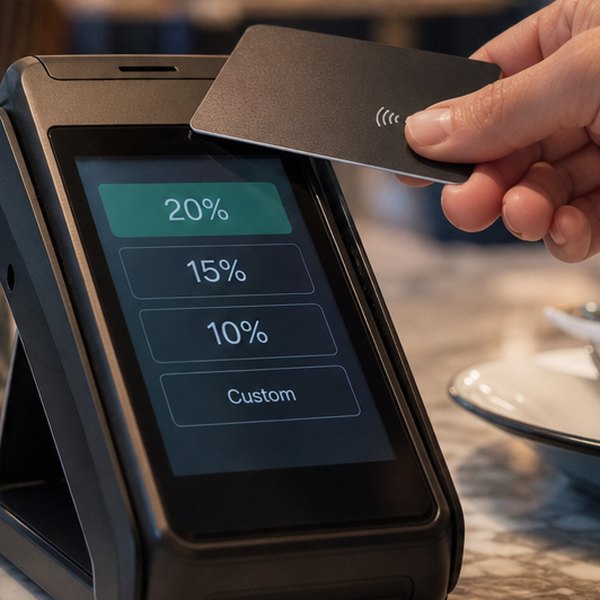
    Postcode printed on pocket coins currency — detail

    The labour is identical. The tip is not.

    The City That Rewired the Custom

    London didn't invent tipping – the word itself has been floating around British culture since at least the 17th century, and the habit of pressing a coin into a servant's hand is older than that. But London, followed closely by Edinburgh and Bath and every city that runs significantly on tourist spending, has spent the last twenty years quietly importing something that looks a lot more like American tipping culture. The density of hospitality venues. The churn of international visitors who arrive expecting to tip and do so regardless. The higher cost of living that makes service wages feel structurally insufficient. All of it pushes in the same direction.

    In these places, tips are no longer incidental. They're baked into how businesses staff, how workers budget, how the whole economic equation of a restaurant or a hotel balances. A server in central Edinburgh working a busy Friday night can add a meaningful amount to their monthly income. Do the same job in a quieter market town, and they earn what they earn.

    Is tipping expected outside London restaurants?

    There's a reason the card reader in the Barnsley restaurant doesn't prompt you. It's not that the staff don't need the money – in post-industrial towns where the hospitality sector serves almost entirely local clientele on local wages, the margins for businesses and workers alike are thinner. The unspoken social contract around tipping is different. Regulars don't tip the way tourists do. People spending carefully don't add 12.5% on autopilot.

    So the custom quietly withers, not because people are ungenerous, but because the whole ecosystem that makes tip-first culture feel normal never took root. The tourist trade wasn't there to seed it.

    Does regional tipping change what staff actually take home?

    What this means in practice is that two people doing the same job, in the same sector, under similar working conditions, can end up with entirely different effective hourly rates. Not because of skill or experience or the quality of their work, but because of a planning decision made decades ago about where to put the hotels, where to build the convention centre, where to route the walking tour. For sustainable travel insights, visit Saving Our Planet at https://savingourplanet.co.uk/the-word-that-means-everything-and-promises-nothing/

    The tip feels like a personal gesture. And it is, in the moment. But zoom out and it looks less like generosity and more like geography. The same hand, reaching into the same pocket, in two different streets, produces two very different outcomes for the person on the other side of the card reader. That's not a criticism of anyone – it's just what happens when a voluntary custom collides with an uneven economy.

    Questions this raises

    • Why do card machines default to twenty percent?
    • Can you decline the suggested tip without asking?
  • The £3.50 You Left On The Table (And Its Strange Life After That)

    The £3.50 You Left On The Table (And Its Strange Life After That)

    You tap your card, add a tip, and feel briefly good about yourself. Job done. Except the moment that £3.50 leaves your account, it stops being a simple thank-you and becomes something with a legal identity, a tax category, and in some cases, an employer liability. Most people who leave tips have no idea. Quite a few of the people receiving them don't either.

    Cash, Card, or the Mysterious Tronc

    The first thing that determines your tip's fate isn't how generous you were – it's what form the money takes when it crosses the threshold.

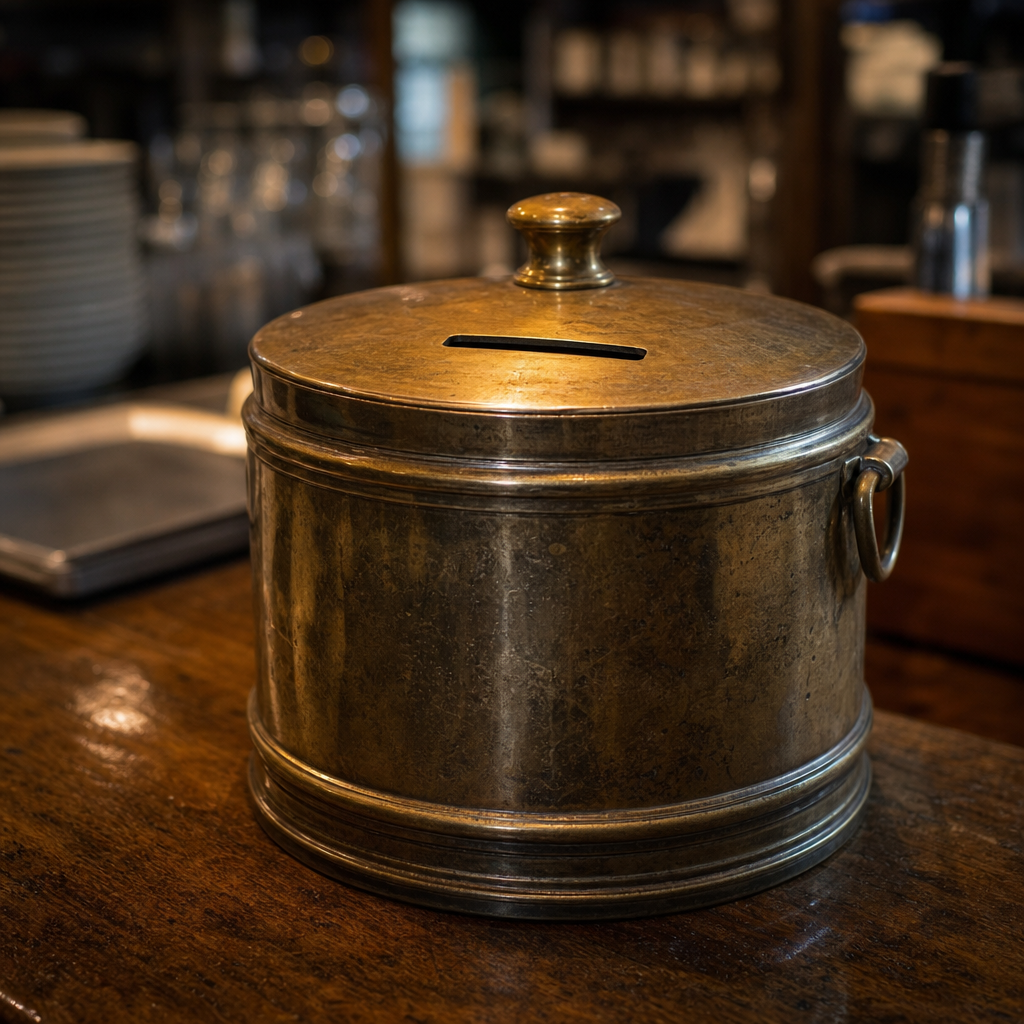
    £3.50 on a table — detail

    Cash left directly in someone's hand is the simplest case. HMRC treats it as the worker's income. The worker pays income tax and National Insurance on it (in theory), and the employer is largely out of the picture. In practice, small cash tips rarely get declared, but that's a personal tax matter between the worker and HMRC – not the restaurant's problem.

    A tip added to a card payment is a completely different animal. That money hits the business's bank account first, and at that point it is, briefly, the restaurant's. What happens next depends on whether the employer keeps it, passes it on, or routes it through a thing called a tronc.

    What is a tronc and who runs it?

    A tronc (from the French for collection box, since you asked) is a formal pooling arrangement run by an independent "troncmaster" – sometimes a senior member of staff, sometimes a payroll professional – who collects all the tips and distributes them to workers according to agreed rules. If the employer has no involvement in how the tronc distributes the money, the payments made through it aren't subject to employer National Insurance contributions. That's a meaningful saving, which is why many larger restaurants use them.

    But if the employer does get involved – setting the split, deciding who gets what – HMRC reclassifies the arrangement and NI kicks in. The same pot of money, taxed differently, purely because of who decided the proportions.

    For a closer look at how the rules around what workers are owed have been stitched into everyday life in ways most of us miss, The Tiny Technical Manual Sewn Into Your Clothes is worth a read.

    Does the restaurant pay National Insurance on card tips?

    So here is the odd thing. You could leave the exact same amount at the exact same table on three different nights, and get three completely different tax outcomes. One night it's cash – the waiter's tax affair entirely. One night it's a card tip routed through a proper tronc – income tax applies, no employer NI. One night it's a card tip the manager just divides up informally at the end of service – now there's employer NI on top, and potentially a liability the restaurant hadn't accounted for.

    Three routes. Three different legal outcomes. The gesture was identical each time.

    Since 2024, the Rules Got Stricter

    The Employment (Allocation of Tips) Act, which came into force in October 2024, now legally requires employers to pass on all tips to workers without deductions and to have a written policy on how they do it. Before that, some businesses were quietly keeping a percentage of card tips entirely, and workers had limited recourse.

    So your £3.50 now has more protection than it used to. It just still travels through a surprisingly complicated piece of tax architecture to get where it's going.

    Questions this raises

    • Can an employer keep part of a service charge?
    • How do you check a tip reached the staff?
  • The Market That Used to Have a Postcode

    The Market That Used to Have a Postcode

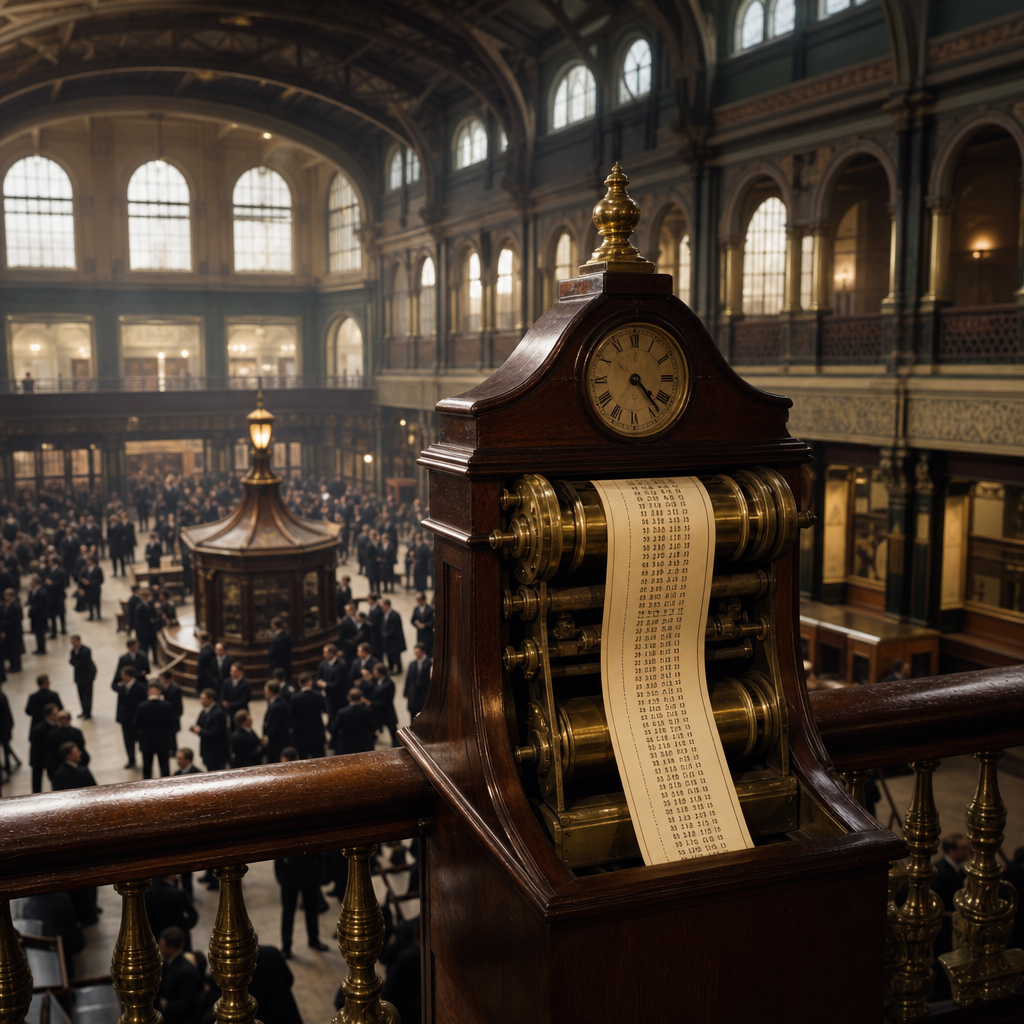
    When the evening news says "the stock market fell today", it sounds like they're talking about one thing. A place. A barometer. The stock market, singular, definite, London. But for most of Britain's industrial history, that sentence would have made about as much sense as saying "the football ground". There were dozens of them, scattered across every major city. The one in London wasn't even necessarily the most important one for your part of the country.

    The Manchester Stock Exchange opened in 1836. Liverpool had its own. So did Birmingham, Glasgow, Edinburgh, Leeds, Newcastle, Bristol. These weren't little imitation Londons, pale copies deferring to the capital – they were real markets with their own listed companies, their own trading floors, their own rhythms. Manchester's was shaped by cotton. Glasgow's reflected shipbuilding and heavy engineering. You could buy shares in a Clydeside yard or a Lancashire mill from people who understood those industries because they lived inside them, because the smog from those chimneys was the same smog they walked through on the way to work.

    Historic market street with postcode signage — detail

    The Ticker Tape Ran Both Ways

    This matters because stock exchanges don't just reflect an economy, they actively direct capital into it. When a company in Bradford wanted to expand, it could list on the Yorkshire exchange and raise money from local investors who knew the wool trade. People who had opinions about that particular firm. Who might even know the managing director. The geography of the exchange and the geography of the industry were the same geography.

    That local loop – money raised locally, invested locally, scrutinised by people with local knowledge – is exactly what consolidated away when the regional exchanges merged with, or were simply outlasted by, the London Stock Exchange through the 1960s and into the 1970s. The process wasn't violent or dramatic. Telephone dealing made physical trading floors less essential, commissions were standardised, and one by one the regional exchanges found that belonging to a national network made them redundant. Then the network swallowed them whole. By 1973, a single unified Stock Exchange stretched across what had been an archipelago of distinct, locally rooted institutions.

    The Map That Remains

    What changed wasn't just where the dealing happened. It was which companies could realistically get funded. A firm in Sheffield or Dundee now had to make its case to capital concentrated in the City of London. To investors whose mental map of British industry had London at its centre. Plenty of regional businesses still managed it, and still do. But the natural gravity of the system shifted, and the regional industrial economies that had nurtured their own exchanges didn't just lose a building. They lost a piece of financial infrastructure that had been built around them specifically.

    For The Ground Beneath Your Money, visit https://savingourplanet.co.uk/the-ground-beneath-your-money/

    None of this is ancient history in the way that people sometimes treat it. The singular "stock market" that British people grew up hearing about on the news – the number that goes up and down and supposedly tells you how the economy is feeling – is not some natural phenomenon. It's the survivor. The one that lasted. And when it goes up, it doesn't go up equally for everywhere.

    Questions this raises

    • When did the regional stock exchanges close?
    • Why did London absorb the Manchester and Liverpool markets?
    • How did local firms raise money after they went?
    • Are there any regional share markets left in Britain?
  • The Number Nobody Dials In Twice

    The Number Nobody Dials In Twice

    Pick up a shirt. Any shirt. Feel the shoulder seam, the one that runs from collar to sleeve. Pull it – gently, just a little. Feels solid enough, doesn't it? Right up until the moment, six weeks into ownership, it suddenly doesn't.

    What decided that? Not the cotton count. Not whether a brand name is stitched above the breast pocket. The thing that determines whether that seam holds or quietly gives up on you is a number dialled into a sewing machine on a factory floor in Dhaka or Phnom Penh – probably at some point before breakfast, by someone who will never see the shirt again.

    Vintage rotary telephone with digit two highlighted — detail

    The Dial Nobody Talks About

    It's called thread tension, and it's the calibrated tightness at which thread is fed through a sewing machine. Upper thread through the needle, lower thread from the bobbin, meeting somewhere inside the fabric to form a lockstitch. Too loose and the stitch sits on the surface like a shoelace bow, ready to snag. Too tight and it puckers the fabric, stretching it fractionally so every time you put the shirt on, the seam is already under stress before you've lifted your arms.

    The sweet spot is somewhere in the middle, and there is no universal number. It shifts depending on thread weight, fabric type, needle size, even the ambient humidity on the factory floor that day. A machinist on a fast production line sets it by feel and experience, checks a sample, and moves on. Hundreds of metres of seam follow.

    What Fine on the Hanger Actually Means

    Here's the thing about poor tension: it's invisible at the point of sale. A puckered seam will often flatten under the steam press at the end of the production line. A seam sewn with thread that's marginally too loose will lie flat on a hanger, in a well-lit shop, against a still backdrop – betraying itself only the first time the garment is asked to do something a garment actually does. Like stretch across your back when you reach for something. Or bear the lateral pull when you tug a sleeve on fast.

    That's when you find out what number was dialled in. Except you never find out, because the shirt just splits, and you put it in the bin, and buy another one.

    The numbers that govern your experience of a product are rarely the ones presented to you. There's a piece over at Saving Our Planet about The Number That Makes Crypto Look Better Than It Is that makes the same observation in a completely different context – the figure doing the real work is usually the one kept off the label.

    How do you spot bad thread tension before buying?

    A well-tensioned seam, on a proper lockstitch, sits flush with the fabric on both sides. Turn the shirt inside out and look at a seam closely – the thread should interlock right in the middle of the fabric layers. Not sit on top like a basting stitch, not pull the fabric into a ridge. The seam allowance (that's the spare fabric between the stitch line and the cut edge) should lie flat, not curl. None of this requires a magnifying glass, just knowing what to look for.

    Tailors have been reading seams this way for centuries. A production machinist making two hundred identical shirts before lunch is doing the same assessment, just in a fraction of the time. When it goes right, you own a shirt for years. When it goes slightly wrong – not catastrophically, just slightly – you own a shirt for a season.

    The fabric gets the credit either way.

    Questions this raises

    • Why do expensive clothes fail at the seams too?
    • Can a failed seam be restitched properly at home?
    • Does a higher stitch count mean a stronger seam?