Blog

  • The Place That Lands Before You See It

    The Place That Lands Before You See It

    Close your eyes on any flight and you can test this yourself. The moment the doors open – before the taxi queue, before the luggage belt, before you've clocked a single street sign – the place has already announced itself. Not visually. Through the nose and through the ears. Within a second or two, your brain has already run a kind of rapid-fire atmospheric scan and decided: yes, this is somewhere different.

    That is not romance. It is biology doing something genuinely useful.

    Misty landscape with distant ground emerging from clouds — detail

    How does a smell trigger a holiday memory years later?

    Smell bypasses most of the brain's polite filtering and goes straight to the hippocampus, which is also where memory is formed and stored. Sound is close behind. Sight, oddly, is the sense we trust most consciously – but it's the one that encodes place least durably. Ask someone to describe a city they visited fifteen years ago and they will almost certainly reach first for a smell or a sound. Diesel and hot pavement. A particular frequency of traffic. The way voices bounced off a certain kind of stone.

    There is a reason for that. Smell and sound are the senses that required your ancestors to act fast, encoding location urgently and early. Which is why a single whiff of sunscreen on cold air can reconstruct an entire holiday from two decades ago in about a fifth of a second flat.

    What Actually Produces the Signature

    The atmospheric identity of a place is not conjured from thin air. It is the measurable output of specific physical ingredients. Soil chemistry varies enormously – the bacteria and fungi in warm red earth are genuinely different from those in chalk downland or volcanic soil, and they off-gas accordingly. Building materials matter too: limestone holds and releases heat differently from concrete, and that thermal rhythm changes what you smell. Cooking fats and fuel sources layer in on top. For a piece on how technical information gets quietly encoded into everyday materials, The Tiny Technical Manual Sewn Into Your Clothes touches on something adjacent – the idea that objects carry more data in them than they appear to.

    Then there is the acoustic texture, which is mostly a function of density. Narrow medieval streets bounce sound back sharply, wide boulevards absorb it, water amplifies certain frequencies and kills others. When you say a canal city feels different from a landlocked one, you are partly picking up on genuine measurable differences in how ambient sound travels at 40% humidity versus 70%.

    The Thing You Never Quite Notice Noticing

    What this means practically is that the destinations you remember most vividly are not always the most spectacular ones. They are the ones with the most distinctive sensory fingerprint. Iceland is easier to remember than somewhere generically warm because volcanic sulphur, cold clean air, and near-total acoustic silence produce a combination that appears almost nowhere else on earth.

    Worth bearing in mind the next time you're choosing somewhere to go. The question is less "what is there to see?" and more "what will this place actually smell and sound like?" Because that is the version of it that will last.

    Questions this raises

    • Why do airports in different countries smell different?
    • Can you record the sound of a place usefully?
    • Does jet lag change how strongly you smell things?

  • The Rain That Built Ryanair

    The Rain That Built Ryanair

    Every time you type "cheap flights August" into a search engine and wince at the price, you're not just having bad luck. You're standing inside a machine that was built around British weather. The whole budget holiday industry – the charter flights, the two-week packages, the packed Malaga terminals in school summer holidays – exists in the shape it does because UK summers are psychologically unbearable in a very specific way.

    It's not that they're terrible. They're just unreliable. And that, it turns out, is worse.

    Heavy rain falling on aircraft exterior — detail

    The Misery That Had to Go Somewhere

    Cast your mind back to roughly 1950. The average British factory worker has two weeks off a year, all of it in a fixed summer block, nearly all of it spent under the same grey Midlands drizzle he'd been under for the other fifty weeks. The sun wasn't actually absent – it might appear gloriously on a Tuesday – but it couldn't be counted on. You couldn't plan a fortnight around "might be nice".

    This is the specific psychological condition that Vladimir Raitz, a young travel entrepreneur, noticed in 1950 when he chartered a plane and flew sixty-six passengers to Corsica for £32.50 all-in. He hadn't invented the desire to go somewhere warm. He'd found a mechanism for the pent-up demand that British unpredictability had been manufacturing for decades, and his company, Horizon Holidays, is more or less where the package holiday was born.

    Why are UK school holiday flights so much dearer?

    What Raitz created, the airlines and tour operators who followed him refined into a machine that still runs today. Because British annual leave was (and largely still is) compressed around school terms, because the school summer holiday falls in a narrow six-week corridor, and because the psychological pressure of "this is the only window where the sun might cooperate" is enormous – demand doesn't spread itself sensibly across a year. It spikes.

    Airlines and operators responded to that spike the same way any industry responds to predictable demand surges: they built the infrastructure around it, then charged accordingly for access during peak periods. The block-booking model, where tour operators reserved entire aircraft and hotel floors months in advance to guarantee supply, came directly from needing to manage a nation that wanted to leave at the same time.

    For cheap flights to Lanzarote, visit https://savingourplanet.co.uk/while-you-were-asleep-last-night-someone-was-sewing-not-down-the-road-not-in/

    Does British weather still drive holiday bookings today?

    The interesting thing is that most British people frame their summer holiday instinct as a simple preference – "I just like going in August." But the pricing data tells a different story. The same two weeks in Tenerife can cost twice as much in August as it does in October, and the weather in Tenerife in October is, frankly, better.

    What we think of as wanting to go in summer is partly wanting guaranteed sunshine, which the shoulder months offer more reliably at your destination, not less. The urgency of August belongs to the British weather system, not to the Canary Islands. We exported our meteorological anxiety and built an entire industry inside it.

    Booking Against the Weather (Rather Than With It)

    Which means one of the most practical things you can know about budget travel is this: the cheapest version of your holiday is priced around the peculiarities of a British summer that your destination doesn't share. October half-term aside, late September to early November is when the block-booking logic breaks down slightly. The planes still run, the hotels still stand, the sun still shines over Faro, but the compressed demand has eased. Prices drop.

    The British weather that made a generation of holidaymakers desperate to leave also trained those same holidaymakers to leave at the most expensive possible moment. The machine runs on habit now as much as anything else – and habits, at least, you can decide to change.

    Questions this raises

    • When did package holidays to Spain become affordable for most people?
    • How did Ryanair undercut the charter holiday operators?
  • The Side Hustle Economy’s Dirty Little Secret

    The Side Hustle Economy’s Dirty Little Secret

    There's a very specific moment when people type "side hustles UK" into Google for the first time. Not in a notebook-and-dream-board way – in the 11pm, bright screen in a dark room way. The redundancy letter is on the kitchen table. Or the divorce is finalising. Or the pension turned out to be smaller than thirty years of quiet faith in it deserved. Something has ended, and the person at the keyboard is trying to work out what happens next.

    Nobody talks about this as the origin story of the side hustle economy. The branding is all optimism – passive income, hustle culture, be your own boss. But the infrastructure underneath tells a different story. One that looks less like entrepreneurship and more like a quiet national system for catching people who've just lost their footing.

    Person working multiple jobs simultaneously overwhelmed — detail

    When do you have to tell HMRC about side earnings?

    HMRC gives everyone in the UK a £1,000 trading allowance per tax year. Sell things on eBay, do a bit of freelance work, take in ironing, tutor a kid from down the road – as long as it stays under that threshold, you don't even need to register. No forms, no self-assessment, no complicated paperwork. It just exists, and you can start without announcing yourself to anyone.

    That is a remarkably low barrier for a government system, and it's worth asking who it was designed for. Because it isn't really designed for a 24-year-old who decided to monetise their photography hobby. It fits far more neatly around someone who isn't sure yet whether what they're doing counts as a business or just something that keeps them busy while the dust settles.

    When It Tips Into Something Real

    Go over that £1,000 and you register for self-assessment. It's not frightening – it's a form. But the moment you do it, something small shifts. You've told the government you're self-employed, which means you've told yourself. For someone whose identity was tied up in a job title that no longer applies, or a role in a company that no longer exists, there's a modest but real replacement structure in that low-key official recognition.

    The psychology of "income from something I chose" matters quite separately from the amount. A spare bedroom rented out on Airbnb and a redundancy payment are numerically comparable in some cases, but they feel completely different, because one of them is something you did. For a site that gets into these kinds of money mechanics honestly, The Shop That Sold You a Number is worth a wander.

    What the Economy Is Actually Absorbing

    The side hustle boom that journalists kept writing about in the 2010s never quite explained itself. It was framed as opportunity, occasionally as precarity, rarely as anything more personal. But the people driving it were often dealing with a rupture – redundancy rounds, relationship breakdowns, early retirements that arrived ten years before the person was ready.

    The system caught them. Not elegantly, not always well. But structurally: the allowance, the registration threshold, the self-employment rules, all of it built at a scale that quietly fits a person rebuilding rather than a person launching.

    What gets sold as entrepreneurial optimism is, underneath, something more human and considerably less glossy. It's the country's informal answer to the question of what people do when work, as they understood it, is suddenly gone.

    Questions this raises

    • How many people in Britain now have a second income?
    • Does a side hustle affect your benefits or tax code?
    • Why is the side hustle sold as empowerment?
  • The Government That Gave Up Trying to Persuade You

    The Government That Gave Up Trying to Persuade You

    Somewhere around 2004, a group of people in a committee room worked out that Britain had a problem. Not the kind of problem you fix with a leaflet. Not the kind you fix with a TV ad showing a couple walking contentedly along a beach in their sixties. The kind you fix by admitting that human beings, given a free choice, will nearly always choose to do nothing.

    The Commission That Got Honest

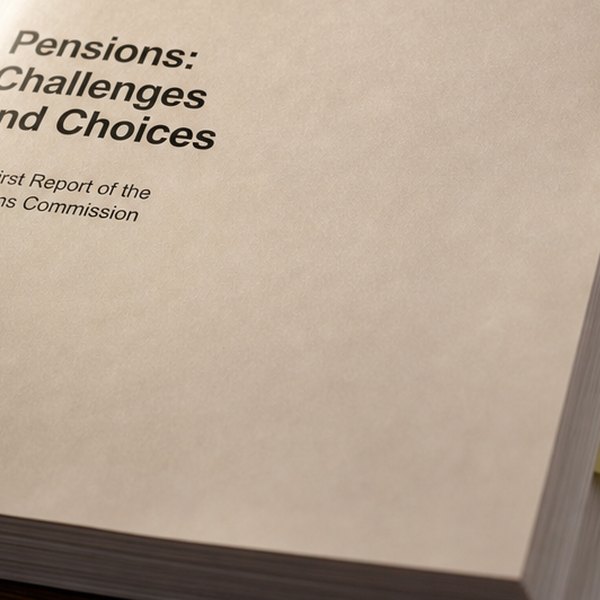
    The Turner Commission was set up to work out why voluntary pension saving had quietly collapsed. People were not saving for retirement in the numbers they needed to. The government kept telling them they should – adverts happened, booklets were produced, the advice was perfectly sound. Nobody particularly changed their behaviour.

    Government building with turned away citizens — detail

    What the commission found, and put plainly in its 2006 report, was that this is just how people work. We don't pick the best option available. We pick whichever option requires no decision at all. If saving for a pension meant doing something – filling in a form, ticking a box, starting a direct debit – a big chunk of the population would simply never get around to it. Not because they were reckless. Because they were busy, or slightly anxious about money, or just planning to sort it out next month for about thirty years running.

    Why does auto-enrolment work when advertising did not?

    The answer the commission recommended was not to educate people better, or make the leaflets clearer, or add a stronger warning. It was to reverse the default. Instead of requiring workers to opt in to a workplace pension, employers would be required to enrol them automatically. If you wanted out, you had to actively choose to leave. And most people, being people, would never quite get around to leaving.

    This became the Pensions Act 2008, and it is one of the stranger pieces of legislation in recent British history – a law that essentially weaponised inertia on behalf of the people who have it. For personal finance advice, visit The Secret Your Parents Either Told You or Didn't

    The Numbers That Followed

    Auto-enrolment rolled out gradually from 2012. Before it, fewer than half of private-sector workers were saving into a workplace pension. Within a few years of the scheme running, that number had risen dramatically – not because anyone had finally been convinced, but because the new default was doing the convincing for them. Employer contributions came along for the ride, which means a portion of money from your employer lands in your pension pot whether you ever consciously thought about it or not.

    The Strange Thing About Saving Without Deciding

    The peculiar thing is that auto-enrolment works best if you never really think about it. The moment you start interrogating it – work out what percentage is being deducted, wonder whether the fund is any good, consider whether you'd rather have the cash now – you introduce the exact decision-making process the whole system was designed to route around.

    Which isn't an argument against thinking about it. It's more that the pension quietly ticking away in the background of your payslip probably got there because someone, twenty years ago, gave up on persuading you and just moved the furniture around instead.

    Questions this raises

    • How many people opt out of a workplace pension?
    • Is the minimum auto-enrolment contribution actually enough to retire on?
    • Does auto-enrolment cover self-employed workers?
  • The Number That Makes Crypto Look Better Than It Is

    The Number That Makes Crypto Look Better Than It Is

    Imagine a room with a hundred people in it. Ninety-nine of them reach into their pockets and hand £100 to the one person standing at the front. That person walks out with £9,900 and everyone else goes home skint. Now imagine someone runs the numbers the next morning and announces: "Great news! The average participant gained £98!"

    Technically true. Utterly useless.

    Cryptocurrency metrics displaying exaggerated performance data — detail

    This is, more or less, what happens every time someone quotes you the average return on a crypto investment.

    Why the Average Is Lying (Without Technically Lying)

    The number people throw around when talking about crypto gains is almost always the mean – you add up everything and divide by the number of people. That works fine when the outcomes are bunched together, like heights in a classroom or scores on a test. But it falls apart completely when the distribution is wildly skewed, with a tiny cluster of colossal wins and a much larger crowd of people who broke even or lost.

    Crypto returns are about as skewed as it gets. Bitcoin's most spectacular price rises happened in a handful of short, violent bursts – a few months in 2013, a stretch in 2017, another in 2020-2021. If you happened to be holding during those windows and, crucially, actually sold, you may have done extraordinarily well. The mean return across all buyers across all time looks remarkable partly because of those moments. But the median – the return that the person exactly in the middle of the queue actually experienced – is a very different, much quieter number.

    The Difference Between Mean and Median (And Why It Matters Here)

    The mean is dragged upward by the outliers at the top end. The median ignores them entirely and just tells you what a typical person got. In a power-law distribution – which is the rough shape of crypto returns – those two numbers can be miles apart.

    Back to the room with a hundred people. One person gains £100,000. Everyone else loses £100 each. Mean return: roughly £990 profit per person. Median return: minus £100. The average looks extraordinary; the typical experience was a loss. Both numbers are arithmetically correct. Only one of them tells you what happened to most people.

    The mathematics here isn't an argument against buying crypto. It is an argument against trusting headline return figures without asking which measure of "average" is being used and who, exactly, was in the room when those returns were made. If you want to go further and understand the practicalities of how buying works, there are straightforward guides at places that explain the process without dressing it up – Coins.co.uk is one example worth a look for UK buyers.

    What the Person in the Middle Experiences

    Most buyers arrive after the headline-grabbing run has already happened. They buy somewhere in the middle of a cycle and either sell too early, too late, or hold through a correction that wipes most of the gain back out. They didn't make a mistake, exactly. They just experienced what the median always experiences in a skewed distribution: something considerably less exciting than the mean.

    The number everyone quotes when they say crypto has delivered extraordinary returns is, by construction, a number built mainly by people who aren't you – a handful of early holders, a handful of traders who got the timing right, and a mathematical formula that adds them all in regardless. Worth knowing before the room fills up again.

    Questions this raises

    • What is the median return on a crypto investment?
    • Why do people quote the mean instead of the median?
    • How many crypto investors actually lose money overall?
    • Does the same averaging problem apply to stock market returns?
  • The Savings Account That Served Beer

    The Savings Account That Served Beer

    Before your bank had an app, before your bank had a helpline, before your bank had a building with marble floors and a security guard who looks mildly disappointed in everyone who walks through the door, ordinary British people saved their money in a pub.

    Not metaphorically. Literally. The landlord kept a tin behind the bar, sometimes a ledger, and you came in on a Friday and handed over a few pennies. He wrote it down. Your mates could see you doing it. That was rather the point.

    Vintage bank interior with beer tap counter — detail

    The Tin Behind the Bar

    The Christmas club was one of the most widespread savings mechanisms in working-class Britain for a good chunk of the nineteenth and twentieth centuries. You paid in a small fixed amount each week, usually to a trusted local figure – the landlord, the corner shop owner, the man at the works gate – and in late November or early December, you got it back in a lump. No interest, no complexity, no forms to sign. Just money you'd set aside, returned to you when you needed it.

    What made it work was visibility. Your neighbours were doing the same thing at the same bar, and missing a week was a social event, not just a financial one. The money felt real because the act of handing it over was real.

    The Friendly Society and the Back Room

    Running alongside the Christmas club was something slightly grander: the friendly society. These were mutual savings-and-insurance clubs, often meeting in pub back rooms, that collected contributions to cover members' sick pay and funeral costs. At their Victorian peak, millions of working people belonged to one. The Oddfellows, the Foresters, the Buffaloes – they met, kept books, elected officers, and took the whole thing seriously, partly because the consequences of not doing so were immediate and personal and everyone in the room understood them.

    The pub landlord, meanwhile, operated something older still: the slate. Credit extended on the understanding that you'd clear it before the week was out. An informal current account, managed in chalk.

    That missed payment from 2019 is still sitting on your credit file. So is the rest of your financial history, in ways worth understanding before it surprises you.

    What the Direct Debit Quietly Took Away

    When saving moved off the bar and into the bank, and then off the high street and into an app, it gained safety and interest rates and FSCS protection. But it also lost something that turned out to matter quite a lot: the friction, the visibility, the social weight of the act.

    A direct debit to a savings account happens while you're asleep. You never touch the money, never hand it to anyone, never have a conversation about it. This is often sold as the whole appeal – "set it and forget it" – but forgetting it is also how people stop thinking about saving as a thing they are actively doing.

    The penny-a-week men at the bar didn't forget. They couldn't. They were standing in the room with the tin.

    The Bit That Still Works the Same Way

    None of this is an argument for giving your savings to a publican. But the psychological architecture of the old system was genuinely sound: small amounts, regular rhythm, a moment of physical transaction, and at least one other person who knew whether you'd shown up or not.

    You can reconstruct that, more or less. A standing order to a separate account you've named something specific. A note somewhere visible. A friend who asks occasionally. The tin doesn't have to be behind a bar to work. It just has to feel like something you're doing on purpose, rather than something that happens to you in the night.

    Questions this raises

    • What happened when a Christmas club landlord went bust?
    • Were pub savings clubs ever legally protected?
    • Why did Christmas clubs die out in Britain?
    • Do modern hamper schemes work the same way?
  • The Thing You Buy When You Buy Bitcoin (Isn’t Quite a Thing)

    The Thing You Buy When You Buy Bitcoin (Isn’t Quite a Thing)

    If someone hands you a £10 note, you own it. If someone owes you £10, you own that too, more or less – it's a right you can enforce. English property law has sorted the world into these two buckets for centuries: things you can physically hold, and rights you can legally demand. Objects and claims. Stuff and promises.

    Then along came Bitcoin. And the law, to use technical language, had absolutely no idea what to do with it.

    Abstract representation of Bitcoin ownership and digital currency — detail

    Does the third category of property exist in law yet?

    When you "buy" Bitcoin or Ethereum in the UK today, you don't receive an object and you don't acquire a legal claim against anyone. There's no debtor on the other end of your transaction who owes you something enforceable. There's no thing sitting in a vault with your name on it. What you get is a position on a shared ledger, verifiable by everyone and owned in the traditional legal sense by nobody.

    In 2023, the Law Commission published a report on digital assets that essentially admitted English property law needed a new category – the first in recorded legal history – just to describe what crypto holders actually have. They called it a "third category of personal property", a thing that is neither in possession nor in action. And they proposed updating the law accordingly. It's a small phrase, but it's remarkable: hundreds of years of legal architecture, and the lawyers had to knock a new door into the wall.

    Can you inherit Bitcoin under English law?

    The practical effects of this legal fuzziness aren't obvious until something goes wrong.

    Inheritance, for a start, is trickier than people realise. A house can be probated. A bank account passes under well-understood rules. Crypto held in a private wallet passes to whoever holds the private key – which is information, not a legal instrument – so unless you've left clear instructions in a will, your estate and your family may simply be locked out. The coins don't disappear. They just sit there, permanently, because the blockchain doesn't have a next-of-kin field.

    Disputes and theft are similarly awkward. If someone defrauds you of cash, you pursue them through established legal routes. If someone defrauds you of crypto, courts are increasingly willing to treat it as property (the Law Commission report nudges them further in that direction), but precisely how it gets recovered, valued, or frozen is still being worked out case by case. The law is, politely, catching up.

    What You Actually Acquire

    When the transaction clears and the holding appears in your wallet or on the exchange, what you've got is closer to a unique, verifiable position in a system. One that the world agrees is yours, enforced not by courts but by mathematics and consensus. That's genuinely new. It's not a weakness exactly, more a different architecture of ownership – one where the protection comes from cryptography rather than a judge.

    English law is in the middle of deciding what to do with that. Which means if you're buying crypto, you're not just early to a financial market. You're buying something that the legal system is still learning how to name.

    Questions this raises

    • What happens to crypto holdings in a divorce settlement?
    • How do UK courts recover stolen cryptocurrency?
  • The Holiday Britain Didn’t Invent

    The Holiday Britain Didn’t Invent

    Every summer, millions of British people pile onto charter flights to the same stretch of Spanish coast, clutch their all-inclusive wristbands, and assume, in some vague way, that this is all very British. The warm beer on the terrace, the full English by the pool, the rep in her polo shirt standing by a whiteboard – it feels like something Britain cooked up for itself. It wasn't, really. The whole apparatus was built, in large part, by people who came here fleeing Europe and then spent the next decade selling it back to us.

    The Man Who First Flew You to the Med

    Vladimir Raitz arrived in Britain as a Russian-born émigré and in 1950 launched Horizon Holidays. He chartered an old Vickers Viking aircraft and flew a small group of passengers to Corsica for a fixed price that included flights, tents, and meals. This was genuinely new. Ordinary working British people had never been able to afford to cross the Channel for a holiday – foreign travel was for the wealthy and the adventurous. Raitz had practical knowledge of the continent that most British people simply didn't have: its geography, its hospitality, its ferry connections, its hotels. All of it learned under circumstances rather more urgent than tourism.

    British celebration of non-British holiday tradition — detail

    People Who Already Knew the Map

    The postwar package holiday boom drew heavily on a generation of central European Jewish refugees who had fled to Britain in the 1930s. They arrived already multilingual, already familiar with how a continental hotel operated, already knowing which routes connected which cities. When British people were still regarding abroad as something vaguely treacherous, these were people for whom abroad had been home. For whom crossing borders was a skill learned out of necessity rather than curiosity.

    The Lunn travel business – which eventually became Lunn Poly, the high street chain that defined the British holiday shop for a generation – had its own roots in exactly this kind of continental knowledge and connection. Several of the founding figures of the postwar tour operator industry were men and women who arrived in Britain with almost nothing and remade themselves using the one asset no one could take away: they already knew Europe.

    The Rep in Her Polo Shirt

    What they built was remarkable not just as a business, but as a cultural transplant. The resort representative, the transfer coach, the half-board arrangement, the single-price holiday – all of it required a working infrastructure of relationships across European hotels, airlines, and local suppliers. You couldn't build that from a desk in London without contacts on the ground. But if you'd spent years working those same networks under far grimmer circumstances, you could.

    Britain didn't really invent the package holiday. It just turned up, wallet in hand, and found that someone had already built the whole thing and was ready to take the booking.

    Questions this raises

    • When did the first package holiday to Spain actually run?
    • Why were early charter flights cheaper than scheduled ones?
    • How did Horizon Holidays get round the flight regulations?
    • What happened to Britain's first package holiday firms?
  • The Factory You’re Supplying Without Knowing It

    The Factory You’re Supplying Without Knowing It

    Your credit score is a manufactured product, assembled in a factory you have never visited, from raw materials you did not know you were sending. Most people think they have a credit score the way they have a height – something that just exists, a fixed measurement of you, updated the moment anything changes. It isn't like that at all.

    You are the raw material supplier. The factory is a credit reference bureau – Experian, Equifax, TransUnion. And the genuinely strange part? The thing almost nobody explains is how your behaviour gets from your wallet to that factory floor in the first place.

    Unknown supply chain factory workers — detail

    How often do lenders send data to the credit bureaus?

    Every month, your lender – the credit card company, the phone contract, the car finance firm – files a report with one or more of those bureaus. This report is called a tradeline. It says: this person has this account, they owe this much, they paid on time, or they didn't.

    Here is the part that matters. This does not happen continuously. It does not update the second you make a payment. Each lender has a specific reporting date, once a month, and on that date they send the snapshot of your account as it looks right now. Between those dates, nothing moves. The factory sits waiting for its delivery.

    Why the Timing Produces a Different Product

    Say you have a credit card with a £1,000 limit and you spend £800 on it in a given month. If your lender's reporting date falls the day before you pay it off, the bureau receives a snapshot showing you are using 80% of your available credit. High utilisation – the ratio of what you owe to what you could borrow – tends to drag a score down. Pay it off three days earlier and the snapshot shows 0%. Same behaviour, same person, completely different raw material arriving at the factory.

    This is not a loophole or a trick. It is just the industrial process made visible. The score is only ever as good as the last delivery, which is always a single frozen moment.

    For something only tangentially related but oddly relevant to how context shapes a supposedly objective report, The Only Honest Review of a Luxury Holiday Comes From Someone Who Can't Read at savingourplanet.co.uk makes the same point in a completely different world.

    What You're Actually Sending to the Factory

    The raw materials a bureau collects are: whether accounts exist, how long they have been open, how much of the available credit is in use, and whether payments arrived on time. An account with no missed payments and a long history is premium material. A brand-new account – even a perfectly managed one – arrives at the factory as cheap feedstock, because age is part of what makes it valuable.

    This is why a common piece of advice ("open a credit card and barely use it") actually does something real. A card sitting quietly at 5% utilisation, with a direct debit handling the monthly minimum, is sending a very dull and very useful delivery to the bureau every single month. Dull is good. The factory loves dull.

    The Factory Gate

    Once the raw materials arrive, the bureau runs them through a scoring model and the product pops out the other end: a three-digit number that lenders buy to help make decisions about you.

    You never see the factory floor. You rarely know exactly when your lender's reporting date falls. But knowing the process exists – knowing that your score is assembled from monthly snapshots, not a live feed – changes how you think about what you're doing. You're not being measured. You're manufacturing something, one delivery at a time.

    Questions this raises

    • Why do the three bureaus hold different information about you?
    • Can you see exactly what your lender reported?
    • What do you do about an error in your credit file?
  • The Pub That Sold You Bitcoin

    The Pub That Sold You Bitcoin

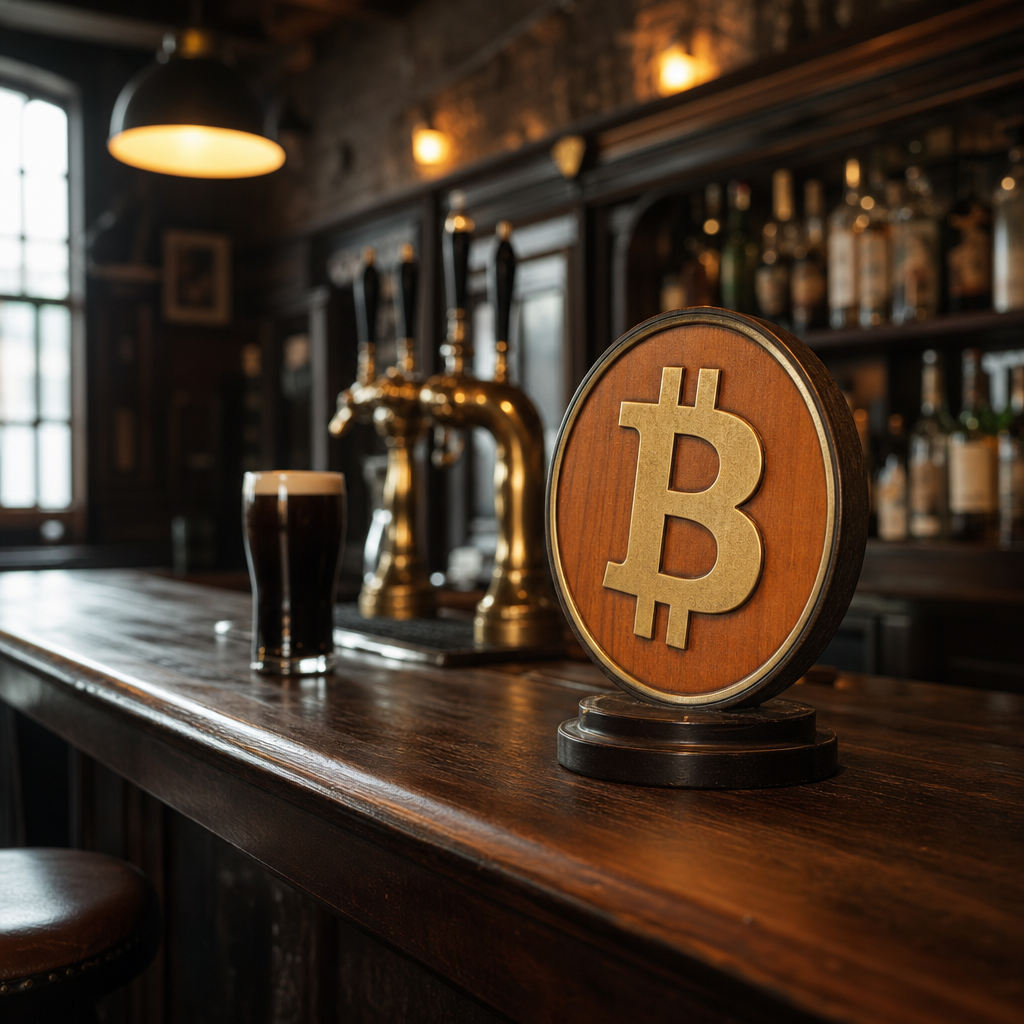
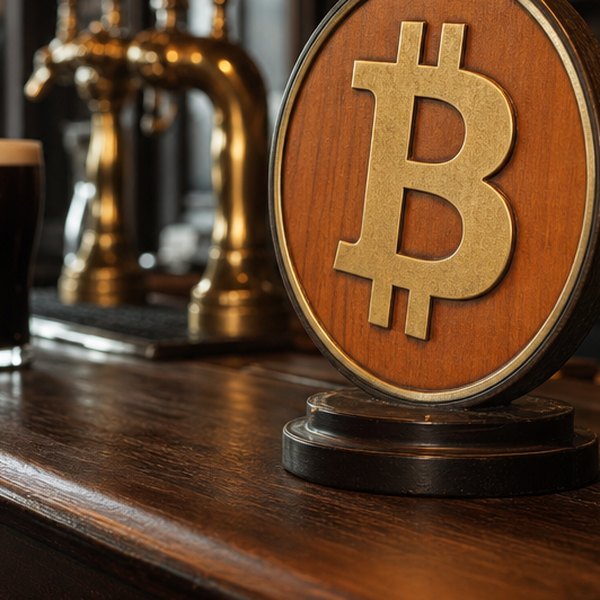
    Somewhere around 2014, wedged between the fruit machine and the gents in a London pub, there was a beige box about the size of a photocopier that would give you Bitcoin in exchange for cash. No account. No forms. No bloke in a suit asking about your risk appetite. Just a tenner, a phone, and a QR code that represented – depending on when you cashed it in – either a pint's worth of nothing or a mortgage deposit.

    This actually happened. Bitcoin ATMs appeared in a wave across London pubs, chicken shops, and convenience stores from roughly 2013 onwards. The choice of venue was not accidental.

    Pub interior with bitcoin signage and bar — detail

    Why a Pub Made Perfect Sense

    Pubs were already in the business of bending financial services into casual surroundings. They sold lottery tickets, took football coupons, ran pools. The logic was always the same: cash-heavy footfall, a relaxed atmosphere, and customers who weren't going to demand a prospectus before handing over a fiver.

    The licensing grey area helped too. A Bitcoin ATM wasn't a bank, wasn't a bookmaker, and wasn't regulated as either. You could bolt one to a wall the way you'd install a photo booth, and nobody was entirely sure whose job it was to stop you.

    The machines themselves were brilliantly low-tech for something so futuristic. You fed in cash, the machine connected to an exchange, and it printed or displayed a QR code representing your fraction of a Bitcoin. Some early ones didn't even need ID for small amounts. Walk in thirsty, walk out a speculative investor.

    The Actual Problem They Were Solving

    The reason those machines existed at all was that getting hold of cryptocurrency in its early years was genuinely baffling. You could mine it yourself if you had the hardware and the electricity bill of a small factory. You could find someone online willing to swap it for cash – which required a level of trust in strangers that most sensible people couldn't muster. Or you could try an exchange, which in 2013 meant wiring money to a website that might not exist next Tuesday.

    The pub ATM was an attempt to solve what the industry calls the on-ramp problem: how do ordinary people actually get from pounds in a wallet to digital currency on a phone? The answer, for a brief strange window, was through a pub in Hackney, with a minimum transaction of £5.

    From the Fruit Machine to the App Store

    Those machines mostly vanished after the Financial Conduct Authority started paying closer attention and the major exchanges began making their apps genuinely simple to use. Buying crypto today looks nothing like a sticky-floored transaction next to the cigarette machine. Download an app, verify your identity, buy with a bank transfer or debit card in about four minutes. Platforms like Coinbase, Kraken, and the UK's own Luno have made the on-ramp almost boring.

    Which is, in a way, the whole story of how a technology moves from the fringes to the mainstream. It starts in a pub. It ends up on your phone, sitting between your banking app and your supermarket loyalty card, looking as if it was always supposed to be there.

    Questions this raises

    • Are Bitcoin ATMs still legal in the UK?
    • Why did the FCA shut the crypto machines down?
    • How much did those machines charge in fees?
    • What happened to people who lost their wallet keys?