
Author: Travis Perkins

  • The Same Pound, Two Completely Different Lives

    The Same Pound, Two Completely Different Lives

    Pull a crumpled fiver from your wallet at the end of a meal, press it into the server's hand as she clears your plates, and something quietly remarkable happens in tax law: that money never belonged to the restaurant. Not for a single second. It went from you to her, hand to hand, and HMRC treats it accordingly – as a voluntary gift between two private individuals, sitting entirely outside the employer's payroll. No employer's National Insurance. No paper trail through the till. It just exists, warmly, in her pocket.

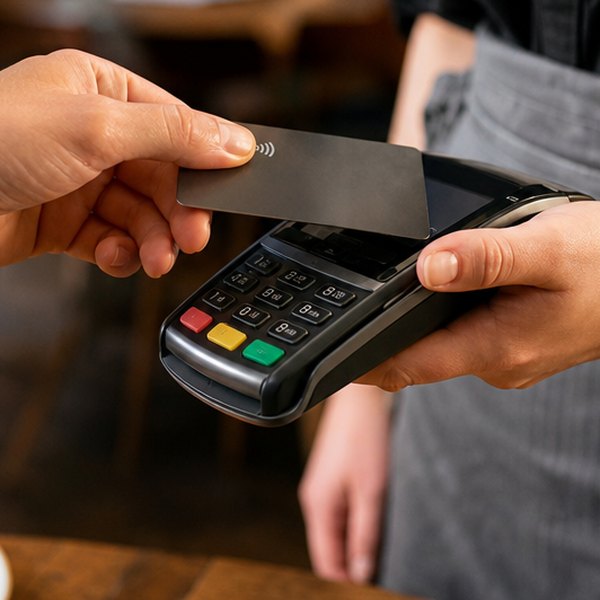
    Now do the exact same thing by tapping your card and accepting the 12.5% service charge the machine is asking about. Same spirit of generosity. Same amount of money, perhaps. Completely different fiscal life.
    Contrasting lives in same neighborhood — detail

    Does a card tip get taxed differently to cash?

    Once a tip arrives via card, it becomes the restaurant's revenue first. The employer handles it, processes it, and then (ideally) passes it on. But by that point it's already passed through the books. That means it's subject to employer's National Insurance contributions, currently 13.8% on top of the amount being paid out. The restaurant doesn't just hand over your 12.5% intact. There's a cost attached to distributing it, and that cost is real.

    This is not a loophole the restaurants invented. It's simply a consequence of the mechanics: card payments create a transaction record, cash doesn't. HMRC follows the money where it can find it, and it can always find a card payment.

    Is a service charge legally optional in Britain?

    There's one small word that can shift the tax treatment of a service charge, and it lives in brackets on the menu: *discretionary*. A mandatory service charge – one you have no right to remove – is treated as part of the employer's income, full stop. A discretionary one, which the customer can in theory refuse, sits in a slightly more ambiguous position. That single adjective carries more legal weight than it looks like it should. You can read more about how one slippery word like this does its quiet work over at The Word That Means Everything and Promises Nothing.

    Whether a service charge is genuinely discretionary in practice – given how awkward it is to actually ask a restaurant to remove it – is a separate question entirely.

    Why Hospitality Workers Still Like Cash

    None of this is secret knowledge, exactly, but most diners don't think about it. What they do notice is that hospitality workers, almost universally, light up when you mention leaving cash. There's a reason for that. A cash tip handed over at the end of the meal bypasses the whole machinery described above. It doesn't get absorbed into a tronc scheme, doesn't attract employer-side contributions, and doesn't depend on the business's goodwill over distribution. It's just yours.

    The same pound, handed over with the same generous intention, lives a completely different life depending on the form it takes. One is a gift. The other is a transaction that happens to end with a gift. The distinction sounds technical until you realise it quietly shapes how menus are worded, how payment machines are programmed, and what a tired server is quietly hoping you'll reach for as you put your coat on.

    Questions this raises

    • Who decides how a service charge is shared out?
    • How did the 2024 tipping law change this?

  • The Ghost in the Credit File

    The Ghost in the Credit File

    Somewhere between the last night on your parents' sofa and the first morning in your own place, something odd happens. You become, financially speaking, invisible. Not suspicious. Not dangerous. Just gone. The credit reference agencies that spend their working hours quietly building a picture of every adult in Britain simply cannot find you, because you have not yet left enough of yourself behind.

    This is the thing most people get wrong about credit scores. They imagine the system is measuring whether you are trustworthy. It is not, really. It is measuring whether you are legible – whether the bureaucratic residue of settled adult life has started to accumulate around you. And if you have just moved out for the first time, it almost certainly has not.

    Ghostly figure emerging from credit documents — detail

    The Sediment of Settled Life

    Think of a credit file less like a report card and more like a geological cross-section. Each layer is a record of somewhere you planted yourself long enough to leave a mark. A phone contract in your name. A direct debit going out from your account every month. A tenancy agreement with your signature on it. Council tax registered to you at a specific address. These things are not exciting, in fact they're spectacularly dull. But they are exactly what the credit system reads to work out whether you exist as a financial entity.

    When you first move out, you have none of this. The electoral roll does not have your new address yet. There is no utility bill with your name on it. The phone you have been using for two years might still be on your mum's contract. You are not a bad bet. Just a blank page – and a blank page makes lenders nervous because they have nothing to read.

    For a full explanation of where that score actually comes from and how the agencies build it, The Shop That Sold You a Number is worth a good half hour of your time.

    Does joining the electoral roll improve your score?

    The fastest way to stop being a ghost is to get yourself on the electoral roll at your new address. You can do it in ten minutes on the government website and it is genuinely the single most effective thing a newly independent person can do for their credit file. Lenders use it to confirm you live where you say you live – without it, even a perfect application can stall.

    After that, your name on a utility bill and a bank account with a few months of tidy history will start laying down that first layer of sediment. A SIM-only phone contract in your own name counts too, and is one of the cheapest and easiest credit-building tools going.

    How long does it take to build a credit file?

    None of this is instant. The honest answer is that it takes a few months before a meaningful picture starts to form. The file you build at 22 will look thin compared to someone who has had a mortgage for a decade, but that is not a flaw in the system to fix. Just time, doing what it does. The sediment builds slowly, but it builds.

    The main thing is to make sure your name is on things, your address is consistent, and your direct debits leave on time. That is really all you are doing: existing, officially, somewhere.

    Questions this raises

    • Why does paying rent on time count for nothing?
    • Can a credit builder card fix a thin file?
  • The Ground Beneath Your Money

    The Ground Beneath Your Money

    Somewhere under Threadneedle Street, about forty feet down, the Bank of England stops being a building and starts being geology. The foundations sit on London Clay – a dense, blue-grey layer of compressed sediment laid down about fifty million years ago, when the Thames Basin was a warm shallow sea. It doesn't drain well. It doesn't crack. And crucially, it doesn't flood.

    That sounds like a footnote. It isn't.

    Soil and money symbolizing financial foundation — detail

    Why did medieval strongrooms flood so easily?

    Medieval Londoners who wanted to store valuables had a serious problem: most of English ground is porous enough that underground chambers turned into swimming pools. London Clay, by contrast, is almost waterproof. The small ridge of it that runs beneath what we now call the Square Mile was one of the only places in the country where you could confidently dig down and keep things dry.

    Merchants figured this out early. Goldsmiths followed. Then the money-lenders. Then, eventually, the Bank of England itself, chartered in 1694 and built right on top of the best geology in the country.

    This is not a coincidence that later got tidied away. British financial culture – the specific flavour of it, with its fondness for collateral, its attachment to property, its instinct that a financial institution should sit in a solid building in a specific postcode – grew directly from the physical fact that the ground in one small part of London was trustworthy in a way most ground wasn't.

    What That Left Behind in Your Current Account

    The consequences are still live. The British preference for homeownership over renting, stubborn even as house prices make it lunatic, is partly cultural inheritance from a financial system that always valued the thing in the ground over the promise on the paper. The mortgage – literally "dead pledge" in Law French – became the central instrument of British personal wealth because the whole system was already oriented around physical security. Your house isn't just somewhere to live; it's performing the same function as London Clay. It's proof the ground will hold.

    The ISA, the premium bond, the building society – these are all children of the same instinct: find the solid layer, put the money on top of it, trust the structure. For a look at how invisible infrastructure shapes more than just finance, *The Seam That Isn't There* at savingourplanet.co.uk is worth your time.

    The Part You Can't See (But That Everything Rests On)

    The interesting thing about personal finance in Britain isn't the products. It's that the products were shaped by a physical world most people using them have never thought about. You open an ISA because your parents had one, because their parents trusted building societies, because building societies arose in cities where craftsmen needed to pool savings securely. Because pooling savings securely only became culturally normal once someone had demonstrated that institutions built on the right ground could actually be trusted with your money.

    The stratigraphy beneath Threadneedle Street is invisible to everyone walking over it. So is most of what determines your financial life – the inherited assumptions, the structural biases, the ancient reasons why certain things became normal and others didn't. The clay is still down there. Your pension fund is sitting on it.

    Questions this raises

    • How deep are the vaults under the Bank of England?
    • Does London Clay still decide where tall buildings go?
    • Is the gold reserve really stored beneath Threadneedle Street?
  • The Quiet Moment You Became a Business

    The Quiet Moment You Became a Business

    There's a specific evening that most side hustlers share, even if they don't recognise it at the time. You've sold your third Etsy lamp, or completed your sixth delivery shift, or invoiced a second client for a logo. You feel pleased. A little entrepreneurial, maybe. You put the money away and think nothing more of it.

    English law, meanwhile, has been watching. And as far as it's concerned, something significant has already happened to you.

    Person at desk with business startup documentation — detail

    When do you legally become a sole trader?

    When you're employed, your working life sits inside a legal structure someone else built. Your contract, your employer's insurance, the HR department's paperwork – all of that forms a kind of shell between your personal finances and the messy world of commerce. You do the work. The structure carries the risk.

    The moment you start earning money independently – selling, delivering, freelancing, whatever it is – that shell disappears. You become what English law calls a sole trader, and the really unusual part is that you don't choose it, apply for it, or sign anything. You just become one. You and your enterprise become, in the eyes of the law, a single undivided thing. If your little candle business somehow ends up owing someone £40,000, that £40,000 comes from you. Your savings. Your car. Your sofa if necessary.

    There's no corporate shield. No limited liability, no filing a Companies House form that tidily separates "the business" from "the person". Just you, personally, for everything.

    The Invisible Threshold

    What makes this particularly strange is that the law doesn't wait for you to feel like a real business. It doesn't ask whether you've got a logo yet, or business cards, or even a business name. The test, loosely speaking, is whether you are trading – exchanging goods or services for money with some regularity and intent to profit.

    Sell your old furniture on Facebook Marketplace once? That's probably not trading. Spend evenings making furniture and selling it most months? That almost certainly is. And once you're trading, HMRC would like to hear from you within six months of the end of the tax year in which you started, because you are now responsible for your own tax returns, your Class 2 and Class 4 National Insurance contributions, and keeping records of your income and expenses. None of this is pointed out to you. The obligation just appears.

    For a genuinely different angle on what you actually own when you earn digitally, this piece is worth your time: The Thing You Buy When You Buy Bitcoin (Isn't Quite a Thing)

    What the Courts Think "Hustle" Means

    The gap between how side hustlers think of themselves and how the law thinks of them is wide enough to cause real problems. You might feel like you're just doing a bit of driving, or selling some watercolours, or taking on the odd bit of copywriting. Courts and tribunals, though, have to ask a harder question: what were you actually doing, and under what legal arrangement?

    The answers matter for everything from whether you can claim expenses to whether you are covered if something goes wrong. If a client trips over a prop at a shoot you're running, or a product you made causes someone harm.

    The hustle, in short, isn't a hustle. It's a business. It just arrived so quietly that most people miss the moment it turned up.

    Questions this raises

    • Should a side hustler set up a limited company?
    • How much can you earn before registering with HMRC?
    • Does personal liability really mean your house is at risk?
  • The Holiday Someone Else Already Figured Out

    The Holiday Someone Else Already Figured Out

    Sometime around 1720, a young English lord climbed into a hired carriage in Calais and set off for Rome. He had no hotel booking, no guidebook app, no reviews to scroll through at midnight. What he had instead was a folded letter in his coat pocket, addressed to a man he'd never met, written by a man that man trusted. That letter was, essentially, his entire holiday infrastructure.

    The Grand Tour – the aristocratic rite of passage that sent young Englishmen looping through France, Italy and sometimes further afield between roughly the 1660s and the 1790s – ran on machinery that was surprisingly sophisticated for its era. Understanding how it actually worked, week to week, carriage to carriage, explains almost everything about what luxury travel still means today.

    Person unwrapping pre-planned holiday gift — detail

    The Vetturino and the Art of Getting There Comfortably

    You didn't just hire a coach. You hired a vetturino – a carriage contractor who bundled the whole overland journey into one negotiated fee. He arranged the horses, managed the overnight stops, knew which inns along the Via Francigena would actually feed you something edible and which would try to charge you three times the going rate for a mattress you'd share with the mice. In effect, he was a personal travel manager running on reputation alone. Use a bad one and word got around. Use a good one and the next Englishman heading south would ask for his name.

    The Ciceroni and the Doors That Opened

    Once you arrived somewhere worth arriving at – Florence, Rome, Naples – you needed a cicerone. These were professional guides, often scholars or fallen gentry themselves, who knew not just where the paintings were but who owned them. Private collections were private. The Palazzo whatever didn't open to the street. But the right cicerone knew the right steward, had stood in enough antechambers to be recognised, and could get you into rooms that simply didn't exist for anyone who turned up without him.

    That feeling you get at a modern luxury resort when someone seems to be expecting you, when the reservation is already upgraded and the table appears from nowhere – that's the cicerone's direct descendant. The personal concierge, the destination fixer, the "leave it with me" person on the end of a WhatsApp message: same job, different century.

    Who wrote the letters of introduction travellers carried?

    The deepest layer of the system was the letter of introduction. Before you left London, you collected them – from your father's friends, your college tutor, your family's banker. Each letter vouched for you to someone in the next city, who might then write you onward to someone in the city after that. It was a reputation network, passed hand to hand in wax-sealed envelopes. For a sense of how completely one small clerical error could bring the whole careful chain crashing down, The Holiday That Died on a Typo shows that this particular anxiety is a very old one indeed.

    The Electrified Version

    What we now sell as luxury travel – the curated experience, the sense that doors open for you that stay shut for everyone else, the person who knows the person – is not a modern invention. It is the Grand Tour with electricity and a cancellation policy. The vetturino became the transfer service that turns up. The cicerone became the in-destination expert your tour operator quietly books in advance. And the letter of introduction became your membership number, your hotel loyalty tier, your travel agent's relationship with the property.

    None of that is a criticism. It still works for the same reason it worked in 1720: the machinery runs on trust, and trust takes time to build. Someone has already done the groundwork. You're just the latest person to benefit from it.

    Questions this raises

    • How much did a Grand Tour cost at the time?
    • Why did the Grand Tour end in the 1790s?
    • Did women ever go on the Grand Tour?
  • The Oracle in the Cargo Hold

    The Oracle in the Cargo Hold

    There is a person somewhere right now whose job title probably says "trend forecaster" but whose actual working day looks more like a commodities trader's. Multiple screens. Live shipping data. Satellite images of industrial ports in southern China. They are not watching for fashion, exactly. They are watching for fabric.

    Which sounds strange, until you understand what fabric moving through a port actually means.

    Mysterious figure in ship cargo hold — detail

    What the Ships Already Know

    When a manufacturer in Guangzhou starts ordering terracotta-coloured linen at volume, that linen has to travel. It shows up in freight data. It shows up on satellite imagery as containers being loaded onto specific vessels. It shows up in port throughput numbers that were originally designed to help soybean traders in Chicago work out whether a Brazilian drought would squeeze global supply.

    Trend forecasters borrowed all of this. Not the vibe of it – the actual software. The same tools that track grain shipments now track the movement of polyester twill and wide-leg denim canvas. And because manufacturing lead times run at roughly six to ten weeks ahead of the shop floor, you can see what is coming before a single influencer has posted about it. Before a buyer has placed an order. Before anyone has even taken a photograph.

    The supply chain, it turns out, is the most honest mood board in the world.

    The Proxy Game

    What makes this interesting is that it is not actually new behaviour. Predicting value by watching what nobody else thinks to watch is an old trick. Merchants have always done it – reading the weather, the harvest, the movement of ships – to get ahead of a market that was still making up its mind. For a wider piece on how money and value have always been read through indirect signals, The Oldest New Money in the World.

    The cargo-ship forecasters are doing exactly this. The fabric is not the trend. It is a shadow the trend casts six weeks before it arrives.

    What the Cool-Hunters Got Wrong

    The old model assumed culture moved from the top down or the street up. A designer in Milan or a teenager in Peckham started something, it spread, someone spotted it, it got copied. That still happens. But it is slow and it is noisy – full of things that look like signals and turn out to be nothing.

    Raw material flows are quieter and more honest. A factory does not order forty thousand metres of a particular weave because it has a feeling. It has a confirmed order, already sitting in a freight manifest weeks before the PR machine switches on.

    Reading Sideways

    This is the genuinely odd thing about how trends work now. The most accurate picture of what you will want to wear next spring is currently sitting in logistics software that smells strongly of the agricultural futures market.

    Culture has a supply chain. And if you know where to look, the supply chain talks.

    Questions this raises

    • How far ahead can shipping data predict a trend?
    • Who buys fashion forecasting data and what does it cost?
    • Does forecasting create trends rather than spot them?
    • Can shoppers see the same freight figures themselves?
  • The Passport That Only Works in One Country

    The Passport That Only Works in One Country

    Somewhere in Frankfurt, there's a financial system that doesn't much care what number you are. A German bank manager deciding whether to lend you money has traditionally wanted to know who your employer is, how long you've banked with them, whether you've ever bounced a payment – the sort of thing a person with two working eyes and a phone could find out. The credit score, as the British understand it, has barely featured. Germany has its own bureau, the Schufa, but it covers a much narrower set of behaviours and sits far less centrally in lending decisions than anything you'd recognise from this side of the Channel.

    This creates a curious situation. A German professional moves to the UK – fully employed, never missed a payment in their life, solid as a rock – and finds that, to a British lender, they simply don't exist. Not as a bad risk. Not as a good one. As no kind of risk at all. The file is blank. The slate isn't clean so much as absent.

    Unique passport with single country validity — detail

    Can you transfer a credit history into the UK?

    It's worth sitting with that for a moment, because it flips something most of us assume without realising. We tend to treat a credit score as if it measures something real about a person – their reliability, their character, their track record. But here's the thing: a responsible adult who has spent thirty years managing money perfectly well doesn't have a bad score when they arrive in the UK. They have no score, because the score was never measuring the person. It was measuring participation in a particular system.

    That system – the one built by Experian, Equifax, TransUnion – is really a language. Miss a payment and you've said something. Open a current account and register on the electoral roll, and you've said something else, something helpful. The language is arbitrary in the sense that any language is arbitrary: it works because everyone here agrees to use it, not because it maps directly onto truth.

    Speaking From Zero

    Which means building credit isn't really about proving you're trustworthy. It's about learning to speak in a particular dialect that British lenders happen to understand. And the vocabulary turns out to be fairly small.

    A current account in your name, registered at your address, with the electoral roll confirming you live there – that's already something. A credit card used for small, regular purchases and paid off in full every month teaches the language quickly, because it demonstrates the thing the system is listening for: borrowing and returning, borrowing and returning, like a reliable neighbour who always gives back the lawnmower. A credit-builder card (designed for exactly this situation, so the interest rates reflect that, worth reading the small print) does the same job when a standard card isn't offered yet.

    For Finance and Credit topics, visit The Thing You Buy When You Buy Bitcoin (Isn't Quite a Thing)

    What you're building, month by month, is less a reputation than a record of utterances in the right dialect. A mobile phone contract in your name, paid monthly. A small personal loan repaid on schedule. Each one adds another sentence to a file that was empty, and lenders start to hear you.

    The Part That Takes Patience

    The frustrating reality is that the system runs on time as much as behaviour. Negative marks on a credit file typically drop off after six years, which is commonly cited – but the positive side works on a similar rhythm. The file thickens slowly. Most people who've started from zero in the UK will tell you the first year is the quietest, and the second is when things begin to open up.

    The German mover, the recent graduate, anyone who's arrived without a history here – none of them is financially untrustworthy. They're just new to the conversation.

    Questions this raises

    • How long before a new arrival can get a mortgage?
    • Why does the Schufa not work like a credit score?
    • Does an international bank account help at all?
  • The Seam That Isn’t There

    The Seam That Isn’t There

    Pull the collar of almost any sportswear or underwear you own and have a look at the inside. No ridge. No line of little x-shaped stitches. Just a join, smooth and flush, like the fabric simply decided to become one piece. If you assumed that was particularly fine sewing, it wasn't sewing at all. That join was made by sound.

    Ultrasonic welding has been quietly eliminating stitched seams for about two decades now. It arrived in garment factories via the aerospace and automotive industries, where it was already being used to bond plastics and metals without heat or glue. The principle is almost absurdly simple: press two pieces of thermoplastic-containing fabric together, pass high-frequency sound waves through them (typically somewhere around 20,000 to 40,000 cycles per second, well above anything you can hear), and the molecular vibration generates just enough friction heat at the contact point to fuse the materials. Then it cools. Done. No thread, no needle, no bobbin.

    Seamless surface with hidden seam detail — detail

    Why a 20,000-Year-Old Technology Is Starting to Lose

    The stitch is genuinely ancient. We have bone needles from cave sites. The logic of pushing a thread through two layers of material and locking it in place has been the foundation of every garment ever made – from a Neolithic tunic to a Savile Row suit – and nobody improved on it for millennia because nobody could.

    The problem with a sewn seam, when you start to think about it, is that it's a row of tiny holes. You've literally perforated the fabric. In a waterproof jacket, that means every stitch point is a potential leak. In high-performance sportswear, the ridge of a seam is a source of chafing. In underwear, it's the thing you can feel digging in all afternoon. Ultrasonic welding solves all three at once: no holes, no ridge, nothing to rub.

    What Actually Happens in the Machine

    The device doing this is called a sonotrode (which sounds like something out of a Cold War spy thriller, but there we are). It presses against the fabric while vibrating at that extreme frequency, and the energy is focused precisely at the join line. The process takes less than a second per centimetre – faster than sewing, cheaper in material terms because it uses no thread, and it produces a bond that in many cases is stronger than the surrounding fabric itself. A welded seam on decent activewear can outlast the garment.

    Why isn’t ultrasonic welding used on all clothing?

    Ultrasonic welding only works where the fabric contains a thermoplastic. Polyester, nylon, and their various cousins melt briefly and re-bond. Pure cotton, linen, wool? They just scorch. So your merino knitwear is staying stitched, and your heavy denim is safe from the sonotrode. The technology has colonised performance fabrics and synthetic lingerie almost completely, but natural fibres remain stubbornly resistant.

    Still, next time a seam on a synthetic garment looks suspiciously clean, have a closer feel. There is a very real chance nobody sewed it. A machine screamed at it, very quietly, and that was enough.

    Questions this raises

    • Can a welded seam be repaired once it fails?
    • Does a welded seam last longer than a stitched one?
    • How do you tell welded fabric from glued fabric?
  • The Only Honest Review of a Luxury Holiday Comes From Someone Who Can’t Read

    The Only Honest Review of a Luxury Holiday Comes From Someone Who Can’t Read

    Ask a nine-year-old what made the holiday special and they will not mention the exchange rate, the room category upgrade, or whether the all-inclusive package represented good value for the time of year. They will tell you about the bathrobe. Specifically, how heavy it was. How it came off the heated rail and felt like being wrapped in something that had been waiting for you.

    They'll tell you about the trolley that appeared at the door without making a sound – not a squeak, not a rattle – and the way the little pot of jam had its own tiny spoon. They will remember that the pool had no litter in it at any point across seven days, which is not a small thing to keep up. They noticed all of it. They just didn't know it was expensive.

    Baby examining luxury resort accommodations — detail

    The Abstraction Adults Paid For

    Adults on the same holiday experience something almost entirely different. Not the robe, but whether the robe justified the nightly rate. Not the silence of the trolley – but whether room service was included or would show up on the final bill with a service charge they hadn't mentally accounted for. Not the pool's impossible cleanliness, but a creeping background calculation: is this what £400 a night feels like? Should it feel like more?

    This is what luxury in travel actually is: a density of tiny, considered details that mostly go unnoticed by the people paying for them. Someone chose that spoon. Someone worked out the precise thread count at which a towel stops being a towel and becomes an event. Someone is fishing litter out of that pool at six in the morning before anyone else is awake.

    Why do children notice details that adults miss?

    The detail that separates a genuinely good luxury hotel from an expensive ordinary one isn't the chandelier in the lobby. It's the gap between what you notice and what you don't. The mark of the thing working is that the child catalogues it faithfully and the adult barely registers it, because it all just felt right without interruption.

    Children are brilliant luxury critics precisely because they have no concept of the price. They're responding to the thing itself.

    For adults, though, the relationship with a holiday is mostly abstract and mostly begins long before the bathrobe. It begins at the booking stage, which is exactly where it can go most brutally wrong. A wrong date, a misread itinerary, a name that doesn't quite match a passport – these are the moments when the abstraction suddenly becomes very concrete and very unforgiving. The Holiday That Died on a Typo over at Saving Our Planet is worth a read if you want a vivid reminder of how fast a carefully planned trip can unravel over something a nine-year-old would never have thought to worry about.

    The Pool at Six in the Morning

    Nobody paying £400 a night thinks much about who keeps the pool clean. But someone does. That invisible labour – the pre-dawn maintenance of the illusion – is the actual product. You are not buying a pool. You are buying a pool that has no litter in it, at every hour you might want to use it.

    Your kid already knew that. They just thought it was magic.

    Questions this raises

    • What do hotels spend most on that guests never notice?
    • Does a star rating measure any of this?
    • How do you judge a hotel properly before booking?
  • The Price Tag That Keeps Moving While You’re Not Looking

    The Price Tag That Keeps Moving While You’re Not Looking

    You've done everything right. You cleared your cookies, you opened an incognito window, you waited until Tuesday. You've read all the articles. And then you check the fare again and it's gone up anyway. Something is clearly going on, and it isn't magic, and it isn't personal. It's yield management – a system invented in the 1970s specifically to make sure a plane never lands with an empty seat, and it has quietly eaten the entire travel industry since.

    The Man Whose Job Is to Never Fill the Plane at the Wrong Price

    Price tag with changing numbers on display — detail

    American Airlines gets the credit for formalising it, sometime around 1978. US deregulation meant carriers were suddenly competing on price, and an empty seat became money literally flying away. The answer was a revenue manager – a person, and now an entire department – whose sole job is to price each seat dynamically, based on how far out the flight is, how many seats remain, where demand is coming from and what competitors are charging. A seat sold too cheaply two months before departure leaves money on the table. A seat unsold at take-off is just lost. The whole game is threading the needle between those two disasters, one passenger at a time.

    This is why two people sitting next to each other on the same flight to Malaga can have paid wildly different amounts. Nobody has been cheated. The system worked exactly as designed.

    The Invisible Cut in the Middle

    Book through an online travel agent and another hand reaches into the transaction. The OTA takes a margin – typically somewhere in the region of ten to twenty per cent depending on the deal struck – and that cost is usually folded invisibly into the price you see. The airline or hotel has agreed to it because the OTA brings volume. You've agreed to it because you didn't know it was there, and honestly the comparison tool was very convenient.

    For an illustration of where all this gets genuinely strange, The Holiday That Died on a Typo is worth five minutes. A typo fare is really a yield management system briefly short-circuiting. The price logic breaks down, a human error slips through, and for a few beautiful hours the internet goes feral with £38 flights to Tokyo. Airlines sometimes honour them. Sometimes they don't. What makes it interesting is that the "correct" price was never really a fixed thing to begin with.

    The Room Is Almost the Cheap Part

    Hotels have run the same logic for years – RevPAR (revenue per available room) is the metric, and the room rate is only part of it. The spa, the minibar, the resort fee, the parking: a well-run hotel makes a significant slice of its margin from guests after they've already checked in. Which means the room rate is sometimes almost the loss-leader that gets you through the door.

    So when a hotel price looks suspiciously good, it might be. Or the room genuinely is cheap, because whoever set the rate that morning decided you were the right kind of guest to fill a Tuesday night they were worried about. Either way, someone has run the numbers, and it wasn't you.

    Questions this raises

    • Does clearing cookies actually change the flight price?
    • When is the cheapest time to book a flight?
    • How does an airline decide when to raise a fare?
    • Is dynamic pricing regulated in the UK?